

Home Inspection Report Explained: A Homeowner’s Guide to Reading the Results
Did you know that 86% of professional home inspections uncover at least one issue requiring repair? If you just received a thick packet full of technical terms and red flags, it's natural to feel a bit of buyer's panic. Having a home inspection report explained shouldn't feel like deciphering a foreign language. It's actually a roadmap for your future home, not a pass or fail grade on your investment. We understand that seeing a long list of findings can be stressful, especially when you're trying to distinguish between a loose cabinet handle and a major foundation concern.
This guide helps you decode the results with the calm perspective of a seasoned expert. You'll learn how to prioritize what needs fixing immediately versus what can wait until later. We'll also cover the specific Florida insurance requirements, including the updated OIR-B1-1802 wind mitigation form and the 4-point inspection rules mandated by carriers like Citizens for homes over 20 years old. By the end of this article, you'll have a clear understanding of your report's structure and the confidence to negotiate the best possible terms for your new property.
Table of Contents
What is a Home Inspection Report? (And Why It’s Not a Pass/Fail Test)
Receiving a 50-page document filled with technical jargon and photos of defects can feel overwhelming. It's easy to view every red mark as a reason to walk away from a deal. However, having a home inspection report explained correctly reveals that this document is actually your greatest asset. It’s a comprehensive summary of the visible condition of the property’s major systems at a specific point in time. A long report doesn't mean the house is a "lemon"; it often means your inspector was diligent and thorough in their evaluation.
It’s essential to understand that an inspection isn't a pass or fail exam. No home is perfect. Even a Florida new construction inspection will typically reveal several minor findings or adjustment needs. Our role isn't to tell you whether to buy the house. Instead, we provide an objective, professional assessment so you can make an informed decision based on facts rather than emotions. Think of us as a diligent mentor giving you a clear-eyed look at your potential future home.
The Purpose of the Professional Evaluation
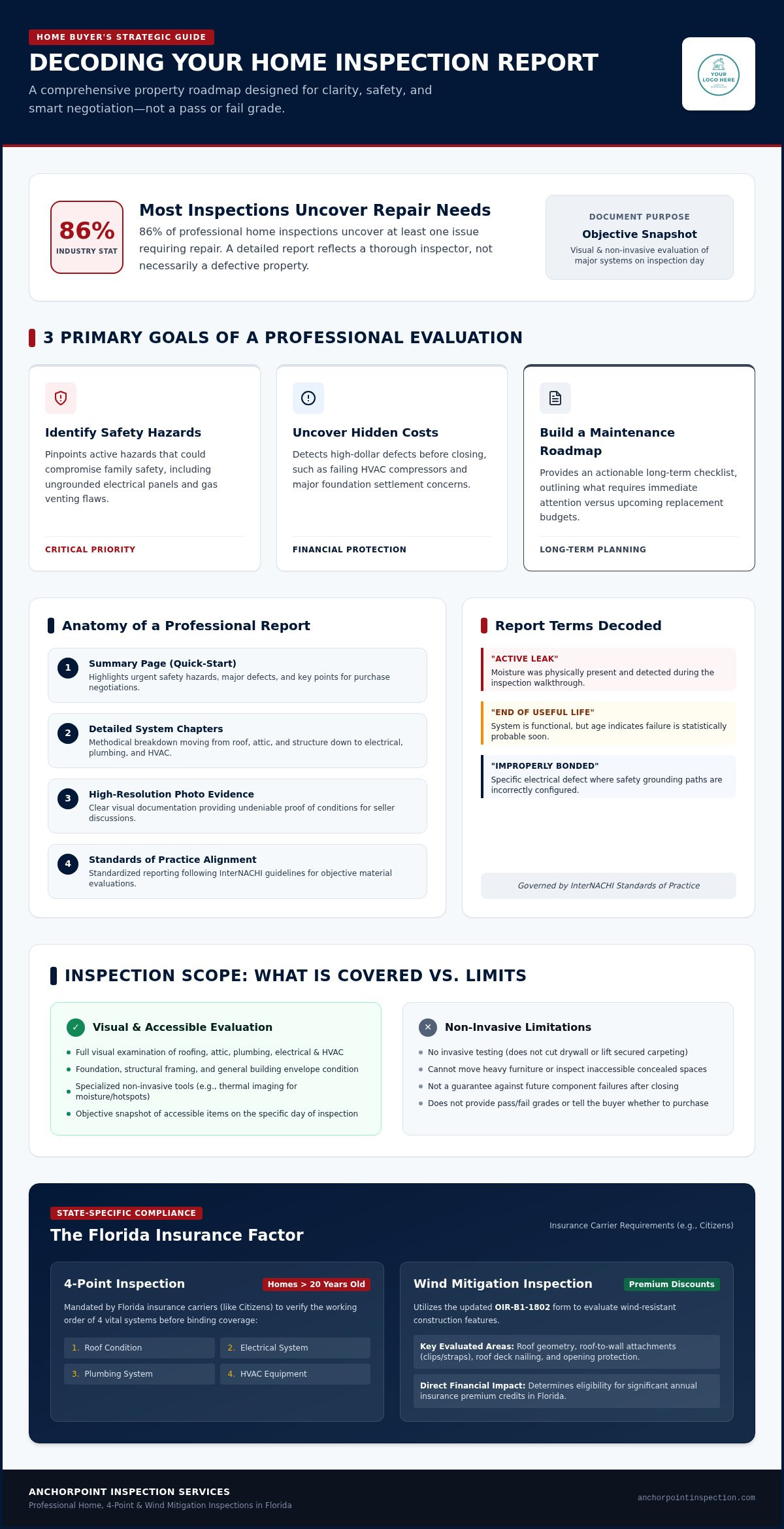
The primary goal of the report is to empower you with knowledge. We focus on three critical areas to ensure your long-term well-being:
Identifying Safety Hazards: We look for issues that could harm your family, such as ungrounded electrical panels or venting problems with gas appliances.
Uncovering Hidden Costs: We identify structural or mechanical issues that might not be visible to the untrained eye but are expensive to fix, like a failing HVAC compressor or foundation settlement.
Creating a Maintenance Roadmap: The report serves as a long-term checklist, helping you understand what needs attention now and what you should budget for in the coming years.
Visual vs. Invasive Inspections
The home inspection process is governed by specific Standards of Practice. This means our evaluation is strictly visual and non-invasive. We don't move heavy furniture, pull up carpets, or cut into drywall to see what’s behind it. While we use specialized tools like thermal imaging cameras to detect moisture or electrical hotspots, we can't see through solid objects. It's a snapshot of what is visible and accessible on the day of the inspection. Understanding these limits helps you set realistic expectations for the home inspection report explained in your final document. We focus on what we can see to give you the most accurate picture possible without damaging the property.
Anatomy of a Professional Inspection Report
A professional report is organized to help you navigate a large volume of data without feeling lost. When you have a home inspection report explained by an expert, you'll see it's divided into logical segments designed for different needs. The Summary Page acts as your quick-start guide. It highlights critical safety hazards and major defects that may require immediate attention or negotiation. However, the Detailed System Chapters are where the inspector provides the context behind each finding, moving methodically from the roof down to the foundation.
Understanding technical jargon is a vital part of decoding your results. For instance, an "active leak" means moisture was physically present during the walkthrough. "End of useful life" suggests a system like a water heater is functional but has reached the age where failure is statistically likely. "Improperly bonded" is a specific electrical term referring to safety grounding. These terms follow the InterNACHI Standards of Practice, which ensure every inspector uses a consistent language to describe safety concerns and material defects.
High-quality photo documentation is perhaps the most valuable part of the document. These images provide undeniable evidence of a property's condition, which is essential when you're discussing repairs with a seller. If you're ready to see this level of detail for your potential home, you can schedule a comprehensive home inspection to get a clear, transparent picture of your investment.
The Core Systems Covered
Every thorough report evaluates the home's vital organs. This includes the roofing and attic, where we check for age, leaks, and proper ventilation. We also inspect the electrical and plumbing systems for outdated materials or safety hazards. In our local climate, we pay special attention to HVAC systems, assessing the efficiency and condition of air conditioning units that work hard in the Florida heat.
How to Read the Summary vs. the Full Report
It's tempting to only read the summary, but the devil is often in the details. The full report explains the "why" behind an issue, which helps you understand the severity. You'll also find "Monitor" items alongside "Repair" items. A monitor item isn't a problem today, but it's something you should watch over the coming year. Distinguishing between these helps you build a realistic maintenance budget for the future.
How to Prioritize Findings: Safety, Structural, and Maintenance
Once you have your home inspection report explained by a professional, the next step is sorting the findings by severity. Not all issues carry the same weight. We recommend a three-tier hierarchy to help you focus on what truly matters during negotiations. This logical approach lowers anxiety by separating minor inconveniences from major liabilities.
Category 1: Major Safety Hazards. These are non-negotiable items that pose an immediate risk to your family, such as fire hazards, severe electrical issues, or structural failure.
Category 2: Major Defects. These are expensive systems that are failing or near the end of their life, such as a leaking roof or a non-functional HVAC unit.
Category 3: Minor Defects and Maintenance. This includes cosmetic wear, aging appliances that still work, and small DIY repairs.
Using this hierarchy allows you to approach the seller with a prioritized list. Asking for every small item can derail a deal. Focusing on categories one and two ensures your safety and financial protection while showing the seller you are being reasonable. This strategy helps you move toward closing with a clear path forward.
Safety Issues: The Non-Negotiables
In our local area, we frequently see specific electrical hazards like double-tapped breakers or missing GFCI protection in wet areas. These are relatively simple to fix but critical for safety. Similarly, pool inspection Lynn Haven FL results often highlight safety concerns like improper fencing or non-functional drain covers. These findings belong at the top of your list because they involve the physical well-being of your household. Identifying trip hazards on walkways or loose deck railings also falls into this protective category. We view these as essential repairs that should be addressed before you move in.
Structural vs. Cosmetic: Knowing the Difference
It's easy to get distracted by "ugly" features, but a diligent buyer ignores the cosmetic to focus on the unstable. For example, small hairline cracks in Florida stucco are often just settling cracks, whereas wide, stair-step cracks in the foundation indicate a structural concern. Water intrusion is the number one enemy of homes in our humid climate. We look for signs of moisture behind walls or under floors that could compromise the home's integrity. Understanding these differences helps you avoid panic over paint colors while ensuring you address the real bones of the house. Reviewing Florida wind mitigation inspection resources can also help you understand how structural hardening features protect your home and lower your insurance costs. This knowledge ensures your home inspection report explained in full detail leads to a safer, more efficient home.
The Florida Factor: Standard Reports vs. Insurance Inspections
In the Sunshine State, having your home inspection report explained requires looking beyond just the buyer's peace of mind. While a comprehensive inspection covers dozens of components for your benefit, Florida insurance carriers have their own set of requirements. You'll likely need separate, specialized reports to secure a policy or qualify for discounts. These documents don't replace the standard report; they supplement it by focusing on the specific risks insurers are willing to cover. Understanding the difference between a buyer's report and an insurance report is vital for a smooth closing.
For homes more than 20 years old, carriers like Citizens typically mandate a 4-point inspection. This is a targeted evaluation of the four systems most likely to cause a claim: the roof, electrical, plumbing, and HVAC. Unlike a standard report that may list dozens of minor issues, the 4-point inspection for home insurance is essentially a pass or fail document. Insurers want to see "satisfactory condition" across the board. If the report identifies cloth wiring or polybutylene pipes, the property may be deemed uninsurable until those specific items are remediated by a licensed professional.
The 4-Point Inspection Explained
The 4-point report focuses strictly on the risk of future damage. In the electrical section, we look for brands like Federal Pacific or Zinsco, which are often flagged for safety concerns. In plumbing, we check for active leaks or materials prone to failure. The HVAC system must be functional and in good repair to meet underwriting standards. If your 4-point report shows a deficiency, it's often a signal that a major system needs immediate investment to protect your insurability.
Wind Mitigation: Your Ticket to Credits
If you're buying in Panama City or anywhere in Bay County, a wind mitigation report is your most valuable financial tool. This inspection looks at construction features designed to withstand hurricane-force winds, such as roof-to-wall attachments like hurricane clips and secondary water barriers. These features translate directly into Windstorm Mitigation Credits on your policy. Properly documented features can reduce the windstorm portion of your premium by up to 88%, potentially saving you thousands of dollars every year. This is easily the most important report for your long-term budget in our coastal environment.
Another critical piece of the puzzle is the roof certification inspection Florida carriers require for older homes. If your roof is approaching 15 years of age, insurers may refuse coverage unless an authorized inspector certifies it has at least five years of remaining useful life. We specialize in providing these precise insurance documents to ensure your closing stays on track. If you need help securing your property's future, you can schedule your insurance inspections with Anchorpoint today.
Moving Forward: Action Steps After Your Inspection
Once you have your home inspection report explained by a professional, the real work of the real estate transaction begins. This document is no longer just a list of findings; it is your primary tool for the negotiation phase. Your first step should be a meeting with your real estate agent to review the summary and build a strategic repair request. Focus on the major safety and structural issues we identified earlier, as these are the items that most significantly impact the property's value and your future safety.
To understand the true cost of the home, you should obtain contractor quotes for any major defects found during the walkthrough. A report might identify a failing HVAC system, but a professional quote provides the actual dollar amount needed to rectify the situation. This data gives you a solid foundation for requesting seller credits or price reductions. If you are on the selling side of the deal, using a pre-listing home inspection Florida guide can help you identify these hurdles before your home even hits the market, allowing for a much smoother closing process.
Finally, don't overlook the importance of closing the loop. If the seller agrees to perform repairs, we strongly recommend a re-inspection. A professional follow-up ensures that the work was completed correctly by licensed tradespeople and that no new issues were created during the process. This final step provides the ultimate peace of mind before you sign the closing papers.
Consulting with Your Inspector
We don't expect you to be a construction expert. If any part of the report is unclear, don't hesitate to call John R. Gramlick III for clarification. We are here to help you understand if a finding is a typical characteristic of a home of its age in Panama City or if it represents a unique concern. It is also vital to distinguish between a professional opinion on a system's condition and a municipal code violation; our reports focus on functional safety and material defects rather than strict code enforcement.
Building a Maintenance Schedule
Your report should live on as a "User Manual" for your new property. By reviewing the home inspection report explained in the detailed chapters, you can address "Monitor" items before they escalate into expensive "Repair" items. Use the age estimates provided for major systems to set a realistic budget for future replacements. This proactive approach to maintenance ensures that your home remains efficient, safe, and valuable for as long as you own it.
Taking Charge of Your Home Investment
Understanding your property's condition is a powerful tool in the home-buying process. Having your home inspection report explained helps you move past the initial anxiety of a long document and focus on what truly matters. It's about more than just raw data; it's about gaining a roadmap for your future. No home is perfect, but knowing exactly where yours stands allows you to plan effectively. By prioritizing safety hazards and structural integrity over minor cosmetic issues, you can negotiate with confidence and clarity. In our local market, ensuring your home meets Florida insurance requirements for wind mitigation and 4-point inspections is equally vital for your long-term budget.
Anchorpoint Inspection Services is here to be your diligent mentor throughout this journey. We're Florida Licensed & Insured and have been proudly serving Lynn Haven and Panama City since our inception. Our expertise in insurance compliance reports ensures you have the documentation needed for a smooth closing. If you're ready to gain a transparent view of your property, Schedule Your Comprehensive Inspection with Anchorpoint Today. We look forward to helping you secure a safe and efficient future for your new home.
Frequently Asked Questions
How long does it take to get the home inspection report back?
Most clients receive their digital report within 24 hours of the physical walkthrough. We understand that time is of the essence during the inspection contingency period in Panama City real estate contracts. Providing a quick turnaround allows you and your agent enough time to review findings and request repairs if necessary. The digital format includes high-resolution photos and clear descriptions to ensure the home inspection report explained in the document is easy to navigate immediately.
Can a house 'fail' a home inspection in Florida?
A standard residential inspection isn't a pass or fail exam; it's a professional assessment of the property's condition. However, in Florida, a home can effectively "fail" insurance underwriting. If a 4-Point inspection reveals a roof near the end of its life or outdated electrical panels, carriers might deny coverage. While the house doesn't fail a test, these specific findings can make the property difficult to finance or insure without immediate repairs or replacements.
Should I be present during the home inspection?
We highly encourage you to attend the final portion of the inspection. While you don't need to be there for the entire three-hour process, joining us for a final walkthrough helps you see issues firsthand. This face-to-face time allows us to show you exactly where a component is located and explain its function. It's the best way to have the home inspection report explained in person, which often helps lower the anxiety surrounding technical findings.
What are the most common deal-breakers in a home inspection report?
While "deal-breaker" is a subjective term, most buyers in Bay County focus on high-cost structural or safety issues. Major foundation cracks, active roof leaks, and outdated electrical systems like Zinsco or Federal Pacific panels are frequent concerns. In our coastal environment, significant water intrusion or wood-destroying organism damage can also derail a transaction. These items often require professional remediation and can impact the overall feasibility of the purchase for many families during the negotiation phase.
Is a 4-Point inspection the same as a full home inspection?
A 4-Point inspection is a much narrower evaluation than a comprehensive home inspection. While a full inspection looks at dozens of items from the attic to the appliances, the 4-Point strictly covers the roof, electrical, plumbing, and HVAC systems. Insurance companies in Panama City Beach use this shorter report to determine underwriting risk. It doesn't provide the same level of detail for a buyer's maintenance roadmap as a full, comprehensive residential inspection does.
How much do repairs usually cost based on a report?
Repair costs vary wildly based on the specific defect and the size of the home. As inspectors, we identify the condition of the systems, but we don't provide repair estimates or contractor services. We recommend taking the findings from your report to licensed local contractors in Lynn Haven for formal quotes. This ensures you have accurate financial data for negotiations rather than relying on general industry averages that might not reflect current local labor rates.
Can I use the home inspection report to lower the house price?
You can certainly use the inspection findings as a basis for price negotiations or repair credits. If the report identifies major defects that weren't disclosed, your agent can help you request a price reduction to cover the true cost of ownership. This is why a thorough evaluation is so critical. It moves the conversation from guesswork to documented facts, giving you the leverage needed to ensure the purchase price reflects the home's actual condition.
What happens if the inspector misses something?
Home inspections are non-invasive, visual assessments governed by specific Standards of Practice. We can't see through walls or move heavy furniture, so some latent defects may remain hidden. However, our commitment to accuracy means we use tools like thermal imaging to go beyond a basic visual check. If you have concerns after moving in, we encourage you to contact us. We view our role as a partnership in your long-term property care and well-being.


Comments