

Condo Association Inspection Requirements in Destin: Who Pays
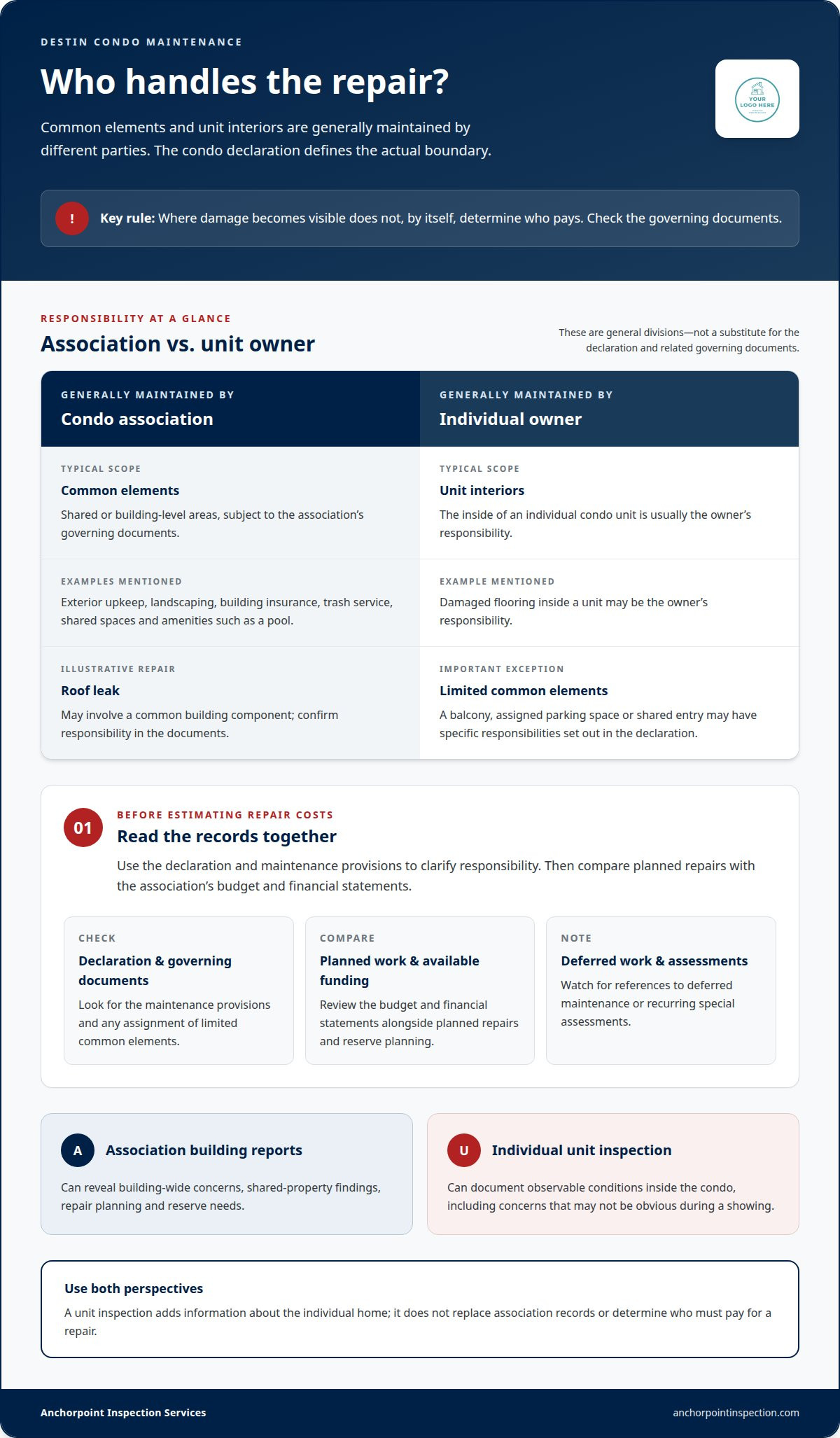
In Destin, condo associations generally maintain common elements, while unit owners typically handle the interiors of their units. The association’s declaration may assign some limited common elements differently, so condo association inspection requirements in Destin do not by themselves determine who pays for each repair. Review the governing documents to clarify responsibility.
It’s understandable to expect the association to handle issues in shared or structural areas, but an inspection finding can affect both common property and an individual unit. This article explains how maintenance responsibility is generally divided, what Florida’s building inspection and reserve requirements cover, and what buyers should review in association records before considering possible repairs.
A well-kept appearance may not reveal hidden concerns. A unit inspection can add useful information alongside the association’s building-level reports.
Table of Contents
Florida condominium and homeowners association laws
Florida law sets inspection, reserve-planning, and buyer-disclosure requirements for condominium associations. For Destin owners and buyers, a building’s height and age, coastal conditions, and association records help clarify which requirements apply.
Milestone Inspection Requirements
A milestone inspection evaluates a qualifying condominium building’s structural condition. Florida Legislature says buildings with three habitable stories or more generally require an inspection at 30 years and every 10 years afterward. A local enforcement agency may require the first inspection at 25 years when conditions such as salt-water proximity justify it, according to Florida Legislature. Florida Legislature also says inspections may lead to required repairs within 365 days. For a buyer, these findings can indicate whether structural work may affect future maintenance or reserve funding.
Local Building Inspection Rules
Local building inspection rules are enforcement requirements applied by the authority responsible for a building’s location. In Destin, coastal exposure can matter: Florida Legislature allows a local enforcement agency to require a first milestone inspection at 25 years when conditions such as proximity to salt water justify it. That local decision can affect timing compared with the general 30-year schedule. The building’s location, height, and age therefore help determine which milestone inspection schedule applies.
Inspection Records and Reporting
Inspection records document building findings, repair planning, and reserve needs. A Florida condo association must distribute the inspector-prepared milestone inspection summary to owners within 45 days. Buyers can review association disclosures, including the declaration, bylaws, rules, annual financial statement, annual budget, and relevant inspection or reserve study materials when provided. Florida Legislature states that a resale condo buyer has a 7-day voidability period after receiving the required documents. Reviewing these records during a purchase can reveal deferred work or planned reserve funding needs.
Inspection Compliance and Costs
Inspection compliance means completing required evaluations and responding to findings. Florida associations existing on or before July 1, 2022 and under unit-owner control have a final structural integrity reserve study completion deadline of December 31, 2026, according to Florida Legislature. The association arranges the professional inspection and reserve study; the appropriate qualifications depend on the specific evaluation. If findings require repairs, Florida Legislature says they may be required within 365 days. Inspection and study costs depend on building size, condition, access, and the scope of work, so there is no single Destin-wide amount to apply to every property.
Condo association maintenance responsibilities
In Destin, understanding condo association inspection requirements helps clarify which areas the association maintains and which fall to individual owners. The declaration and related governing documents define those boundaries. Associations generally maintain common elements, while owners usually handle unit interiors. The declaration may assign limited common elements differently, so a balcony, assigned parking space, or shared entry may have specific responsibilities set out in the documents.
Association fees may support exterior upkeep, landscaping, building insurance, trash service, shared spaces, and amenities such as a pool. These expenses differ from unit-level work. For example, a roof leak may involve a common building component, while damaged flooring inside a unit may be the owner’s responsibility. The declaration, not simply where damage becomes visible, determines the boundary.
For buyers researching condo association inspection requirements in Destin, a practical step is to read the maintenance provisions alongside the association’s budget and financial statements. Compare planned repairs with available funding, and note references to deferred maintenance or recurring special assessments. These details can help show whether routine upkeep is funded or larger projects may affect owners later. During closing, association documents help clarify how costs and responsibilities are allocated.
Structural integrity reserve planning matters because long-term building work can involve components shared by owners. A reserve study helps an association plan for major future expenses, while the budget shows how that plan is reflected in current funding. If a document identifies needed work, check whether the stated responsibility belongs to the association or an individual owner before estimating its effect on ownership costs.
For a unit-specific view alongside association records, a closer assessment of the condo’s condition can help identify visible concerns within the unit. It does not replace association records or determine who must pay for repairs. For buyers weighing condo association inspection requirements in Destin, reviewing the documents alongside an inspection can provide a clearer picture of maintenance needs before purchase.
Condo inspections and hidden property issues
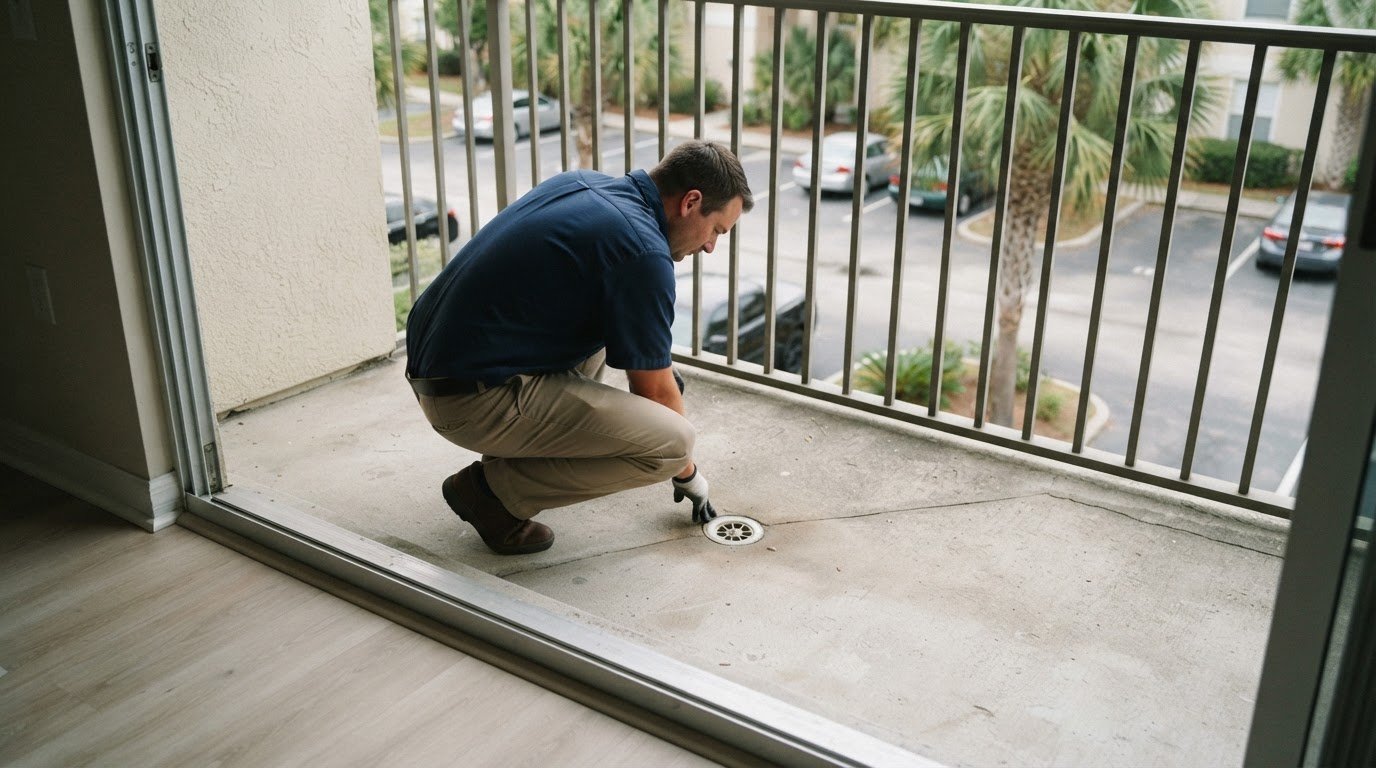
A tidy unit may still have conditions that a brief showing won’t reveal. In Destin, a sticking sliding door, loose outlet, or slow drain may be easier to spot during a focused inspection than a quick walkthrough. Understanding condo association inspection requirements in Destin also means recognizing that association building reports and an inspection of one unit answer different questions. One concerns shared property; the other documents observable conditions inside the individual home.
For example, a unit inspection may identify a window that doesn’t seal well, while association records may describe planned exterior work. These observations do not determine who must pay, but they give buyers distinct details to consider together. A unit-level finding can prompt questions about maintenance history, while board records may explain whether related work affects other areas of the building.
Association materials can provide context that isn’t visible during an inspection. A reserve study, meeting materials, and repair updates may describe how planned work is being funded. If records mention pending repairs or deferred maintenance, note the component and location, then compare those details with the unit’s observed condition. This gives a fuller picture than relying on a single document or a polished interior.
For buyers weighing condo association inspection requirements in Destin, the distinction is practical: a milestone report addresses the structure of a qualifying building, while a unit inspection documents visible conditions in the property being considered. Neither gives a complete account of every concealed area or determines future costs. Reviewing both can help identify which concerns are unit-specific, which relate to shared property, and what merits further attention before a purchase decision.
What Okaloosa County or City of Destin building inspection rules apply to condominium associations?
For a Destin condominium, distinguish Florida’s milestone inspection framework from inspections associated with specific construction or repair work. Whether the building is within the City of Destin or unincorporated Okaloosa County helps identify the relevant local jurisdiction. Association records can show which inspections concern the whole building and which relate to an individual project.
Florida law authorizes a local enforcement agency to require an earlier first milestone inspection when conditions, such as proximity to salt water, justify it. That is the local connection to the statewide schedule; it does not mean every condo follows the same inspection calendar. Building age, height, coastal exposure, and agency action shape the applicable timing.
For repair work, permit and inspection records can help owners understand a project’s scope and status. For example, records about exterior concrete repairs answer a different question from a milestone report on structural condition. Neither document alone explains every association responsibility. Read project records alongside board materials and governing documents to understand what work was proposed, what findings were recorded, and how the association plans to address them.
Buyers can organize their review into three groups: milestone reports, structural reserve planning, and project-specific permits or inspection records. Then compare dates and descriptions. A reported building concern may relate to common areas, while a repair record may cover a particular component or project. This helps distinguish a local building review from an inspection of the condo unit itself.
For an independent view of visible conditions inside a unit, schedule a condo inspection as part of your property review. It complements association and local project records, but serves a different purpose: documenting observable conditions within the unit.
Anchorpoint Inspection Services: Condo inspections
Anchorpoint Inspection Services provides condo inspections to help buyers understand visible conditions inside a unit before purchase. The inspection complements association milestone reports and reserve documents by focusing on the unit itself, including accessible components and areas that may need maintenance.
Turn to a condo inspection when you want an independent assessment of the property’s observable condition. A Comprehensive Home Inspection offers a broader residential evaluation, while a 4-Point Inspection focuses on four major systems. A Wind Mitigation Inspection documents wind-resistant features for insurance purposes. Each serves a different purpose, so the right choice depends on the information you need.
Association records and a unit inspection answer different questions. Together, they can help clarify whether an observed concern belongs to the unit or relates to wider building maintenance. For help understanding the inspection options for your condo, contact Anchorpoint Inspection Services.
Make your next property decision with clarity
Understanding condo association inspection requirements in Destin is one part of evaluating a property. Your next step is to connect building-level information with the condition of the specific unit you may own or purchase. That distinction can help frame practical questions about maintenance, future work, and how an inspection fits into your decision.
Keep the association’s records and unit-level findings organized together. If a concern appears in both, you can better understand how it relates to the property as a whole. If the records and visible conditions differ, that contrast can guide a more focused conversation during the purchase or ownership process.
An inspection provides useful observations, not a substitute for association documents or legal advice about who must pay. For a measured next step, connect with Anchorpoint Inspection Services about a condo inspection and move forward with a clearer understanding of the unit.
Frequently Asked Questions
What condo inspections are required by Florida law for associations?
Florida’s requirements include milestone inspections for qualifying condominium buildings and structural integrity reserve studies for residential condominium buildings with three or more habitable stories. Florida Legislature states that the reserve study requirement applies regardless of building age. These association-level evaluations address building structure and long-term component planning. They differ from an inspection of an individual condo unit, which can help identify observable conditions inside that specific property.
What are Florida condominium milestone inspection requirements and deadlines?
Florida Legislature states that buildings with three habitable stories or more generally reach their first milestone inspection at 30 years, then repeat every 10 years. A local enforcement agency may require the first inspection at 25 years when conditions such as salt-water proximity justify it. Findings may lead to required repairs within 365 days. Associations must also distribute the inspector-prepared summary to owners within 45 days.
How often must Destin condo associations inspect roofs, elevators, fire systems, and other components?
Florida’s milestone inspection schedule is not a universal inspection calendar for every roof, elevator, or fire system. It evaluates the structural condition of qualifying buildings, while component upkeep is managed through association maintenance planning and applicable system requirements. A structural integrity reserve study helps plan for major components and future expenses. For a particular Destin property, association maintenance records can show when specific systems were last serviced or repaired.
How do inspection requirements differ for older and newer Florida condominium buildings?
Building age affects when a qualifying building reaches its first milestone inspection, but it does not remove the reserve-study requirement for residential condo buildings with three or more habitable stories. Florida law states that this study requirement applies regardless of age. Older coastal buildings may face an earlier first milestone inspection if local conditions justify it. Buyers can compare a building’s age with its reports and planned work.

Comments