

Home inspection contingency period in Florida and your options
The home inspection contingency period in Florida is set by the signed purchase contract and commonly lasts 7-14 days. A home inspection is generally optional, but the contract may give buyers time to inspect the property and act on the findings before the deadline. Missing that deadline can affect the options available.
It’s understandable to want a clear answer about what a home inspection contingency period in Florida protects and whether a concerning finding lets you walk away. Your rights depend on the purchase agreement’s terms, including its deadline and notice requirements, not simply on what the inspection report says.
This article explains what an inspection contingency means, how Florida contract deadlines work, and what choices may follow an inspection, including when cancellation may be available. You’ll also learn how to review findings and make a measured decision within the time your contract allows.
Table of Contents
Is a home inspection required in Florida?
Florida buyers generally aren’t required to get a home inspection. Inspection contingencies are common in Florida real estate contracts and can give buyers time to assess the property and decide how to proceed. The purchase contract determines which protections apply and when the buyer must act.
An inspection report can help buyers negotiate repairs, a price reduction, or a seller credit before closing. For example, if the report identifies a roof leak, a buyer might ask the seller to arrange a repair or offer a credit toward the work. Buyers can also accept the property as-is or pursue another solution allowed by the contract.
Repair requests and credits are proposals, not automatic outcomes. A seller generally isn’t required to agree to every requested repair. The seller may agree to some items, propose a different resolution, or decline. The buyer’s next options depend on the contract terms and any inspection rights still available.
Keep negotiations focused by connecting each request to a specific inspection finding. Separate safety or major-system concerns from routine maintenance, then consider whether a repair, credit, or price adjustment would address the issue. A costly concern may make a price reduction more useful than a small repair, while an agreed repair may resolve a specific defect.
Timing matters. Buyers should deliver inspection decisions and repair requests before the contract’s inspection deadline and follow its notice requirements. Missing the deadline may affect available options. A seller’s response does not automatically extend the deadline, so keep track of the contract timeline while discussing a resolution.
Before choosing how to proceed, compare the report’s findings with the purchase contract and your priorities. A buyer who wants the seller to address a defect can negotiate; one who prefers not to proceed may have a contract right to terminate. Although the inspection itself is optional, understanding the contract process helps buyers use the protections it provides.
Can I cancel the contract after the inspection?
A buyer may be able to cancel after receiving inspection findings, but the purchase contract controls that right. The inspection period, required notice, and deposit terms shape the available options.
Inspection-Based Contract Termination
Inspection-based termination means ending a purchase contract by using a cancellation right tied to inspection findings. Serious defects may change whether a home meets the buyer’s expectations. Under the contract, a buyer may be able to cancel within the inspection period rather than negotiate repairs or proceed. The report documents the property’s condition, but the contract determines whether the findings support termination.
Contract Deadlines and Notice Requirements
The deadline is the contract’s final date for completing inspections and delivering required notices. Florida inspection periods are often described as 7-14 days; the default FAR/BAR contract provides 15 calendar days unless the parties negotiate another deadline. The signed agreement also controls how days are counted, who must receive notice, and how notice must be delivered. A buyer should use the written deadline, not an assumed standard.
Cancellation and Deposit Concerns
Deposit concerns arise because cancellation rights and deposit outcomes depend on the purchase contract. If a buyer properly uses an available inspection right before the deadline, they may be able to end the agreement without losing the deposit. That depends on following the contract’s notice process. A buyer who misses a deadline or cancels without an applicable right may face a different outcome.
Inspection Periods and Other Contract Options
An inspection contingency addresses the property’s physical condition; a condo or homeowners association document review period concerns governing documents. These are separate contract protections, with distinct deadlines and purposes. Depending on the agreement, a seller may continue marketing the property or accept a backup offer during the inspection period. A backup offer does not, by itself, cancel the existing purchase contract or end the buyer’s inspection rights.
What Is an Inspection Contingency?
An inspection contingency gives a buyer time to have a property professionally inspected under the purchase contract. It connects the inspection findings to options the contract may provide, such as negotiating repairs or credits, or terminating the agreement.
In Florida, a home inspection is a visual, non-invasive evaluation of readily accessible systems and components. The inspector records observed conditions in a report, helping buyers understand the property before completing their purchase. The report reflects the home’s condition on inspection day, not a guarantee against future problems.
Review the report by first identifying safety concerns, major systems, and defects that may affect your decision. Then read the supporting details and recommendations. For example, an electrical finding may describe an observed concern without establishing every hidden condition. Use the report to understand what was observed, where it was found, and whether further evaluation may be appropriate.
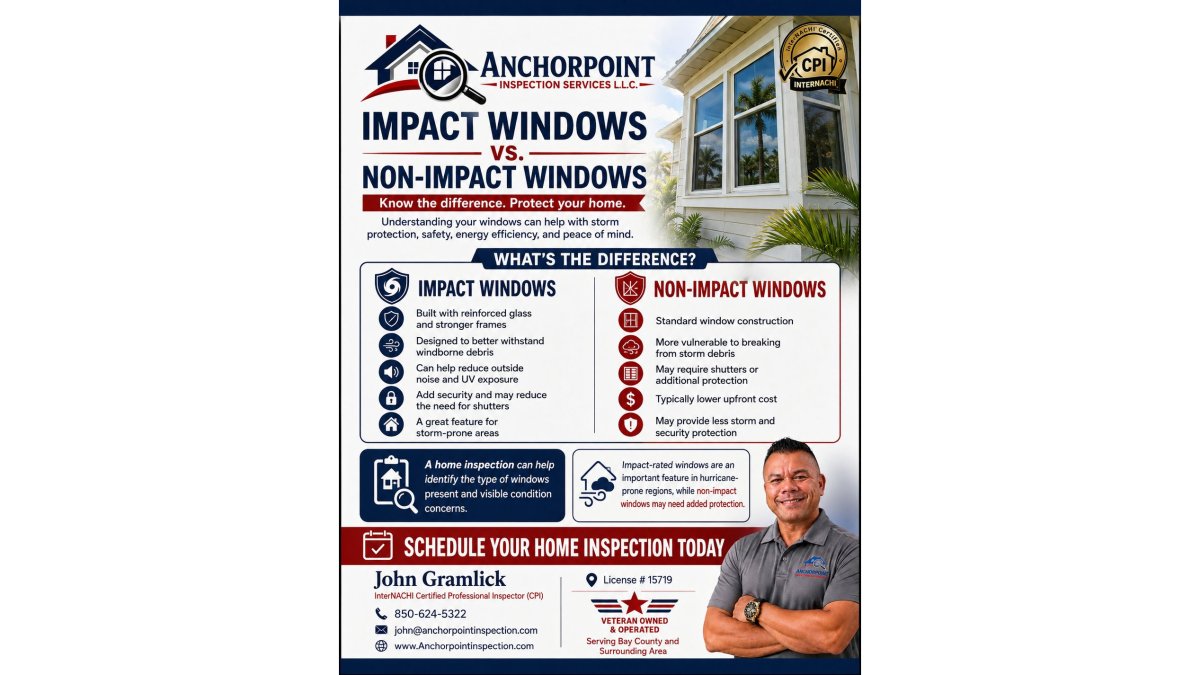
Florida homebuyers may consider focused evaluations for termites or other wood-destroying organisms, moisture or mold concerns, radon, and wind mitigation. Humidity and moisture can raise mold and wood-rot concerns, while termites and other wood-destroying organisms are recognized pest risks in Florida. Wind mitigation focuses on features related to wind resistance. Buyers can consult qualified professionals about which evaluations suit the property and their concerns.
Attending the inspection is encouraged. It lets buyers ask about observed conditions and see locations firsthand. A walkthrough, for example, can clarify whether a report describes routine maintenance or a condition needing further attention. Afterward, compare the findings with your priorities and contract options. A long report may include minor repairs and cosmetic imperfections alongside more consequential observations, so consider each finding in context rather than judging by page count alone.
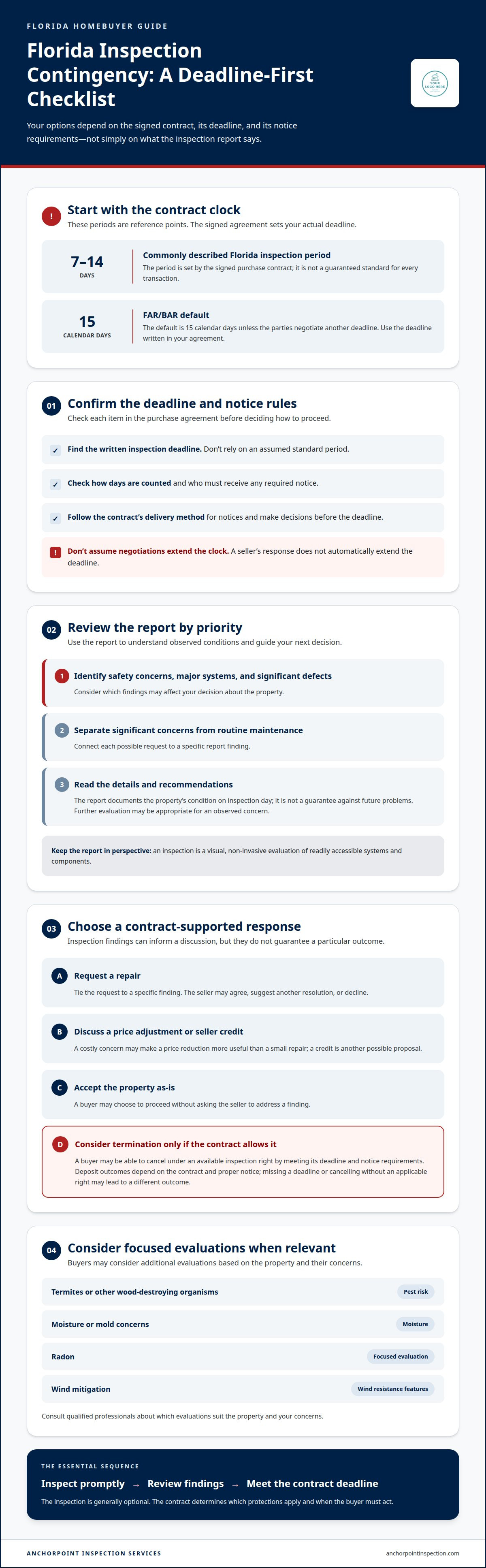
How inspection contingencies and deadlines work
The signed purchase contract sets the inspection deadline, how days are counted, and where notices must go. Scheduling promptly leaves time to review findings and make decisions before closing.
When the Inspection Deadline Begins
The inspection period usually begins on the contract’s effective date, when the last party signs and the agreement becomes binding. This date determines how much time remains for inspections and any required response. Schedule promptly after signing to leave time to receive and review the report. Waiting to arrange access can leave less time to assess concerns or decide how to proceed.
Managing Notices and Deadlines
Deadline management means following the contract’s stated timeline and notice process. Florida inspection periods are commonly described as 7-14 days, while the default FAR/BAR contract provides 15 calendar days unless the parties negotiate a different deadline. The signed agreement controls the actual period, day-counting method, notice recipient, and delivery requirements. Buyers should allow several business days before the deadline to review findings and prepare any required notice.
Common Deadline Mistakes
A common mistake is relying on an assumed standard inspection period instead of reading the signed contract. Scheduling late can also leave too little time to review the report or arrange follow-up evaluations. Buyers may confuse a negotiation request with formal notice required by the agreement. Missing a deadline may affect contract rights, so track the exact date and required actions in the purchase documents.
For a Florida real estate investment, early inspection scheduling creates more room to understand the property before closing. Schedule a comprehensive home inspection early enough to review the report and make timely decisions.
Anchorpoint Inspection Services: Comprehensive Home Inspection
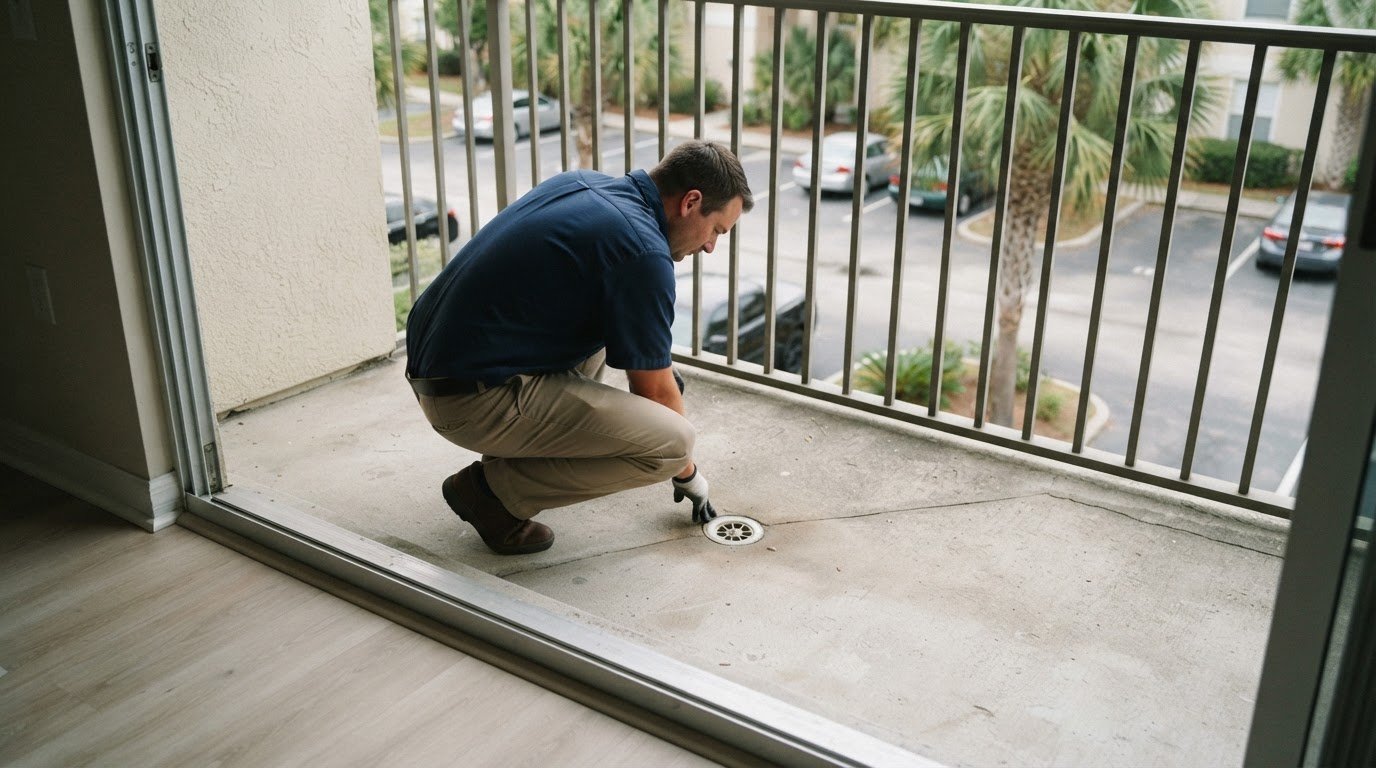
Anchorpoint Inspection Services provides comprehensive home inspections to help buyers understand a property’s condition before making decisions under their contract. A clear digital report with photos of inspected systems and components can help you assess observed concerns and consider your next steps within the inspection period.
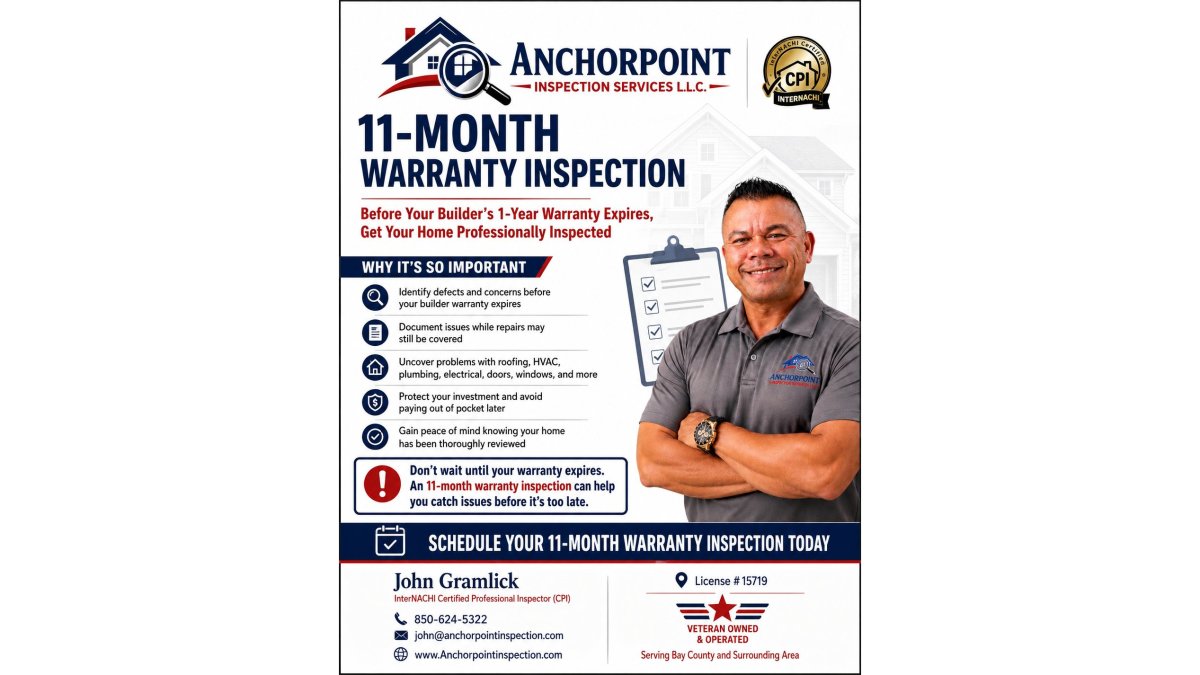
For specific needs, Anchorpoint also offers Wind Mitigation Inspection and 4-Point Inspection, including evaluations used for Florida insurance. An 11 Month Warranty inspection can help identify potential builder defects while a new home is still within its warranty period.
Choose the inspection that fits the property and your decision. A comprehensive inspection supports a broad review, while wind mitigation or a 4-point inspection addresses a more focused purpose. Contact Anchorpoint Inspection Services to discuss an inspection for your property.
Move Forward With a Clear Plan
The inspection stage is also a chance to shift from evaluating a purchase to preparing for ownership. Once you’ve made your contract decision, keep the report as a reference for future maintenance planning. Findings vary in urgency, so organize them by likely impact on safety, function, and upkeep. This turns a one-time evaluation into useful information for caring for the home over time.
The home inspection contingency period in Florida is a limited part of a much longer relationship with the property. Treat the contract decision and future maintenance priorities as connected but separate tasks. First, follow the agreement’s requirements. Then use the inspection findings to guide your questions and plans as a homeowner.
For support with your property inspection, contact Anchorpoint Inspection Services. A clear understanding of the home can help you take your next step with care and confidence.
Frequently Asked Questions
Should I skip the inspection to make my offer stronger?
Skipping an inspection can remove an important opportunity to understand the property before buying. Inspections are generally optional in Florida, but waiving an inspection contingency can limit your ability to rely on inspection findings under the contract. For example, a buyer who discovers a costly roof concern after the deadline may have fewer contract options. Consider this trade-off carefully before changing your offer terms.
How long is the home inspection contingency period in Florida?
Florida inspection periods are commonly described as 7-14 days, but the signed contract sets your actual deadline. The default FAR/BAR contract provides 15 calendar days unless the parties negotiate a different period. These figures describe different contract situations, not a single deadline for every purchase. Use the effective date and timing terms in your own agreement to calculate when your inspection rights end.
Is there a standard Florida home inspection contingency period or does the contract set it?
The purchase contract sets the inspection period; no single deadline applies to every Florida home sale. The parties can agree to different terms, and the written contract determines how days are counted and which notices are required. Two buyers using different contract terms may therefore have different deadlines, even if both properties are in the same Florida community.
What does the Florida Realtors/Florida Bar residential contract say about the inspection period?
The default FAR/BAR contract provides 15 calendar days for inspections unless the parties negotiate another deadline. The Florida Realtors/Florida Bar AS IS contract is also commonly associated with a 15-day inspection period and broad cancellation rights. Read the version signed for your purchase, since negotiated changes can alter the timeline. The contract’s notice terms also explain how to exercise any inspection-related right.
Can a buyer cancel during the Florida inspection period and recover the deposit?
A buyer may be able to cancel and recover the deposit by properly exercising an available inspection right before the contract deadline. The agreement’s termination terms and notice requirements matter, so an inspection report alone doesn’t cancel the purchase. For example, sending notice to the wrong recipient may not satisfy the required process. Review the signed contract before acting on a decision to terminate.
What happens if a Florida buyer misses the inspection contingency deadline?
Missing the inspection deadline can affect the buyer’s options under the purchase contract. Depending on the agreement, the buyer may lose the ability to use an inspection-related cancellation right or negotiate under that contingency. Receiving a report after the deadline does not automatically extend the period. Check the contract’s dates and notice provisions promptly, and don’t assume that an unanswered repair request pauses the timeline.
Comments