

How Often Should You Get a Home Inspection? A Timing Guide
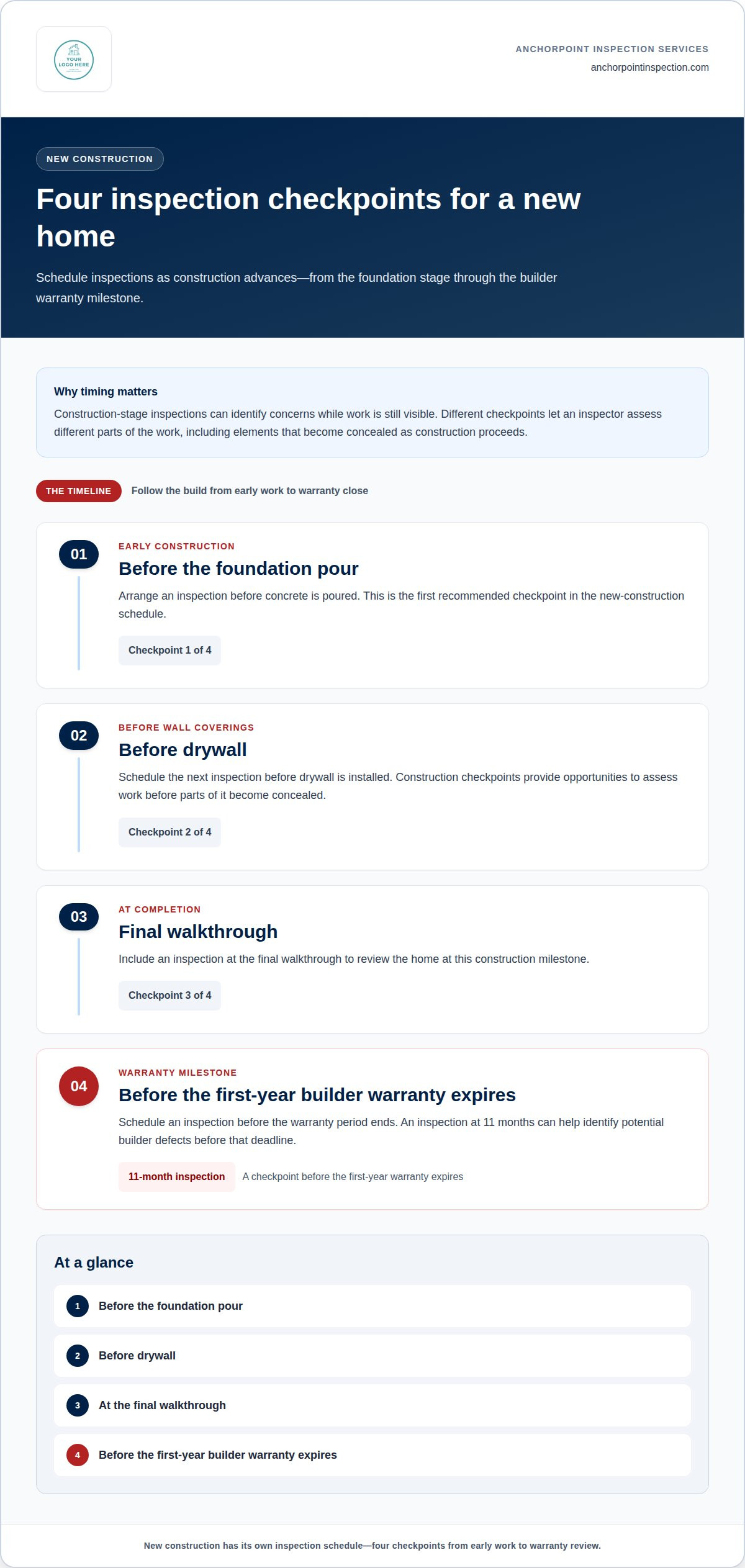
A brand-new home still needs careful inspection. For most homeowners, the answer to how often you should get a home inspection is every 3 to 5 years; older homes or properties with unique features may benefit from annual inspections. New construction calls for a different schedule: inspections are recommended before the foundation pour, before drywall, at the final walkthrough, and before the first-year builder warranty expires.
It makes sense to assume a new home needs less attention than an older one. But inspections during construction can identify concerns while work is still visible, and a home’s age, climate, and exposure to severe weather all affect when another assessment may be useful. This guide explains how inspection timing changes as a home ages, what to consider after storms or renovations, and how regular inspections can support long-term maintenance. You’ll also learn when a full home inspection is useful and when a focused inspection may better address a specific concern.
Table of Contents
Benefits of professional inspections
A professional inspection reviews the foundation, roof, structural components, heating, electrical, plumbing, and appliances. That broad view helps connect observations: a roof leak, for example, may leave moisture near a ceiling or wall. The findings help homeowners understand conditions across the property, rather than focusing on one visible symptom.
An inspection provides an overall assessment; a specialist can investigate a flagged concern in greater detail. If an inspection identifies an electrical issue, a qualified specialist can assess the system further. This distinction helps homeowners separate a general condition assessment from a targeted evaluation. You’re encouraged to attend the inspection, see observations firsthand, and ask questions about the report.
What are the risks of waiting too long between home inspections? A developing defect may go unnoticed while wear or damage continues, making the issue harder to manage. For example, a small roof concern can become a more complicated maintenance problem if water continues to enter the home.
Prioritize repairs: Safety concerns, major repairs, and unexpected defects generally matter more than cosmetic flaws or ordinary wear.
Plan maintenance: Findings about heating, plumbing, or electrical components can help organize follow-up work.
Target specialist review: A concern in one system can guide a closer assessment instead of repeating a broad review.
Inspection timing also differs from routine system checks. HVAC systems should be checked yearly, while electrical wiring should be inspected every 5 to 10 years, depending on age and usage. Plumbing should be checked every few years. These checks address particular systems; a professional home inspection offers a broader perspective on how the home’s parts relate. For example, a foundation concern alongside sticking doors may give the inspector useful context to document and explain.
Inspection frequency based on home age
Home age helps shape a practical schedule. For homes under 10 years old, an inspection every 3 to 5 years is a general guideline, though these homes usually don’t need inspections that often. Once a home reaches 10 years, schedule maintenance inspections every two years. Older homes or properties with unique features may benefit from annual inspections because wear can progress faster.
New construction has its own checkpoints. Schedule inspections before the foundation pour, before drywall, at the final walkthrough, and before the first-year builder warranty expires. These stages let an inspector assess different parts of the work, including elements that become concealed as construction proceeds. An 11-month inspection can help identify potential builder defects before the warranty period ends.
A routine inspection assesses the home’s condition at a particular time. An annual home maintenance inspection focuses on major components, such as the foundation, roof, HVAC, electrical and plumbing systems, appliances, and structural elements. Both can help set repair priorities, while a maintenance inspection supports ongoing upkeep.
There isn’t one inspection interval that applies to every property or jurisdiction. Maintenance schedules differ from requirements that may apply to a particular location, transaction, or insurance situation. The home’s age and condition help guide when maintenance is due.
Inspection cost depends on factors such as the home’s size, age, location, and inspection scope; a specific price is provided after a quote request. After buying a house, schedule an inspection as soon as possible to understand its condition and plan repairs. A seller’s disclosures don’t replace an independent assessment.
For individual systems, HVAC should be checked yearly and plumbing every few years. Roof inspection timing depends on its condition and exposure; spring is a useful time to assess possible winter damage. A broader home maintenance inspection can include the foundation, with timing guided by the property’s age and condition.
Climate and severe-weather considerations
Homes exposed to heavy rain, strong winds, or cold winters may need more frequent maintenance inspections. Weather can stress the roof, exterior, drainage, and heating systems differently across seasons. A professional assessment helps document visible conditions and identify areas that may need closer attention. This can offer peace of mind by turning weather-related concerns into a clearer maintenance plan.
In spring, assess the roof for winter damage and look for soil erosion or standing water in the yard. Clear debris from gutters and downspouts so rainwater can drain away from the home. Pooling water near the foundation is a useful observation to include in an inspection. These checks connect drainage conditions with the home’s exterior and structure.
Summer brings different maintenance priorities. A professional can assess whether the air conditioning is working properly and examine decks or outdoor structures for wear. After strong winds or heavy rain, an inspection can document visible damage and identify concerns that need further evaluation. Homes with exposed exterior features may need different maintenance from properties sheltered by surrounding structures.
In fall: Have the heating system checked for winter readiness, and assess windows and doors for drafts.
In winter: Look for ice dams on the roof and insulate pipes to help prevent freezing.
After severe weather: Consider an inspection when strong winds or heavy rain may have affected the roof, drainage, or exterior.
Weather also matters during construction. New construction inspections can assess work at key stages, including before drywall conceals components. Later, severe weather may reveal concerns that were not visible during construction, such as roof damage or water entry. Plan an inspection based on the home’s exposure, observed changes, and maintenance history, not age alone. A documented review after a weather event can help prioritize repairs without treating every mark or surface change as a major defect.
Should you get a home inspection every year or every few years?
For most homeowners, a comprehensive inspection every 3 to 5 years is a useful rule of thumb. It gives a professional a broader view of the property without treating every seasonal maintenance task as a full inspection. The right interval shifts with age, condition, weather exposure, and changes such as renovations. An older home with recurring roof or plumbing concerns may need closer attention than a newer home with no known issues.
Yearly inspections can suit older homes or properties with unique features, where wear may progress faster. A yearly maintenance review can also help identify developing issues before they become harder to manage. This doesn’t mean every system needs a full professional assessment each year. HVAC systems should be checked yearly, while plumbing should be checked every few years and electrical wiring every 5 to 10 years, depending on its age and usage.
Newer home: Use the home’s condition and maintenance history to set a longer interval; a full inspection every 3 to 5 years is a common guideline.
Home reaching 10 years: Schedule maintenance inspections every two years as components age and wear accumulates.
Older or distinctive home: Consider an annual professional review, especially when prior findings point to recurring concerns.
These intervals are planning guides, not substitutes for an inspection after a major event or substantial renovation. A severe storm, visible water entry, or completed renovation can be a reason to assess the affected areas sooner. Keep the previous report available: comparing its observations with current conditions can clarify what has changed and which repairs deserve priority.
Choose the schedule that matches the property rather than relying on the calendar alone. For a professional assessment tailored to your home’s condition, schedule a home inspection.
Anchorpoint Inspection Services: Comprehensive Home Inspection
Anchorpoint Inspection Services provides a Comprehensive Home Inspection to help homeowners understand a property’s overall condition and plan maintenance. Consider one when an older home is due for a broad review, after renovations, or when you need an updated understanding of its major systems. For specific needs, a 4-Point Inspection or Wind Mitigation Inspection may be appropriate for insurance-related documentation.
Newly built homes can also benefit from professional reviews at key construction stages. An 11 Month Warranty inspection helps identify potential builder defects before the first-year warranty period expires, giving homeowners time to understand findings and plan next steps.
Choose the inspection that fits your home’s age, condition, and reason for booking. Contact Anchorpoint Inspection Services to discuss a professional home inspection.
Make your next inspection part of a clear home plan
Turn each inspection into a useful record of your home’s condition. Keep the report alongside notes about completed repairs and recommendations that still need attention. This gives future inspections helpful context and makes it easier to track changes over time. It also supports informed conversations about maintenance priorities.
Deciding how often you should get a home inspection is easier when you consider the home’s history alongside its age, condition, and weather exposure. The goal isn’t to inspect on a rigid schedule, but to choose an assessment that fits the property and the questions you need answered.
Anchorpoint Inspection Services offers a Comprehensive Home Inspection for a broad assessment, plus Wind Mitigation and 4-Point Inspections for focused inspection needs. If you’re ready to discuss the right next step for your home, contact Anchorpoint Inspection Services. A thoughtful inspection plan can help you care for your home with greater clarity.
Frequently Asked Questions
Do I need an inspection on new construction?
Yes. New construction can benefit from inspections at pre-pour, pre-drywall, and final walkthrough, when different work is visible. An 11 Month Warranty inspection is recommended around the 10th month of ownership. That timing gives homeowners an opportunity to document potential builder defects while the first-year warranty period is still active and plan any follow-up with the builder.
What happens if the inspection finds major problems?
A major finding gives you documented information to help decide what needs attention first. Safety concerns and serious system defects generally take priority over cosmetic items. For a concern such as damaged electrical components, a specialist can assess the issue in greater detail. In a purchase, findings can support a negotiation; the agreement, market conditions, and severity shape any request.
How often should homeowners get a routine home inspection?
For routine planning, a comprehensive inspection every 3 to 5 years is a common guideline. Homes less than 10 years old generally don’t need inspections as often, while inspections every two years are recommended once a home reaches 10 years. Older homes or properties with unique features may benefit from yearly reviews. Renovations or severe weather can warrant an earlier assessment.
What factors determine how frequently a home needs an inspection?
Home age, condition, weather exposure, and maintenance history all affect inspection timing. For example, a property with recurring roof concerns may need a closer review than one with no known issues. Renovations can also change what needs assessment, especially when work affects major systems. Previous inspection findings help track changes and identify areas that deserve attention sooner.


Comments