

How to Research 200 Martingale Loop, Lynn Haven FL 32444
Last Updated: November 7, 2026
Quick Summary
Researching 200 Martingale Loop, Lynn Haven FL 32444 means verifying every listing claim against the county property appraiser record, the clerk's recorded deeds, and the MLS history. Treat listing pages as a starting point, confirm current availability by phone, and schedule a home inspection before your contingency deadline.
Pull parcel ID, owner, year built, square footage, and last sale from the property appraiser first.
A deed's recording date can lag the closing date by days or weeks.
Compare the original list date to the sold date yourself instead of trusting days on market.
Benchmark the asking price against three to five similar homes sold in the last twelve months.
Confirm the flood zone on the current effective map, not just the zone letter.
Buying on Martingale Loop?
Veteran-owned, InterNACHI certified home inspections across the Florida Panhandle.
Table of Contents
What Buyers Should Know About 200 Martingale Loop in Lynn Haven, FL 32444
Property research for 200 Martingale Loop, Lynn Haven FL 32444 starts with a simple habit: treat every listing page as a starting point, not a final answer. This guide from Anchorpoint Inspection shows how to verify what's true about the property, what public records confirm, and what only a physical inspection can reveal.

A single-family home in the 32444 ZIP code can appear on a dozen sites with a dozen slightly different versions of the same facts. Bedroom counts shift, square footage changes, and listing status lags by days or weeks.
Property Details Buyers Ask About First
The details buyers ask about first shape an offer: home type, bedrooms, bathrooms, interior square footage, year built, lot size, and current listing status. Most are simple to confirm, but each has a place where it can go wrong.
Home type and status: confirm whether the property is listed as for sale, pending, or off-market before you invest time in it.
Bedrooms and bathrooms: count them against the floor plan, not just the headline number.
Square footage: interior square feet should match the county record; a discrepancy of even a few hundred feet affects value.
Year built: this drives what an inspector looks at, from older wiring patterns to how the home was framed.
Property features and finishes: upgraded finishes and an open floor plan are selling points, but verify them in photos and in person.
What most guides miss is that listing sites pull from different feeds on different schedules, so two pages can show the same address with different prices on the same afternoon.
Why Listing Pages Disagree With Each Other
Listing pages disagree because each one refreshes on its own schedule, and some keep expired listings live to capture search traffic. A price reduction may appear on one site and not another. A sold date may be missing entirely. An MLS number may be recycled or misattributed.
The practical fix is to pick one source as your baseline, usually the county property appraiser record, and compare everything else against it.
How to Verify the Current Listing Status and Availability
Verifying current listing status takes three steps: check the county record, check the listing agent's own site, and call to confirm availability directly. Availability changes fastest of all, so a phone confirmation is the only version you can rely on the day you plan to visit.
Start with an address lookup on the county property appraiser's site to confirm ownership, parcel details, and recorded year built. Next, search the address on the listing brokerage's own website rather than a syndicated aggregator, since the brokerage updates its own inventory first.
A common mistake is assuming a page that loads means a home is available. Stale pages load fine. Only a live confirmation settles it.
Reconciling Conflicting Property Facts Before You Make an Offer
Reconciling conflicting property facts means deciding which source wins before you negotiate. Set your hierarchy in advance: county record first, listing agent confirmation second, syndicated listing pages last.
Square footage is the most frequent conflict. A tax record may list a different figure than the listing because of an enclosed addition or a converted space.
This is also the moment to understand your contract timeline. The inspection contingency period in Florida guide explains the deadlines and what you may request, negotiate, or cancel.
Property Records and Transaction History for Martingale Loop Homes
Transaction history for homes on Martingale Loop comes from three places: the county clerk's recorded deeds, the property appraiser's sales history, and the MLS listing history. Together they show whether a price is supported by the neighborhood's actual sales. Most listing pages show one of these at best, and rarely label which one.
Here is how to pull each source yourself and what to read once you have it.
Step 1, Start with the property appraiser record. Search the address on the county property appraiser's website and write down five fields: parcel identification number, owner of record, recorded year built, heated and cooled square footage, and the most recent recorded sale date and price. This is your baseline. If a listing page disagrees, question the listing, not the record.
Step 2, Pull the deed history from the clerk's office. A deed shows the grantor, the grantee, the recording date, and the legal description.
Step 3, Read the MLS history, not just the current listing. Open the collapsed "property history" tab on most brokerage sites.
Step 4, Reconcile the three. Lay the appraiser record, the deed, and the MLS history side by side.
Here are the three record sources to pull and what each one tells you.
Source | What to pull | What to watch for |
Property appraiser record | Parcel ID, owner, year built, square footage, last sale | Baseline source; question the listing, not the record |
Clerk's recorded deeds | Grantor, grantee, recording date, legal description | Recording date can lag closing date by days or weeks |
MLS listing history | Original list date, price changes, status changes, sold price | Days on market calculated differently by different feeds |
Why a Home Inspection for Buyers Matters on Martingale Loop
A home inspection matters because listing pages describe a property's marketing, not its condition. Anchorpoint Inspection Services LLC is veteran-owned and operated, led by a retired U.S.
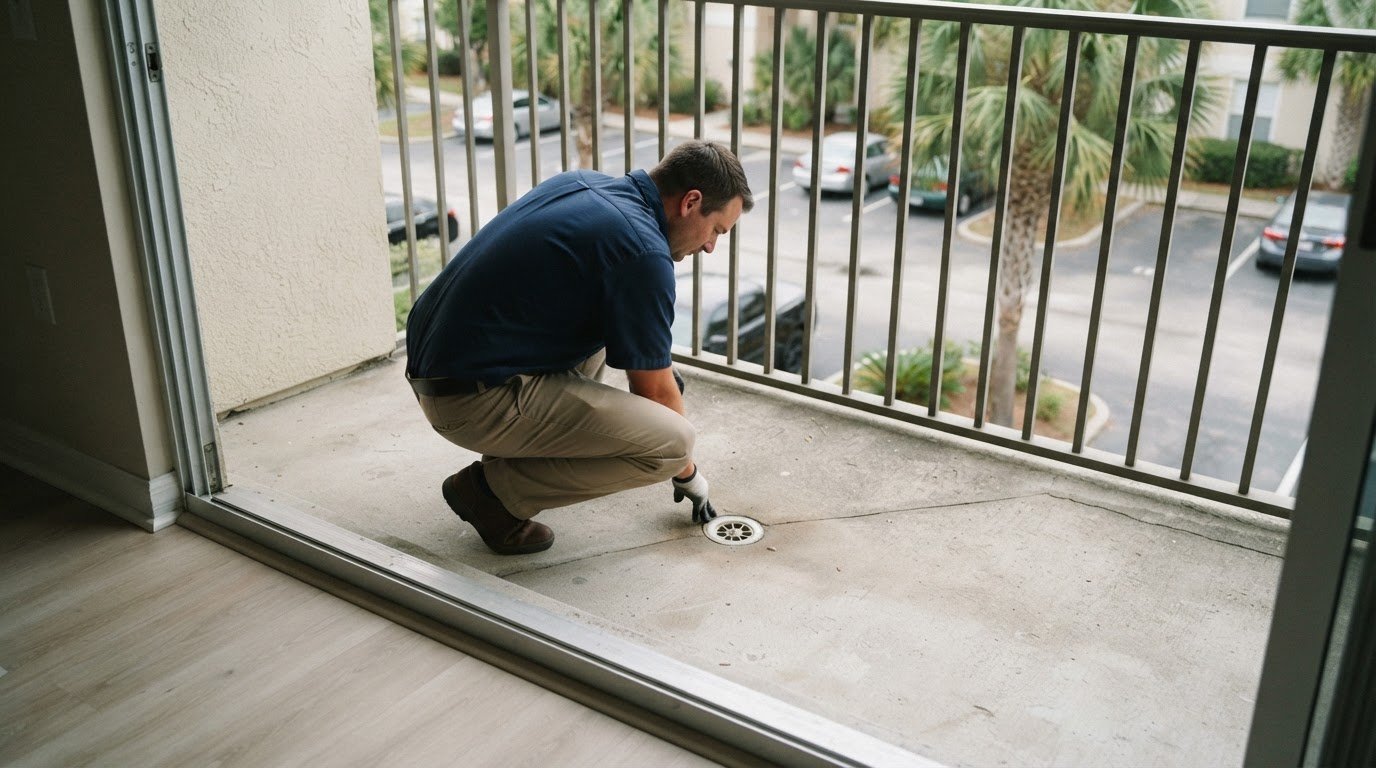
Our inspections are non-invasive evaluations of the home's accessible structure, systems, and components, delivered as a clear, photo-documented report. If you're ready to move, review the full scope on our full home inspection service page.
Watch out: skipping an inspection to keep an offer competitive is the single most expensive shortcut in a purchase. Condition problems surface after closing, when the cost is entirely yours.
Your Florida Home Inspection Checklist for This Property
A Florida home inspection checklist for a resale home covers the roof covering and drainage, exterior walls and grading, foundation, attic and insulation, plumbing supply and drains, water heater, electrical panel and wiring, heating and cooling equipment, interior rooms, windows, and the garage. Each item is inspected where it is safely accessible.
Use this checklist to prepare questions for your inspector:
Roof covering condition and visible flashing
Exterior siding, trim, and grading away from the foundation
Attic insulation and visible framing
Water heater age and visible connections
Electrical panel labeling and visible wiring type
Cooling and heating equipment operation
Plumbing fixtures and visible supply lines
Windows, doors, and interior moisture staining
Garage door operation and safety features
If the home is newer construction, an 11-month warranty inspection before the builder's first-year warranty ends is worth considering. It documents issues while the builder is still responsible for them.
Four-Point Inspection: What It Covers and When You Need One
A four-point inspection is a focused review of four systems: roof, electrical, plumbing, and heating and cooling. It is not a full home inspection and does not replace one.
If your insurer asks for a four-point inspection, our four point inspection Lynn Haven guide explains how to book one your carrier will accept.
Wind Mitigation Inspection: What Insurers Look For
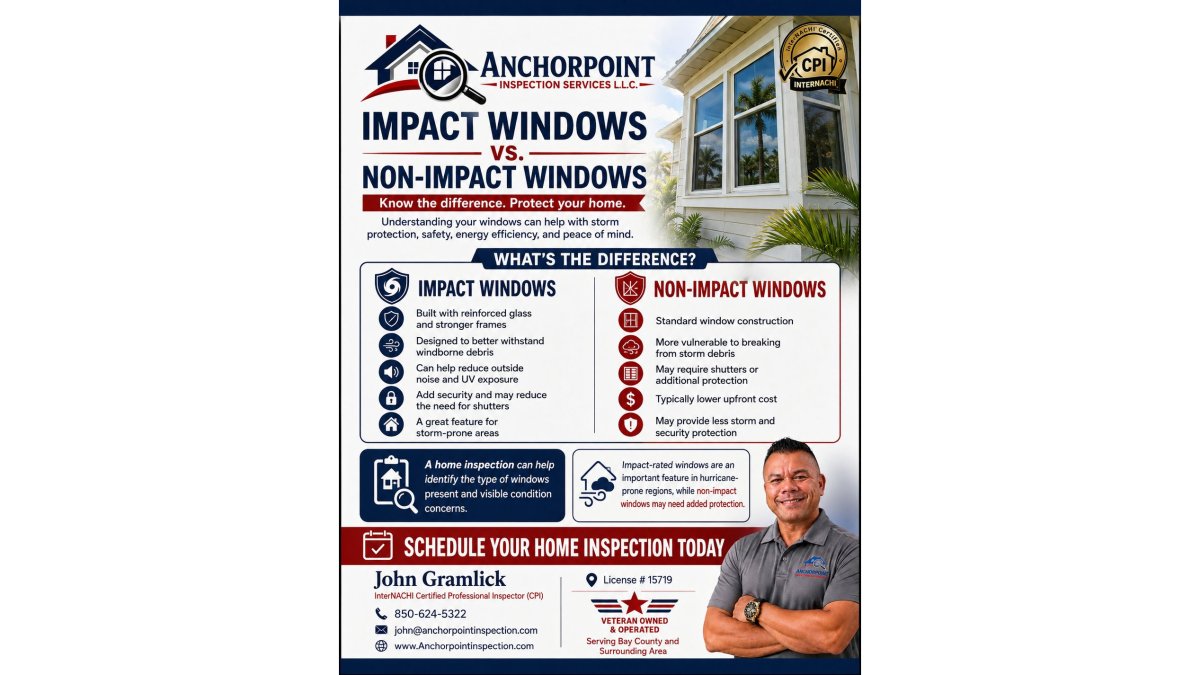
A wind mitigation inspection documents features that reduce wind damage risk: roof covering type, roof deck attachment, roof-to-wall connections, secondary water resistance, and opening protection. Insurers often use this report when evaluating windstorm credits on a policy.
Our wind mitigation inspection in Lynn Haven guide covers the current form and what each field means.
Neighborhood Due Diligence and Comparing Nearby Homes
Neighborhood due diligence covers what an inspection cannot: flood zone designation, school assignments, commute patterns, and how nearby homes actually sell.
Schools and services. School assignment boundaries change, and a listing site's school label is often stale.
Street and lot position. Two homes with identical square footage on the same street can carry very different values based on lot position. A corner lot has more exposure and often more traffic; a lot backing a busy road or a commercial parcel carries a different resale profile than an interior lot. Walk the lot lines and note what is directly behind, beside, and across from the home.
A repeatable comparison method. Rather than comparing against a single nearby listing, build a small comparison set: three to five homes in the same subdivision sold within the last twelve months, matched on interior square footage within a reasonable range, similar year built, and similar lot position. For each, record the sold price, the sold date, the days from original list to contract, and whether the price was reduced before sale. That four-column comparison tells you more about how the neighborhood actually prices than any single estimate.
Drive it twice. Visit the street at different times of day and on a weekend. Note traffic, parking, noise, and how well neighboring properties are maintained.
Once the neighborhood questions are settled, the remaining unknowns are about the house itself. For a local overview of what an inspection covers in this area, see our guide to home inspection in Lynn Haven, Florida.
Schedule Your Inspection Before You Close on Martingale Loop
The gap between what a listing page says and what a home actually needs is where buyers lose money. Close that gap before your contingency deadline, not after. Anchorpoint Inspection provides comprehensive, photo-documented home inspections across the Florida Panhandle, backed by InterNACHI certification, a Florida home inspector license, and a commitment to explaining every finding in terms you can act on. We also provide four-point and wind mitigation inspections when your insurer requires them.
Get started with Anchorpoint Inspection and walk into closing knowing exactly what you're buying.
Frequently Asked Questions
How can I find the current listing for 200 Martingale Loop?
Start with a search by the full property address, including the ZIP code 32444, on a major listing site, then cross-check the MLS number against a second source. Listing pages can lag behind reality, so call the listing agent or a local real estate office to confirm whether the home is still for sale, under contract, or off-market. If the home is not actively listed, ask a local agent to pull recent sold data for Martingale Loop so you can compare asking price, sale price, and days on market.
What should I review before buying a home on Martingale Loop?
Review the property details first: bedrooms, bathrooms, square footage, year built, lot size, and the floor plan. Then confirm the listing status and transaction history, and read the seller's disclosure carefully. Order a home inspection for buyers so you understand the condition of the roof, electrical panel, plumbing, and HVAC before you commit. A Florida home inspection checklist helps you track what has been verified and what still needs a professional opinion.
What is a four-point inspection, and do I need one for a Lynn Haven home?
A four-point inspection is a focused assessment of four systems: roof, electrical, plumbing, and HVAC. The inspector documents the age and condition of each system with photos. If you are buying an older home on Martingale Loop, ask your insurer whether a four-point inspection will be required so you can schedule it alongside your full home inspection.
What is a wind mitigation inspection, and how does it help with insurance?
A wind mitigation inspection documents features that help a home withstand high winds, such as roof shape, roof-to-wall attachments, secondary water barriers, and opening protection. Insurers may use the report when evaluating eligibility and possible discounts for verified features. The inspection is visual and non-invasive, and the report includes photos of each feature. Ask your insurer which form they accept before scheduling so the report matches their requirements.
Comments