

Hurricane Shutter Inspection Wind Mitigation: What Inspectors Check
Hurricane shutters are just one part of a wind mitigation inspection. A hurricane shutter inspection for wind mitigation documents whether mounting hardware is permanently installed around the openings, even if the shutters themselves are not in place. The inspection also reviews roof connections, roof-deck attachment, roof shape and covering, secondary water resistance, and other opening protection.
It’s reasonable to ask whether your home’s features will be recognized and what the inspection involves. A wind mitigation inspection records existing wind-resistant features for insurance purposes. It is not a pass-or-fail evaluation and does not guarantee a specific premium. The findings can help you understand how your home is documented and identify features that may matter when discussing coverage with your insurer. This article explains what inspectors look for in shutters and other parts of the home, what documentation can help, and how the report fits into the process.
Table of Contents
Why conduct a wind mitigation inspection?
A hurricane shutter inspection for wind mitigation documents features that can help a home withstand high winds. The inspector assesses the roof, walls, windows, doors, and related attachments, then records how those components may affect wind resistance. In Florida, insurers are required to offer wind mitigation discounts, and the report gives homeowners information to discuss with their insurer.
A wind mitigation inspection can be useful even when a home has no storm damage. It focuses on existing construction, not cosmetic condition or a pass-or-fail result. The findings show how roofing, roof-to-wall connections, and opening protection are documented, and can help you identify areas for proactive improvement. Whether features qualify for insurance savings depends on what the inspection records and the insurer’s rating process.
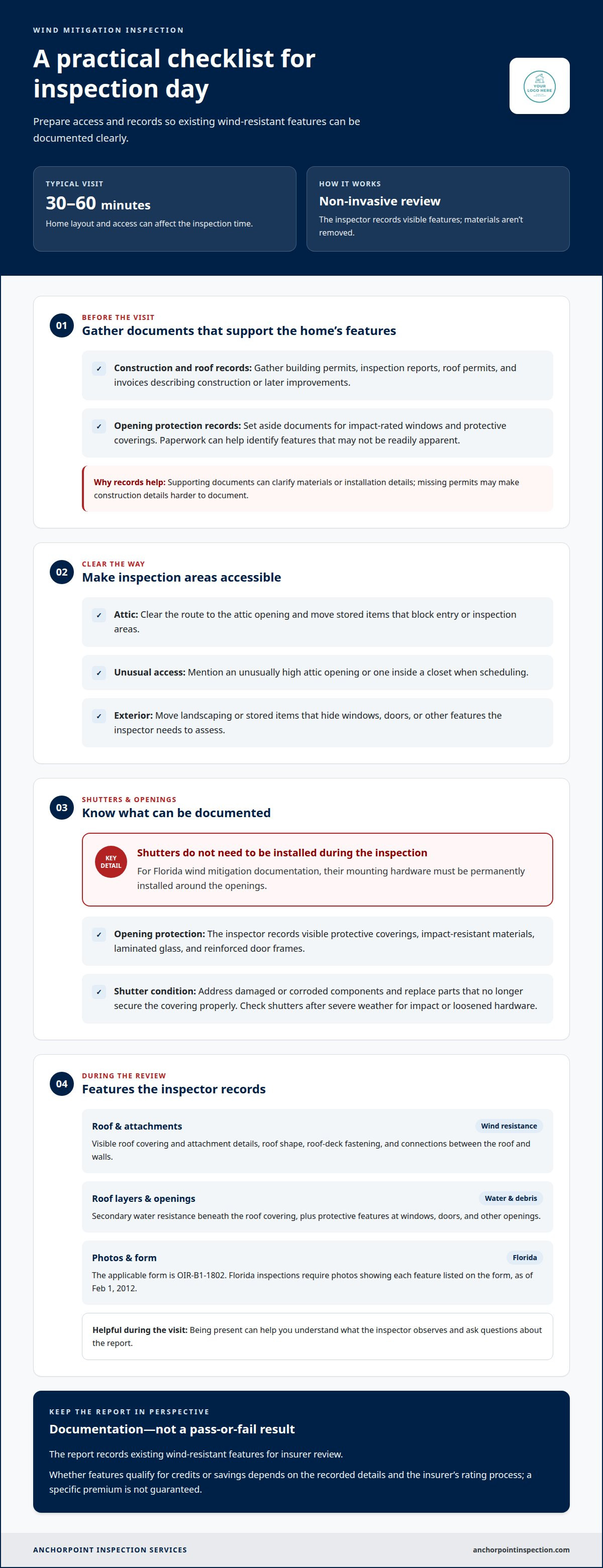
During the visit, the inspector reviews visible roof covering and attachment details, roof shape, deck fastening, and connections between the roof and walls. The inspector also assesses doors, windows, and other openings for protective features. The process is generally non-invasive: materials aren’t removed. The observations are recorded on the applicable inspection form, with photographs documenting listed features. A wind mitigation inspection typically takes 30-60 minutes, though the home’s layout and access can affect the visit.
Inspection pricing depends on factors such as location, property characteristics, and the inspection’s scope. The price for this service depends on the home and scope, and is provided after a quote request. A report can help clarify which existing features are recorded for insurance review. It doesn’t establish a guaranteed premium reduction, but it gives the insurer documentation to assess the home’s wind-resistant features.
For homeowners, the practical value is a clearer record of how the home is built. That information can support a coverage discussion and help prioritize improvements. A wind mitigation inspection is also useful when reviewing storm readiness, since the roof, attachments, and openings work together to resist wind and limit water intrusion.
Preparing for an inspection
Preparation helps the inspector access the features recorded on Florida’s wind mitigation form, OIR-B1-1802. The homeowner can gather building permits, inspection reports, roof permits, and invoices that describe construction or later improvements. For example, paperwork identifying impact-rated windows can help document opening protection. Insurance companies use the completed report to review a home’s documented wind-resistant features.
Access matters, too. If your home has an attic, the inspector needs access. Clear the route to the attic opening and move stored items that block entry or inspection areas. When the opening is unusually high or inside a closet, mention that when scheduling so the inspector can plan for access. Clear exterior areas where landscaping or stored items block windows, doors, or other features.
Gather permits and reports that describe roof work or construction.
Set aside invoices and documents for impact-rated openings or protective coverings.
Clear the attic access and pathways to areas the inspector must assess.
Remove exterior obstructions that hide windows, doors, or roof-related details.
Florida inspections also require photographs showing each feature listed on the form, as of Feb 1, 2012. The photos support the written documentation, so accessible views of relevant features help the inspector record them. Being present during the visit can help the homeowner understand what the inspector observes and ask questions about the report.
Weather can affect access to exterior areas, while missing permits may leave construction details harder to document. The inspection still assesses visible features, but supporting records can clarify materials or installation details that aren’t readily apparent. For a wind mitigation inspection, organized documents and clear access help keep the review focused on the home’s actual features.
Secondary water resistance and opening protection
Inspectors document how openings and roof layers help limit wind-borne debris and water intrusion. In Florida, this includes window and door protection, as well as secondary water resistance beneath the roof covering.
Shutters and Impact-Resistant Glazing
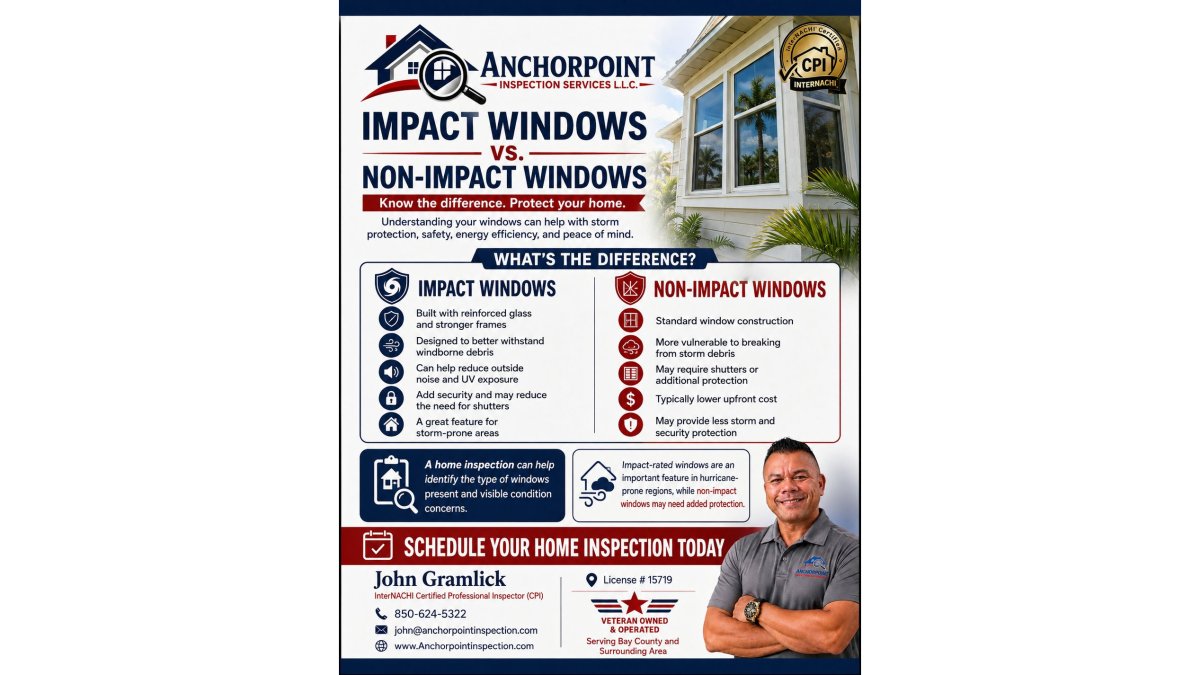
Hurricane shutters and impact-resistant glazing protect windows and doors from wind-borne debris during a windstorm. Inspectors document protective coverings, impact-resistant materials, and reinforced door frames as wind-resistant features. Laminated glass and impact-resistant windows provide another form of opening protection. These features matter because a breach can expose the home’s interior to severe weather and wind pressure.
Shutter Qualification for Wind Mitigation Credits
For Florida wind mitigation documentation, shutters are considered along with their permanently installed mounting hardware around openings. The shutters themselves do not need to be installed during the inspection, but the hardware must be permanently in place. Inspectors record visible opening protection on the applicable form. The report documents features for insurer review; whether they qualify for credits depends on the recorded details and the insurer’s rating process.
Shutter Inspection and Upkeep
Periodic inspection and maintenance help keep shutters and their attachments effective over time. An inspector can document visible conditions, including whether mounting hardware remains present around openings. Homeowners should address damaged or corroded components and replace parts that no longer secure the covering properly. Check shutters after severe weather, since impact or loosened hardware may affect their condition and use.
Opening protection works alongside secondary water resistance. Inspectors assess whether the roof includes self-adhering underlayment, which can act as a secondary barrier against water entering through the roof. They also review the roof covering and related components for conditions that affect wind resistance. Together, these observations provide a more complete picture than shutters alone: protected windows and doors address debris exposure, while roof layers help limit water intrusion if the covering is compromised.
Hurricane shutters and wind-borne debris protection
Storm shutters are one form of opening protection against wind-borne debris. Inspectors document how openings are protected and record visible features for the wind mitigation report.
Opening Protection Against Wind-Borne Debris
Opening protection means shutters or impact-resistant materials protect windows and doors from wind-borne debris. This matters because a breached opening can expose a home to wind damage during storms. An inspector records the protection present at each opening, including storm shutters and impact-resistant glazing. The report describes existing features; it does not guarantee insurance savings or prevent damage.
Shutters also depend on their mounting hardware. In Florida, shutters do not need to be installed during the inspection, but the hardware must be permanently installed around the openings. This distinction helps document protection even when removable panels are stored away. The report shows insurers which features were observed for premium consideration.
Shutter Ratings and Testing Standards
A shutter’s wind-pressure rating describes its tested resistance to wind forces, while testing standards define how that performance is evaluated. The inspection documents visible opening protection and related features; it is not a product test and does not assign a rating. The inspection alone cannot establish one pressure rating for every shutter and opening.
Product records can help identify a shutter’s rating and testing details. Inspectors document the home’s existing features, while insurers assess the report under their applicable rating process. Keep product documentation with your other home records, especially after updating shutters or opening protection. This supports a clearer review of improvements that may relate to discounts and insurance premiums.
Opening protection is only one part of wind mitigation. Roof attachments, roof covering, and secondary water resistance also contribute to the report’s picture of wind-resistant features. A 4-Point Inspection serves a different purpose, focusing on key property systems rather than documenting the home’s full wind mitigation features. Understanding that distinction helps homeowners choose the assessment that matches their insurance or property needs.
For a closer review of key property systems, explore a 4-Point Inspection.
Anchorpoint Inspection Services: Wind Mitigation Inspection
Anchorpoint Inspection Services provides Wind Mitigation Inspections to document a home’s wind-resistant features for insurance review. Consider this inspection when you need a report documenting features such as roof attachments, roof covering, and opening protection. The findings can help you understand what was recorded and support a discussion with your insurance company.
A Wind Mitigation Inspection focuses on wind resistance, while a Comprehensive Home Inspection evaluates the property more broadly. A 4-Point Inspection addresses key home systems for insurance purposes. Choosing the assessment that fits your immediate need helps keep the inspection focused and useful.
For a clear record of your home’s wind mitigation features, contact Anchorpoint Inspection Services to discuss a Wind Mitigation Inspection.
Make Your Next Wind-Readiness Decision
Your next step can be a clearer plan for the home, not simply a completed report. Treat a hurricane shutter inspection for wind mitigation as a useful reference for future property decisions. Keep the findings with your home records so they can inform later conversations about coverage, maintenance, or planned improvements.
If you change the roof or opening protection, preserve related paperwork and photos. These records can help explain what has changed since the inspection and make future reviews easier to follow. A measured approach keeps decisions grounded in the features your home actually has, rather than assumptions about how it may perform.
Anchorpoint Inspection Services offers Wind Mitigation Inspection, Comprehensive Home Inspection, and 4-Point Inspection services to support different property needs. Choose the assessment that matches the decision in front of you, whether you’re documenting wind-resistant features or seeking a broader view of the home.
Contact Anchorpoint Inspection Services to discuss the inspection that fits your next step. A clear record can help you move forward with greater confidence.
Frequently Asked Questions
How can I improve my wind mitigation report?
Make sure the inspection record reflects your home’s actual features and available supporting documents. Keep permits and invoices for roof work, opening protection, or other wind-resistant improvements with your property records. If a feature has changed since an earlier report, tell the inspector so the current condition can be documented. The report records observed features; it does not prescribe upgrades or guarantee a particular insurance outcome.
What Does an Inspector Check?
A wind mitigation inspector checks features that affect a home’s ability to resist wind, including roof shape, roof covering, deck attachment, and roof-to-wall connections. The inspector also documents opening protection, such as shutters or impact-resistant glazing, and secondary water resistance. For example, a visible strap connecting roof framing to a wall is recorded as an attachment feature. The inspection focuses on construction features, not cosmetic finishes.
What is Windstorm Mitigation?
Wind mitigation describes construction features and improvements intended to reduce a home’s vulnerability to wind and related damage. In a residential inspection, these features can include roof connections, roof-deck fastening, protected openings, and secondary water resistance. The assessment documents what is present, helping homeowners understand their home’s wind-resistant characteristics. Unlike a general property condition review, it focuses specifically on wind mitigation features.
What states offer discounts and incentives for wind mitigation?
Florida requires insurers to offer discounts for qualifying wind mitigation features. Louisiana, Texas, and South Carolina may also offer discounts or incentives for wind-resistant features. The programs and qualifying improvements differ by state. For example, coastal parts of Texas require windstorm inspections before certifying a new building, while insurance incentives depend on the state’s applicable program and the home’s documented features.
What’s the process when a professional performs a wind mitigation inspection?
The inspector reviews the home’s wind-resistant construction, documents applicable features, and completes the relevant inspection form. The review can include roof geometry, covering, attachment methods, opening protection, and secondary water resistance. In Florida, the inspector photographs features listed on the form. Anchorpoint Inspection Services provides Wind Mitigation Inspections in Lynn Haven, Panama City, Panama City Beach, Callaway, Southport, Mexico Beach, Port St. Joe, and surrounding communities.
What documents and photos are needed for a wind mitigation inspection?
Useful records include building permits, inspection reports, roof permits or invoices, and paperwork identifying impact-rated openings. These documents can help explain construction details that aren’t obvious during a visual review. Florida’s form is the OIR-B1-1802, and the inspection includes photographs of each feature listed on the form. Homeowners don’t need to create those inspection photos themselves; the inspector documents the features during the visit.
Comments