

New Build Final Inspection in Fort Walton Beach
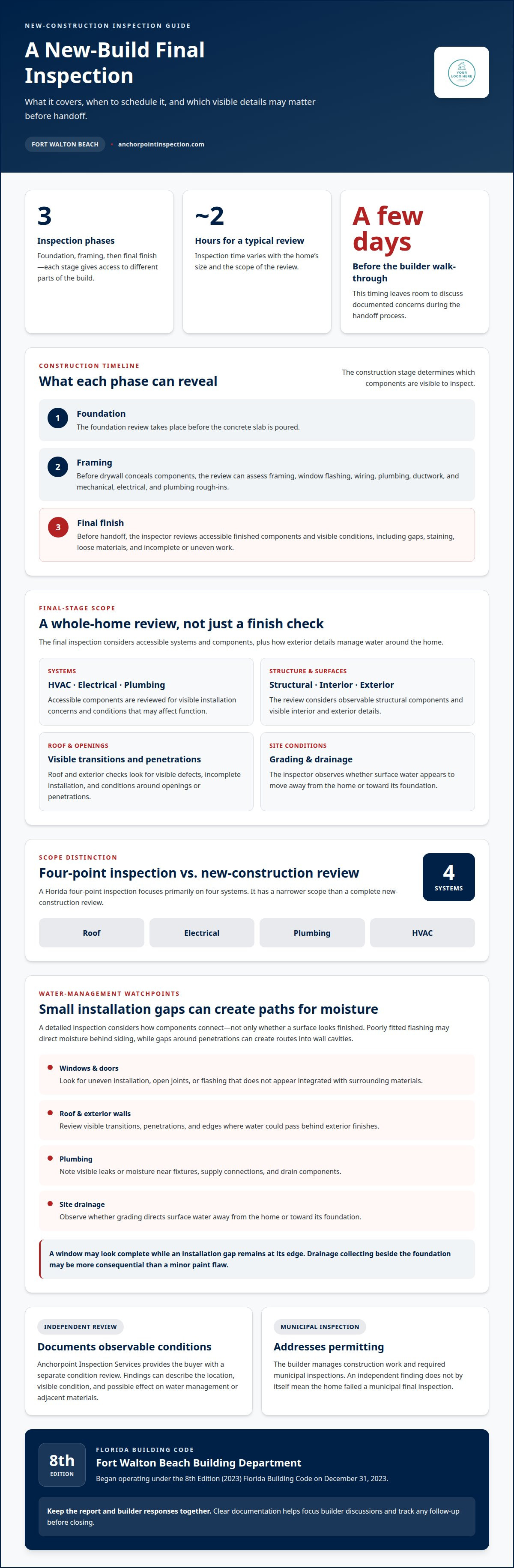
A completed home can still have issues worth addressing before handoff. A new-build final inspection in Fort Walton Beach reviews accessible HVAC, electrical and plumbing systems, structural components, interior and exterior details, grading, and drainage. It can also identify visible installation concerns that may allow water intrusion or create safety or structural risks.
It’s reasonable to expect a new home to be ready to live in, but fresh finishes don’t always reveal what’s behind them or how well key components work. This guide explains what a final inspection can assess, why details such as flashing and drainage matter, and how documented findings can help you discuss concerns with the builder before closing. You’ll also learn how the final phase fits into new-construction inspections and what to expect when arranging a professional review.
Table of Contents
New-construction inspections in Fort Walton Beach, Navarre, and Crestview
New-construction inspections examine a home at key stages, from foundation work through final finishes. A new-build final inspection in Fort Walton Beach helps identify visible concerns before the builder walk-through.
Independent New-Home Inspections
An independent inspection by Anchorpoint Inspection Services gives buyers a separate assessment of construction quality and observable conditions. It can also apply to renovated homes, where new work may meet older systems or materials. The inspector’s review complements, but does not replace, municipal building inspections. Useful scope details include the construction stage, access to relevant areas, and whether the review covers new construction or renovation work.
To coordinate the inspection with a Fort Walton Beach or Okaloosa County project, arrange access with the inspector and align it with the construction timeline. The phase matters: foundation checks occur before the concrete slab is poured, while framing reviews occur before drywall conceals components.
Final Inspection Responsibilities
The builder manages construction work and required municipal inspections; Anchorpoint Inspection Services provides the buyer with a separate condition review. These roles serve different purposes. A municipal inspection addresses permitting, while an independent review documents observable concerns throughout the home. Share findings with the builder early to allow time for discussion before closing.
An independent finding doesn’t by itself mean the home failed a municipal final inspection. If the city identifies an outstanding item, the builder addresses it through the construction process before the item is cleared. Keep the report and builder responses together to track the issue and any follow-up.
Scheduling and Inspection Timing
Schedule a new-build final inspection in Fort Walton Beach a few days before the builder walk-through. This allows time to discuss documented concerns while the home is still in the handoff process. A new-construction inspection from Anchorpoint Inspection Services typically takes two hours, depending on the home’s size and inspection scope.
New-construction inspections typically follow three phases: foundation, framing, and final finish. At the final stage, the review considers HVAC, electrical, plumbing, structural components, interior and exterior details, grading, and drainage. Fort Walton Beach’s Building Department began operating under the 8th Edition (2023) Florida Building Code on December 31, 2023. A completed home gives the inspector access to finished components and visible conditions before handoff.
Improper installation that may cause water intrusion
Water intrusion can begin at small gaps where exterior components meet. On the Emerald Coast, a new home’s inspection should consider how windows, doors, roofs, and wall openings shed water. Poorly fitted flashing may direct moisture behind siding instead of away from the structure. Gaps around penetrations can also create routes into wall cavities, where damage may remain hidden after finishes are installed.
Timing affects what an inspector can observe. Before drywall, a framing inspection can assess window flashing, electrical wiring, plumbing, framing components, ductwork, and mechanical, electrical, and plumbing rough-ins. This view helps connect installation details with surfaces that will later conceal them. At the final stage, an inspector reviews accessible finished areas for signs of incomplete or uneven work, such as visible gaps, staining, or loose materials.
Windows and doors: Look for uneven installation, open joints, or flashing that does not appear integrated with surrounding materials.
Roof and exterior walls: Review visible transitions, penetrations, and edges where water could pass behind exterior finishes.
Plumbing: Note visible leaks or moisture near fixtures, supply connections, and drain components.
Site drainage: Observe whether grading directs surface water away from the home or toward its foundation.
These examples show why a detailed inspection considers how components connect, not just whether a surface looks finished. A window can appear complete while an installation gap remains at its edge. Drainage that collects beside the foundation can be more consequential than a minor paint flaw. The inspector documents observable conditions and explains how their location, extent, or surrounding materials affect their significance.
For Florida buyers, clear documentation makes builder discussions more focused. A report can identify a finding’s location, describe the visible condition, and explain its possible effect on water management or adjacent materials. This gives the builder a specific item to review and helps distinguish installation concerns from routine finish observations.
Roof, HVAC, electrical, plumbing, foundation, and appliance checks
A thorough final review considers how major systems operate and how visible components are installed. The inspector examines the roof and exterior for observable damage, then reviews accessible HVAC, electrical, and plumbing components. A Florida four-point inspection focuses primarily on those four systems: roof, electrical, plumbing, and HVAC. It has a narrower scope than a complete new-construction review.
Roof and exterior: The inspector looks for visible defects, incomplete installation, and conditions around roof penetrations or exterior openings.
HVAC and mechanical: The review considers accessible equipment, ductwork, and visible installation concerns that may affect operation.
Electrical: The inspector checks accessible components and notes visible concerns, such as exposed wiring or incomplete finish work. Fort Walton Beach adopted the 2020 National Electrical Code (NFPA 70), effective December 31, 2023.
Plumbing and appliances: Accessible fixtures and connections are reviewed for visible leaks, while installed appliances are observed in operation where possible.
Foundation: A foundation-phase inspection can assess grading and drainage, reinforcing bar, and the placement of tension cabling in post-tensioned construction.
Mechanical, electrical, plumbing, and gas work may involve separate trade-permit reviews during construction. An independent inspection documents observable conditions; it does not replace municipal permit approvals. Buyers can use the report to distinguish a visible installation concern from a permit-status question and direct each item through the appropriate construction channel.
Plan handling also affects the municipal process. Fort Walton Beach stopped accepting paper plans in May 2022, so construction plans are submitted electronically. That process concerns plan review, while a final home inspection concerns accessible, completed conditions. Keeping those roles distinct helps clarify whether a concern relates to an installation, a system’s visible condition, or project documentation. Together, these checks give buyers a structured view of the roof, major systems, foundation, and installed appliances before handoff.
Cosmetic defects versus safety and structural concerns
A visible finish flaw and a structural concern need different attention. Small paint skips, uneven caulking, or a cabinet door that rubs may be cosmetic. A gap around an exterior opening can matter more if it leaves a path for water. The inspector records each condition and its location, then explains its possible effect.
Structural concerns relate to how components support or enclose the home. Examples include visibly damaged framing, movement around a structural connection, or grading that directs water toward the foundation. A crack alone doesn’t establish a structural defect. Its location, pattern, and relationship to nearby surfaces help determine how the finding should be described.
Cosmetic: A paint blemish, chipped trim, or uneven finish that doesn’t appear to affect operation or protection.
Functional: A sticking door, loose handrail, or fixture that doesn’t operate as intended.
Safety-related: Exposed wiring or a loose stair rail that may create a direct hazard.
Potentially structural: Visible movement, damaged support components, or water collecting beside the foundation.
Drywall changes what an inspector can observe. Before installation, framing and rough-in components are more accessible; afterward, the inspector evaluates visible surfaces and accessible areas. A final review cannot see through finished walls, so the report should distinguish observed conditions from concealed construction. For example, a stain on drywall is visible evidence of moisture, but it doesn’t identify the source by itself.
For a useful builder discussion, organize findings by location and impact. A cosmetic paint touch-up can be listed separately from a loose railing or a suspected drainage concern. Clear descriptions help prioritize follow-up without treating every finish imperfection as a structural failure. A 4-Point Inspection focuses on the roof, electrical, plumbing, and HVAC systems, not every finish or structural component.
If your concerns center on those four systems, schedule a 4-Point Inspection for a focused review.
Anchorpoint Inspection Services
Anchorpoint Inspection Services helps buyers understand visible conditions before a new-home handoff. John Gramlick III, a licensed Florida home inspector and InterNACHI® Certified Professional Inspector, provides a clear digital report with photos of inspected systems and components. The inspection follows the Home Inspection Standards of Practice and Code of Ethics. It’s a practical choice when you want an independent review of accessible components, not just a walkthrough focused on finishes.
The findings can help you distinguish a cosmetic touch-up from an issue involving system operation, water management, or structural components. That context makes it easier to organize questions and understand which items may need follow-up before closing. An inspection supports your decision-making; it does not replace the builder’s responsibilities or municipal inspections.
For a clear, independent review of your new home, contact Anchorpoint Inspection Services.
Plan Your Next Step Before Handoff
A new-build final inspection in Fort Walton Beach can give you an independent basis for deciding what to discuss with the builder. Use the findings to set priorities, keep a record of follow-up items, and make informed choices about the home’s ongoing care. The right inspection scope depends on the questions you need answered: a Comprehensive Home Inspection supports a broad evaluation, while Wind Mitigation and 4-Point Inspections address more specific needs.
Clear documentation can make the transition from construction to ownership more organized. It gives you a practical reference as you plan maintenance and review outstanding concerns, without treating every observation as equally urgent.
Contact Anchorpoint Inspection Services today to discuss an inspection that fits your next step. A thoughtful review can help you move into ownership with greater clarity.
Frequently Asked Questions
What does a final inspection for a new-build home in Fort Walton Beach include?
A final inspection reviews accessible parts of the completed home, including major systems, structure, finishes, and exterior conditions. The inspector documents observable concerns and their locations so buyers can discuss specific findings during handoff. For example, a report can distinguish an appliance that does not operate from a cosmetic finish flaw, helping the builder understand what needs attention.
What permits and inspections are required before new-build final approval in Fort Walton Beach, Florida?
Required municipal approvals depend on the permitted project and its approved plans. New-home construction inspections proceed through foundation, framing, and final-finish phases, with the city’s building process addressing permitted work. Fort Walton Beach permits are valid for 180 days from issuance, and each passed inspection extends validity by 180 days from the inspection date. Keep permit records and inspection results together.
What are common defects found during new-home final inspections in Florida?
Common observable findings include incomplete finishes, doors or windows that don’t operate smoothly, visible plumbing leaks, loose components, and gaps around exterior openings. A final review may also note drainage concerns or installation details that could affect water management. Significance depends on the defect’s location and effect: a paint blemish differs from a loose stair rail or water collecting beside the home.
What documents and utilities must be ready for a new-build final inspection?
Keep the project’s permit records, approved plans, and builder documentation available, especially records of construction changes. Ensure the inspector can access rooms, installed equipment, and service areas. Operating utilities allow systems and appliances to be observed in use, where applicable. If an item cannot be operated or accessed, the report can distinguish that limitation from a defect found during the inspection.
Should I hire an independent inspector in addition to the municipal final inspection?
An independent inspection adds a buyer-focused review alongside the municipal inspection because the two serve different purposes. Municipal inspectors review work through the city’s permitting process; an independent inspector documents observable conditions for the buyer. For example, a report can organize finish concerns and system observations into clear items for discussion with the builder. It doesn’t replace municipal approvals or determine whether the city has approved the project.
What happens if a new construction home fails its final inspection in Fort Walton Beach?
If the city identifies an outstanding item, the builder addresses it through the construction process before it is cleared. An independent inspection finding does not by itself mean the home failed the municipal final inspection.
Comments