

Opening Protection Wind Mitigation Reports in Panama City and Insurance Credits
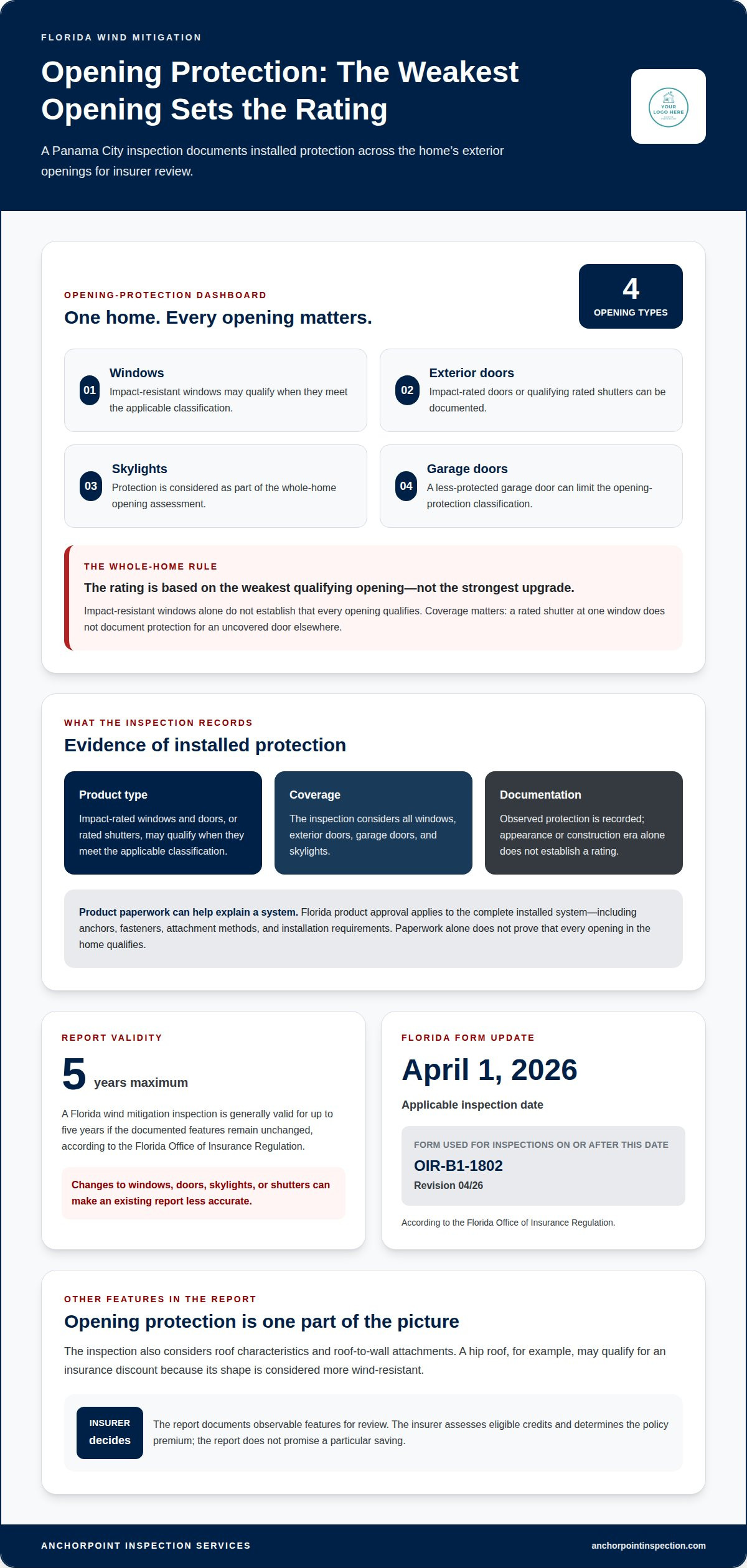
The least-protected exterior opening can affect the opening-protection credit recorded in a wind mitigation report. In Florida, the inspection documents openings such as windows, doors, skylights, and garage doors. The opening-protection rating is based on the weakest qualifying opening. An opening protection wind mitigation report in Panama City records which protective features are present in your home.
It’s natural to want to know what an inspection covers and whether the report could support insurance credits. The result depends on the home’s documented wind-resistant features, so a thorough inspection helps clarify what is in place.
This article explains how opening protection is evaluated, which other wind-mitigation features may matter to Panhandle homeowners, and how to arrange an inspection around Panama City. You’ll also learn what happens after the report is completed and submitted to your insurer.
Table of Contents
What's Documented During a Wind Mitigation Insurance Inspection?
A wind mitigation inspection records a home’s wind-resistant features, including protection at exterior openings. The report gives the insurer information to assess opening-protection credits.
Protected Exterior Openings
Protected exterior openings include windows, exterior doors, skylights, and garage doors. The inspection documents protection at these openings because one weaker opening can affect the home’s opening-protection classification. For example, impact-resistant windows alone do not establish that every opening qualifies if a garage door or skylight has less protection.
Do all exterior openings need protection to qualify for a wind mitigation credit? The form evaluates every exterior opening, and the credit is based on the weakest qualifying opening. A less-protected opening can therefore limit the classification, even when other windows or doors have stronger protection.
Qualifying Opening Protection
Qualifying opening protection can include impact-resistant windows and doors or rated shutters that meet the classification recorded during the inspection. The report documents the observed protection rather than treating all shutters or resistant glazing as equivalent. This helps the insurer assess the protection level supported by the home’s features.
What types of windows, doors, and shutters qualify as opening protection? Impact-rated windows and doors, along with rated shutters, may qualify when they meet the applicable classification. The inspection records evidence and coverage at the openings rather than assuming a product’s appearance or the home’s construction era establishes its rating.
Coverage matters as much as product type. An inspector considers all windows, exterior doors, garage doors, and skylights, then records the weakest qualifying opening. A rated shutter protecting one window does not document protection for an uncovered door elsewhere. This whole-home assessment explains why a report may show a lower classification than expected based on one upgraded opening.
A Florida wind mitigation inspection is generally valid for up to five years if documented features remain unchanged, according to the Florida Office of Insurance Regulation. If windows, doors, skylights, or shutters change after the inspection, the existing report may no longer accurately describe the openings. An up-to-date record gives the insurer a clearer account of the protection in place.
Wind mitigation benefits for Florida Panhandle homeowners
A wind mitigation report gives Florida homeowners a structured record of features that can reduce wind damage. Alongside opening protection, the inspection considers roof characteristics and roof-to-wall attachments. For example, a hip roof may qualify for an insurance discount because its shape is considered more wind-resistant. The report connects observable construction features with information an insurer can use to assess eligible credits.
Florida’s standardized inspection form organizes those observations. According to the Florida Office of Insurance Regulation, wind mitigation inspections performed on or after April 1, 2026, use form OIR-B1-1802, Rev. 04/26. This revision matters because a report needs to reflect the applicable form, rather than relying on earlier paperwork. In Panama City, the inspection records the home’s features for the insurer’s review; it does not set the policy premium.
Product documentation can help explain the opening-protection system observed during an inspection. Florida product approval applies to the complete installed system, including anchors, fasteners, attachment methods, and installation requirements. For example, documentation for rated shutters can explain how the product is intended to attach. The report should still reflect the protection installed at the home, not treat product paperwork alone as proof that every opening qualifies.
How long is a Florida wind mitigation report valid for insurance purposes? It is generally valid for up to five years from the inspection date if the documented features remain unchanged, according to the Florida Office of Insurance Regulation. Renovations or replaced windows, shutters, or roof components can make an older report less representative of the property.
If an opening-protection finding seems inaccurate, an inspector can revisit the opening, document its installed protection, and prepare an accurate report. The insurer reviews that documentation and decides whether to change its records or credits. For example, evidence of a rated shutter or impact-resistant window may clarify what was present during the inspection. The report provides findings for review, but the insurer makes the decision.
Potential insurance premium credits and savings
A wind mitigation report documents features an insurer can consider when assessing insurance credits. An opening-protection wind mitigation report for a Panama City home records how the documented features contribute to the overall assessment. Credits depend on the home’s documented protection and the insurer’s rating process, so the report records evidence rather than promising a particular premium.
Wind Mitigation Insurance Credits
Wind mitigation credits are premium reductions associated with qualifying wind-resistant features documented in an inspection report. Florida homeowners may receive credits for features such as roof covering, roof shape, roof-to-wall connections, and opening protection. The report gives the insurer information to evaluate these features together, rather than relying on one upgrade alone.
Florida insurers are required to apply corresponding discounts for qualifying wind-resistant features once a report is on file. The amount varies with the home’s characteristics and insurer. Florida estimates place potential wind mitigation premium reductions at 10% to 40%, depending on those factors.
Opening Protection and Premium Discounts
Opening-protection findings affect discounts by documenting the protection level across a home’s exterior openings. The weakest qualifying opening can influence the recorded classification, so impact-resistant windows alone may not establish the same protection level if another opening has less protection. Accurate documentation helps the insurer assess the features present.
How do opening protection findings affect homeowners insurance discounts in Florida? The report documents whether windows, doors, skylights, and garage doors have qualifying protection, and the insurer uses those findings to assess eligible credits. A licensed inspector’s report can help verify what is installed, but the insurer determines the resulting premium.
Roof features also shape the overall assessment. A new roof may make a Florida home more likely to qualify for wind mitigation credits, while a hip roof may qualify for a roof-shape discount. Florida’s hip-roof criterion requires that no other roof shape account for more than 10% of the perimeter. These roof details complement, rather than replace, opening-protection documentation.
After the inspection, submit the completed report to your insurer so it can assess eligible features and apply any applicable credits. If an opening-protection finding is inaccurate, an inspector can document the observed condition in an accurate report. An opening-protection wind mitigation report for a Panama City property gives the insurer clearer information to review, without guaranteeing savings.
Wind mitigation services in Panama City and surrounding areas
In Panama City, a wind mitigation inspection can be performed on its own or alongside a general home inspection or 4-point inspection. This flexibility helps homeowners match the appointment to an insurance review, home purchase, or broader property evaluation. The report documents wind-resistant features for the carrier, rather than assessing only one upgrade.
For a coastal home near Panama City Beach, the inspection can document opening protection and roof features together. Impact-resistant windows, rated shutters, roof covering, and roof-to-wall attachments describe different parts of the home’s wind resistance. A hurricane-rated feature at one opening does not document protection throughout the property. The inspection is useful because it records the features present across its scope.
How can I choose a licensed wind mitigation inspector in Panama City or Bay County? Choose a licensed inspector who evaluates the relevant wind-mitigation features and prepares a report for insurance review. A typical inspection for an average home takes under an hour, though the property and inspection scope shape the visit.
Florida Building Code context can help explain a home’s construction, but the report documents observable features rather than assuming protection based on age alone. For example, the inspector records the actual roof covering and opening-protection details. The insurer then uses the report to assess eligible credits. Clear documentation helps distinguish installed hurricane protection from features that only appear similar.
Some homeowners arrange wind mitigation as a standalone inspection; others combine it with a general home or 4-point inspection. A combined visit can make sense when the insurance review also requires information about major home systems. The right scope depends on the reader’s immediate need, such as documenting wind-resistant features or completing a wider property review.
For a focused review of your home’s wind-resistant features, schedule a wind mitigation inspection.
Anchorpoint Inspection Services: Wind Mitigation Inspection
Anchorpoint Inspection Services provides Wind Mitigation Inspections to document the wind-resistant features of homes around Panama City. This service is useful when you need a report for an insurance review or want a professional record of features such as opening protection and roof attachments.
The inspection can also be arranged alongside a Comprehensive Home Inspection or 4-Point Inspection when a broader property assessment fits your needs. For a newer home approaching the end of its builder warranty period, an 11 Month Warranty inspection addresses a different purpose: identifying potential builder defects.
A clear report gives your carrier information to assess, while the carrier determines any eligible credits. If you’re ready to arrange a wind mitigation inspection, contact Anchorpoint Inspection Services.
Keep Your Home Records Ready for What Comes Next
Home improvements often happen in stages, so consider how each project affects the information used for future insurance decisions. Before replacing windows, changing exterior doors, or updating roof components, keep product and installation records together. Clear records help the inspector understand what has changed and document the home accurately.
An opening protection wind mitigation report in Panama City is most useful when it reflects the home as it stands today. If you’re planning updates, an inspection can provide a practical reference for your next conversation with your insurer. The report supports that conversation, while the insurer evaluates your policy and applicable credits.
For help arranging an inspection or deciding which property evaluation fits your needs, contact Anchorpoint Inspection Services. A clear next step can make it easier to manage your home information with confidence.
Frequently Asked Questions
What Is Opening Protection?
Opening protection refers to a system or feature intended to protect a building’s exterior openings from wind-borne debris and wind pressure. Examples include impact-rated glazing and rated shutters covering windows or doors. In a Panama City home, protection may vary from one opening to another, so identifying the installed feature at each location helps clarify what the property has.
What is opening protection in a Florida wind mitigation report?
In a Florida wind mitigation report, opening protection describes the qualifying protection documented for exterior openings. The report records how the home’s openings are protected for the insurer’s review. For example, it can distinguish impact-resistant glazing from shutters covering an opening. The report documents observed features, and the insurer uses that information when assessing the policy.
What opening protection rating levels are listed on Florida Form OIR-B1-1802?
Florida Form OIR-B1-1802 identifies Class A as hurricane-rated opening protection and Class B as intermediate protection. These classifications describe protection levels, not a ranking of brands or materials. The form’s result depends on the qualifying features documented at the home, so a homeowner should read the recorded class alongside the inspection findings rather than infer it from one product.
What documentation may a professional inspector need to verify opening protection in Panama City?
An inspector may use visible product labels, product approval documents, and installation details to identify the protection system. Florida product approval applies to the installed system, including anchors, fasteners, attachment methods, and installation requirements. For example, shutter documentation can help clarify how the product was designed to attach. These materials support the inspection record, but do not replace observing the installed opening.
What are the Florida Building Code requirements for opening protection in Panama City?
Florida Building Code requirements depend on the opening and the protection level being claimed. Non-glazed openings must meet applicable Florida Building Code wind-pressure requirements to qualify for the claimed protection level. Product approval applies to the complete installed system, including its attachment. A report documents observed conditions, while code-compliance questions about a specific alteration depend on its project details.
How do impact-rated windows compare with hurricane shutters for wind mitigation credits and cost?
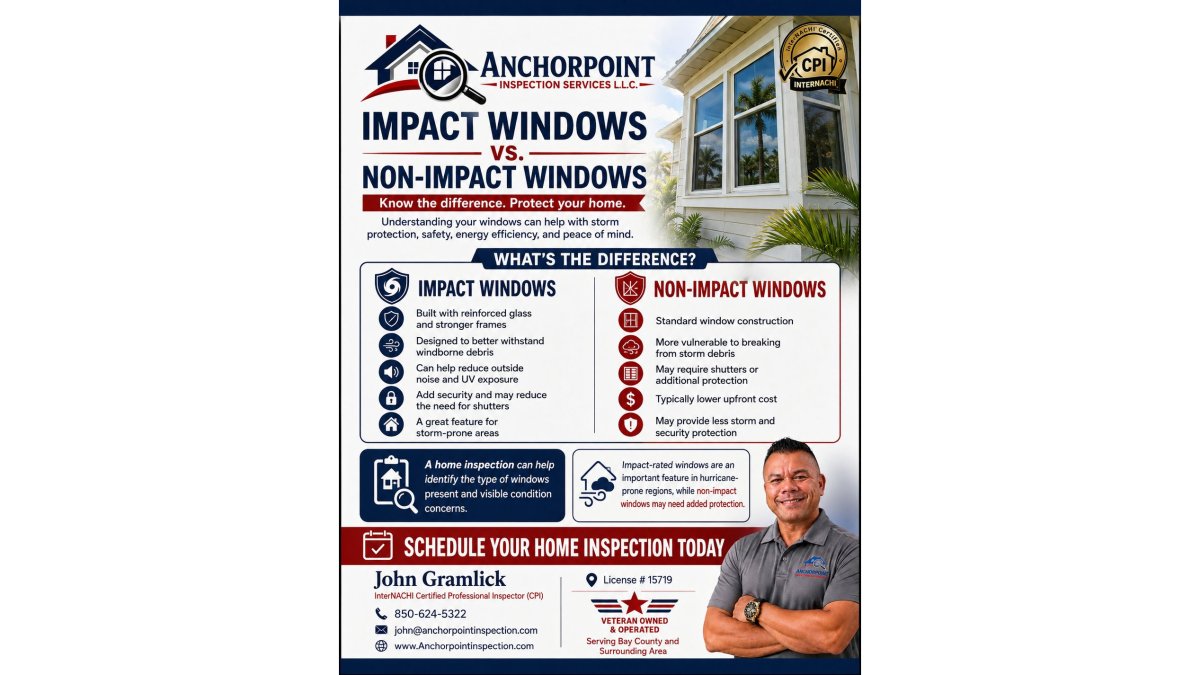
Impact-rated windows and rated hurricane shutters can both qualify as opening protection when they meet the applicable classification. Wind mitigation credits depend on documented protection, not simply on choosing windows over shutters. Costs vary with the product, number and size of openings, and installation needs. The home’s weakest qualifying opening can also affect its recorded protection class and credit assessment.
Comments