

Pre-Purchase Home Inspection Checklist Florida: Complete 2026 Buyer Guide
Updated: Oct 3
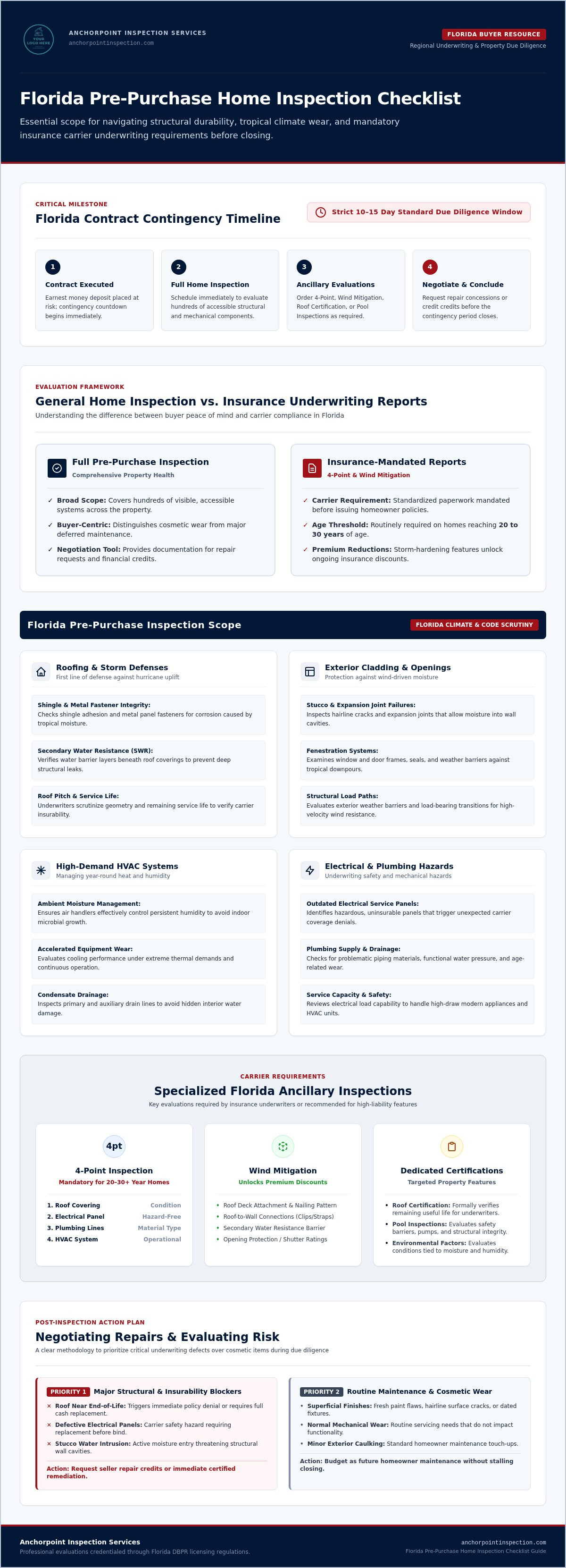
In Florida, a house can easily pass a casual open-house walkthrough and still prove uninsurable just days before closing. Buying property here comes with unique pressures, from rigorous wind-resistance standards and intense humidity to tight due diligence windows that leave no room for guesswork. You shouldn't have to wonder whether an aging roof covering, an outdated electrical panel, or hidden storm damage will trigger an unexpected insurance denial. That is why working through a dedicated pre-purchase home inspection checklist Florida buyers can rely on is the smartest way to protect your investment.
This 2026 guide equips you with a methodical, Florida-specific inspection checklist designed to identify costly structural defects, mechanical hazards, and carrier roadblocks before you finalize your purchase. We will break down key climate-resilience factors, clarify the essential differences between full evaluations and insurance-mandated 4-point or wind mitigation inspections, and give you the clarity needed to negotiate repair credits with confidence.
Table of Contents
Florida Pre-Purchase Home Inspection Checklist: Essential Scope for 2026 Buyers
Exterior and Structural Systems: Assessing Roofs, Envelopes, and Storm Defenses
Critical Mechanical Systems: Electrical, Plumbing, and High-Demand HVAC
Florida-Specific Ancillary Inspections: Wind Mitigation, 4-Point, and Environmental Factors
Reviewing Inspection Findings: Negotiating Repairs and Finalizing Your Purchase
Florida Pre-Purchase Home Inspection Checklist: Essential Scope for 2026 Buyers
Buying a property in the Sunshine State requires a strategy grounded in regional reality. While a standard visual examination explains what a home inspection is in general terms, Florida's sub-tropical climate demands far greater scrutiny. Persistent humidity, intense ultraviolet exposure, and driving tropical rains place immense stress on structural envelopes and mechanical components. Relying on an ordinary national template leaves dangerous gaps. A specialized pre-purchase home inspection checklist Florida buyers use must account for accelerated wear and strict regional compliance before any earnest money goes at risk.
Every thorough review separates superficial aesthetic flaws from deferred maintenance that threatens structural integrity. A fresh coat of interior paint or updated quartz countertops might catch your eye, but they do nothing to indicate whether roof decking has begun to soften or whether an air handler is struggling to manage ambient moisture. Approaching the property methodically helps you evaluate major systems objectively, protecting your financial future long before closing day arrives.
Understanding Florida's Contract Contingency Timeline
Standard Florida real estate contracts typically establish a strict inspection contingency period of 10 to 15 days. Time moves fast once an agreement is executed. To keep your deposit protected, schedule a comprehensive home inspection immediately upon entering contract. This quick start leaves adequate room for necessary specialized evaluations, such as dedicated roof certifications or pool inspections, and gives you ample time to negotiate repair requests or credit concessions before your due diligence window shuts.
Distinguishing General Inspections from Insurance Reports
A full residential evaluation covers hundreds of visible, accessible components across a home to establish its total physical health. However, home buyers frequently confuse this thorough assessment with the standardized paperwork required by insurance carriers. In Florida's current market, major underwriters routinely mandate specialized forms before agreeing to issue a policy, particularly on homes reaching 20 to 30 years of age. Review our 2026 Guide to Florida Home Insurance Inspections to understand specific prerequisites, including 4-point reports and wind mitigation forms. Knowing which evaluation addresses your personal peace of mind and which satisfies insurance underwriters is a critical part of your pre-purchase home inspection checklist Florida transaction strategy.
Exterior and Structural Systems: Assessing Roofs, Envelopes, and Storm Defenses
Severe tropical weather, high-velocity wind uplift, and torrential rains test a building envelope like nowhere else in the country. Because of this, an exterior structural assessment sits at the core of any reliable pre-purchase home inspection checklist Florida buyers consult. Evaluating structural load paths and exterior weather barriers ensures the dwelling can withstand intense storm seasons without compromising occupant safety. Professional evaluators credentialed through the state board responsible for licensing and regulating home inspectors look beyond surface cosmetics to identify vulnerability points.
Roofing Coverings, Geometry, and Attachment Integrity
Your roof is the first line of defense against driving downpours and hurricane-force uplift. During an evaluation, inspectors check shingle adhesion, examine metal panel fasteners for corrosion, and verify secondary water resistance barriers underneath the covering. Because roof condition directly impacts carrier insurability, underwriters scrutinize pitch and remaining service life closely. You can review documentation essentials in The 2026 Guide to Roof Certification Inspections in Florida.
Exterior Cladding, Stucco, and Fenestration Vulnerabilities
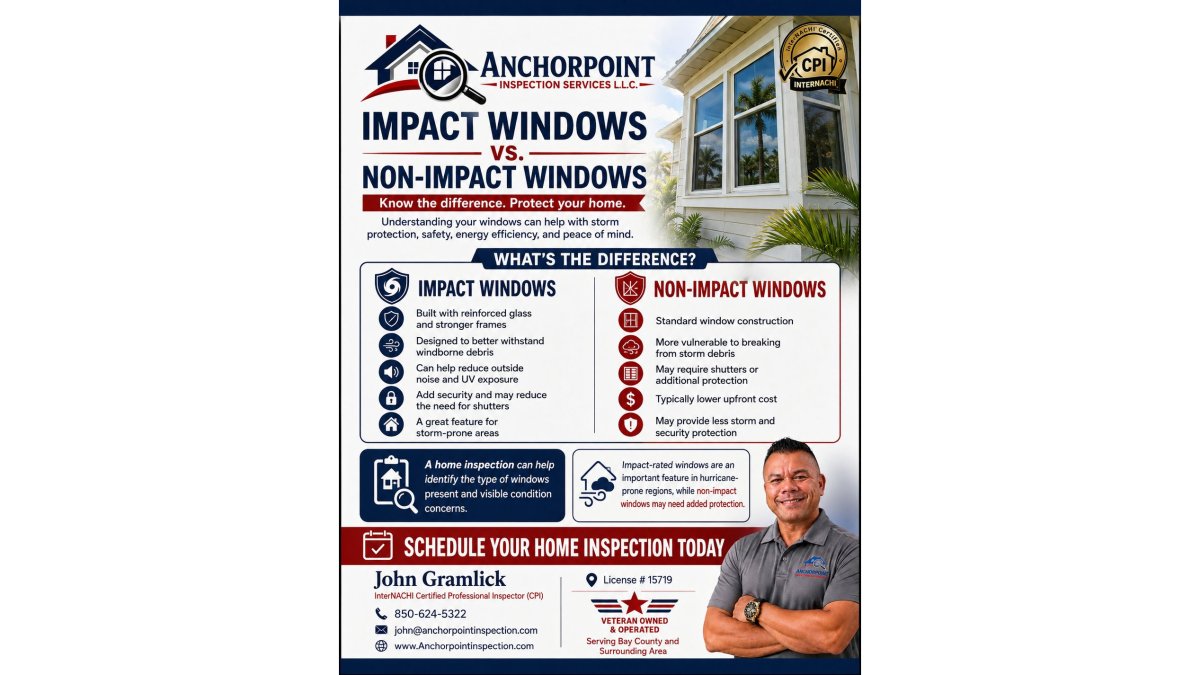
Exterior claddings must turn back wind-driven rain before moisture enters structural wall cavities. Stucco finishes require careful examination for hairline cracks and expansion joint failures that signal hidden water penetration. Fenestration systems need equal diligence. A dependable pre-purchase home inspection checklist Florida purchasers rely on should include checks for impact-rated glass markings, weatherstripping wear, and functional hurricane shutters. Verifying these defenses helps ensure the building envelope resists extreme wind pressure.
Foundation Slabs, Crawlspaces, and Site Drainage
Whether built on a monolithic concrete slab or raised pilings, foundation stability remains non-negotiable. Inspectors examine perimeter footings for stair-step fractures or signs of differential settlement. Crawlspaces demand careful checks for adequate cross-ventilation, continuous vapor barrier coverage, and damp ground that invites wood-destroying organisms. Around the exterior perimeter, proper ground grading and functional downspouts must direct roof runoff far from exterior walls. If you are preparing to evaluate a property in Northwest Florida, scheduling a comprehensive assessment with Anchorpoint Inspection Services provides the objective clarity you need before closing.
Critical Mechanical Systems: Electrical, Plumbing, and High-Demand HVAC
Florida's climate pushes interior mechanical infrastructure to its absolute limit. High humidity levels, salt air corrosion, and relentless summer temperatures require cooling units, plumbing lines, and electrical networks to operate under intense daily load. A generic assessment rarely accounts for these extreme operating conditions. Incorporating these systems into your pre-purchase home inspection checklist Florida routine helps identify active hazards before you inherit expensive repair bills, while remote alert services such as intouchrandb.com can help keep critical HVAC units and pumps monitored after closing.
Electrical Panels, Wiring Types, and Safety Disconnects
Electrical safety directly influences property insurability. Legacy panels manufactured by Federal Pacific Electric or Zinsco are notorious for failing to trip during overcurrent events, creating latent fire hazards that prompt immediate insurance underwriting rejections. Evaluators must also verify branch wiring materials to ensure the home lacks hazardous single-strand aluminum wiring from the late 1960s and 1970s. Modern building standards mandate functional Ground Fault Circuit Interrupter (GFCI) protection on all receptacles located within six feet of water sources, including kitchens, bathrooms, outdoor outlets, and exterior mechanical disconnects.
Plumbing Supply Lines, Drain Waste, and Water Heaters
Supply pipe failures cause catastrophic interior water damage. An inspection checklist requires a meticulous review of accessible plumbing lines to uncover obsolete polybutylene or corroded galvanized steel piping, both of which face strict underwriting restrictions. Evaluators also investigate cabinets beneath sinks and flooring around toilet bases for soft subflooring or active moisture seepage. Water heaters need direct evaluation to confirm proper tank capacity, manufacture date, electrical bonding, and the presence of an unobstructed temperature-pressure relief valve discharge line. Additionally, for properties relying on onsite wastewater management rather than municipal sewer grids, buyers can learn more about dedicated septic tank pumping and inspections to avoid unexpected underground failures.
Air Conditioning Capacity, Ductwork, and Dehumidification
Air conditioners in Florida do not just lower indoor temperatures; they serve as primary moisture extraction devices. An inspector measures the differential temperature split between return and supply air to verify that the compressor and coils produce efficient cooling. Unconditioned attics expose flexible ductwork to intense heat, leading to ripped exterior jackets, air distribution loss, and condensation that feeds biological growth. Technicians also confirm that condensate primary and secondary drain lines include operational safety float switches to prevent overflowing water from ruining drywall ceilings below. Just as securing your building exterior involves recognized windstorm damage mitigation techniques, protecting interior mechanicals ensures lasting habitability.
Florida-Specific Ancillary Inspections: Wind Mitigation, 4-Point, and Environmental Factors
A standard property review gives you an honest look at a structure's current condition, but insurance underwriters demand targeted documentation before issuing a policy. Florida's insurance market functions differently than most states, meaning a general assessment alone might leave you scrambling for coverage days before closing. Integrating specialized ancillary evaluations into your pre-purchase home inspection checklist Florida strategy bridges the gap between basic property condition and carrier insurability.
Wind Mitigation Features and Insurance Premium Credits
Florida law requires insurance carriers to offer substantial premium discounts for verified wind-resistive building features. A certified wind mitigation inspection evaluates structural defense details, including roof-to-wall connectors like metal hurricane clips, single wraps, or double wraps rather than basic toenailing. The inspector also documents roof geometry, fastener spacing, and secondary water resistance barriers installed beneath the exterior covering. Verifying these construction details can significantly reduce the wind-damage portion of your annual insurance premium.
The 4-Point Inspection Framework for Older Florida Homes
Carriers typically mandate a standalone 4-point inspection when a home reaches 20 to 30 years of age. This focused report examines four vulnerable areas: roofing, electrical panels and wiring, plumbing systems, and HVAC units. Underwriters review these findings to ensure the roof has sufficient remaining service life, the mechanical units function properly, and the electrical panels present no known fire hazards. Because a standard buyer's inspection serves your personal due diligence rather than carrier underwriting requirements, completing this specific check is essential for securing coverage on older homes.
Swimming Pool Safety, Barrier Compliance, and Deck Stability
In-ground swimming pools, spas, and screen enclosures introduce distinct safety, liability, and structural considerations. A dedicated evaluation verifies child safety barriers, self-closing latches, pool perimeter door alarms, and proper electrical bonding around pump motors. Evaluators also examine concrete pool decks for sub-base erosion, settlement cracks, or coping separation caused by coastal soil conditions. Review our complete safety breakdown in Expert Pool Inspection in Lynn Haven, FL: Protecting Your Family and Investment. To protect your closing timeline and budget, schedule your comprehensive home inspection and wind mitigation with Anchorpoint Inspection Services today.
Reviewing Inspection Findings: Negotiating Repairs and Finalizing Your Purchase
Receiving an inspection report packed with high-resolution photos and technical descriptions can feel overwhelming. However, a comprehensive document serves as an objective roadmap rather than a reason to panic. By working through your completed pre-purchase home inspection checklist Florida documentation methodically, you can separate standard property maintenance from material deficiencies that require immediate seller negotiation.
Categorizing Report Deficiencies by Urgency and Safety
To keep negotiations constructive, group every noted deficiency into clear operational categories. Focus your initial energy on major structural flaws, active roof leaks, and non-functional mechanical systems. Minor issues, such as missing caulking along a baseboard or loose cabinet hardware, are standard homeownership tasks that shouldn't derail a transaction. You can gain clarity on deciphering these categories by reviewing Home Inspection Report Explained: A Homeowner’s Guide to Reading the Results.
Structuring Repair Requests Under Florida Real Estate Contracts
Most residential purchases in the state utilize the Florida Realtors/Florida Bar "As-Is" contract. While this framework does not obligate the seller to complete repairs, it grants you the unrestricted right to cancel within your due diligence period. This leverage provides strong negotiating power when critical problems arise. In fact, industry data shows that 50% of homebuyers use the home inspection report to negotiate a better purchase price. Rather than having the seller rush low-cost fixes, consider requesting closing credits or escrow price reductions. If the seller agrees to complete repairs before closing, specify these conditions in your addendum:
All critical structural, electrical, and plumbing repairs must be performed by licensed and insured trade professionals.
Permits must be pulled with local building departments whenever mandated by municipal code.
Paid invoices, lien waivers, and transferrable manufacturer warranties must be provided before final closing.
Selecting a Qualified Northwest Florida Professional Inspector
The strength of your negotiation hinges on the credibility of the underlying report. When vetting a partner for your pre-purchase home inspection checklist Florida process, verify that the inspector holds an active license through the state, carries general liability coverage, and brings deep familiarity with local Panhandle construction styles. Coastal winds, flood zone classifications, and wind mitigation details require an experienced eye. Choosing a dedicated professional who communicates with calm clarity ensures you make your final buying decision with total confidence.
Protect Your Florida Real Estate Investment Before Closing
Entering a property transaction with verified clarity gives you decisive negotiating power. Navigating tight due diligence windows and strict regional underwriting standards requires looking far beyond cosmetic finishes. Using a structured pre-purchase home inspection checklist Florida buyers trust ensures that aging roof coverings, strained cooling systems, or hazardous electrical panels won't derail your contract. When you separate everyday maintenance from genuine material defects, you protect both your earnest money and your long-term peace of mind.
As a Florida licensed home inspector serving Lynn Haven, Panama City, and all of Bay County, Anchorpoint Inspection Services delivers thorough evaluations that combine complete structural analysis with essential wind mitigation and 4-point reporting. Our clear, detailed documentation lowers your stress and equips you with the objective data needed to streamline closing negotiations. Ready to take the next step in your purchase? Schedule your comprehensive property inspection with Anchorpoint Inspection Services today and move forward into your new home with total assurance.
Frequently Asked Questions
What is typically included in a pre-purchase home inspection in Florida?
A pre-purchase home inspection provides a non-invasive, visual examination of a property's accessible systems and structural components. In Florida, this evaluation includes the roof covering, attic framing, foundation slab or crawlspace, exterior cladding, plumbing supply lines, electrical service panels, and heating and air conditioning equipment. Evaluators assess these systems specifically for safety hazards, functional operation, and climate-induced deterioration common across Northwest Florida homes.
Is a 4-point inspection the same as a pre-purchase home inspection?
No, a 4-point inspection is significantly narrower than a comprehensive pre-purchase home inspection. While a full buyer's evaluation covers hundreds of visible items from cosmetic caulking to site drainage, a 4-point inspection solely documents four major assemblies: the roof, electrical, plumbing, and HVAC systems. Insurance carriers require this specific form to assess underwriting risk on older properties, making it an essential companion to your pre-purchase home inspection checklist Florida due diligence.
Why do Florida insurance companies require a wind mitigation inspection?
Insurance carriers request a wind mitigation inspection to verify specific construction features that reduce windstorm damage during tropical weather. The report documents roof geometry, roof deck nail spacing, water barriers, and roof-to-wall attachments like metal clips. Florida law mandates insurance premium discounts when these protective components are present, helping homeowners across coastal communities like Panama City Beach and Destin substantially lower their annual policy costs.
Can a home buyer attend the inspection in person?
Yes, buyers are encouraged to attend at least the final portion of the on-site evaluation. Walking the property alongside your inspector provides valuable context that written reports cannot match. You can review observed issues firsthand, ask questions about mechanical shut-offs, and learn routine maintenance practices suited to the local climate. This face-to-face walkthrough transforms raw findings into practical, actionable insight before you finalize your closing negotiations.
What issues fail a home inspection in Florida?
A standard home inspection is an informational report rather than a pass-or-fail test. However, certain conditions trigger immediate safety concerns or insurance underwriting denials. In Florida, common deal-breakers include roofs nearing the end of their useful service life, recalled electrical panels like Federal Pacific or Zinsco, deteriorated polybutylene plumbing, active moisture intrusion, and malfunctioning cooling equipment unable to control interior humidity.
How long does a pre-purchase home inspection take in Florida?
A standard single-family residential inspection typically takes between two and four hours on-site to complete. The actual duration depends on the square footage, property age, foundation type, and any added evaluations such as a detached screen enclosure, pool, or roof certification. Older residences or properties with complex crawlspaces naturally require more meticulous scrutiny from the inspector to ensure all accessible components are thoroughly examined.
What happens if the seller refuses to fix inspection issues on an as-is contract?
If a seller declines to make repairs on a Florida "As-Is" contract, you retain the right to cancel the agreement and reclaim your earnest money deposit, provided you act within your inspection contingency window. Alternatively, you can negotiate a reduction in the purchase price or request closing cost credits. This flexibility highlights why completing your pre-purchase home inspection checklist Florida process early in your due diligence timeline is so critical.
Do brand new construction homes in Florida need an inspection?
Yes, newly constructed homes should always undergo an independent evaluation before closing. Municipal code inspectors review properties for minimum code compliance, but they rarely have time for the detailed, system-wide evaluations performed during private inspections. Independent inspectors frequently uncover missing attic insulation, poorly connected ductwork, improperly flashed roof penetrations, and wiring defects that builders must correct before your final punch list is signed and builder warranties begin.
Comments