

Understanding Your Florida Home Inspection Report: A Buyer’s Guide (2026)
Updated: Oct 6
Your home inspection report isn't a pass-fail test; it's a practical triage manual designed to protect your investment. When you're buying a property in the Sunshine State, understanding your Florida home inspection report is often the difference between walking away in panic and moving forward with clarity. Opening a forty-page document filled with technical jargon and flagged defects can easily feel overwhelming, especially with earnest money on the line and contractual deadlines ticking down. It's completely natural to feel uncertain about what represents an immediate safety hazard versus routine wear and tear.
This guide demystifies your property inspection findings so you can focus on what genuinely matters. We'll show you how to separate major structural flaws from minor maintenance tasks, explain how state-specific requirements like 4-point and wind mitigation inspections affect your insurance eligibility, and equip you to negotiate repair requests or closing credits effectively. You'll gain a clear, step-by-step framework to navigate the inspection period with steady confidence.
Table of Contents
The Anatomy of a Florida Home Inspection Report
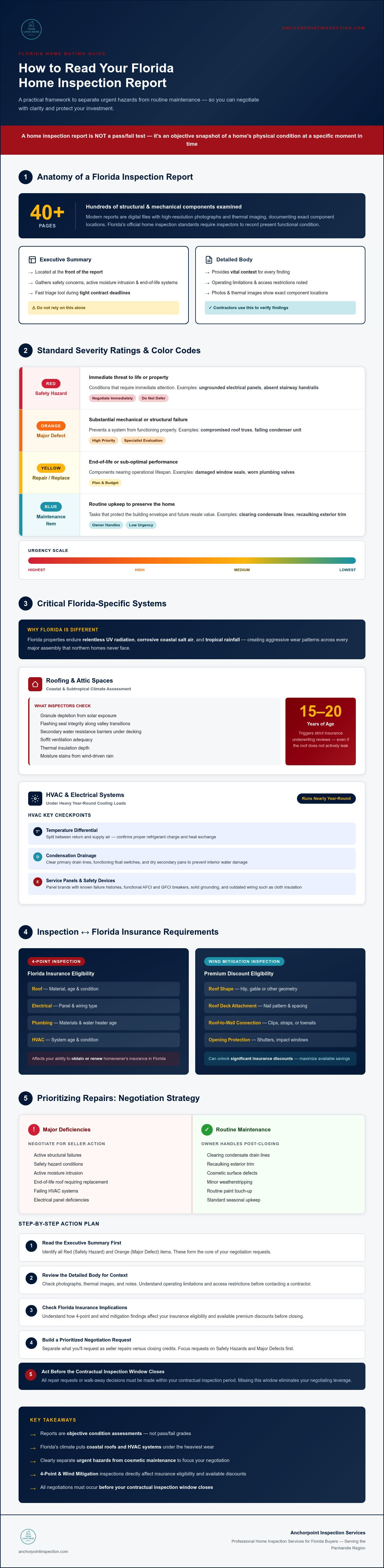
A professional evaluation is an objective snapshot of a home's physical condition at a specific moment in time. It's not a municipal code compliance check, nor does a property pass or fail. In the state of Florida, a standard home inspection examines hundreds of structural and mechanical components, producing an exhaustive digital file that easily exceeds forty pages. If you haven't reviewed modern inspection software before, our guide on having a home inspection report explained breaks down the baseline mechanics. Truly understanding your Florida home inspection report begins with recognizing how digital reporting separates vital red flags from routine upkeep.
The Executive Summary vs. Detailed Body
Modern software platforms generate an executive summary at the beginning of the file. This section curates the most pressing issues, gathering safety concerns, active moisture intrusion, and end-of-life systems in one consolidated view. While the summary offers a fast triage tool during tight contract deadlines, you shouldn't rely on it alone. The detailed body provides vital context, describing operating limitations, access restrictions, and minor defects. High-resolution photographs and thermal imaging appear throughout these pages, documenting exact component locations so your contractor can verify findings without second-guessing.
Standard Severity Ratings and Color Codes
Most reporting software categorizes observations using universal color-coded tiers to help you assess risk quickly:
Safety Hazard (Red): Conditions posing an immediate threat to life or property, such as ungrounded electrical panels or absent stairway handrails.
Major Defect (Orange): Substantial mechanical failures or structural flaws that prevent a system from functioning properly, like a compromised roof truss or a failing condenser.
Repair/Replace (Yellow): Components nearing the end of their operational lifespan or functioning sub-optimally, such as damaged window seals or worn plumbing valves.
Maintenance Item (Blue or Green): Routine tasks, like clearing condensate lines or recaulking exterior trim, that preserve the building envelope and protect future resale value.
Separating these tiers is essential when understanding your Florida home inspection report, as it transforms an intimidating list into an organized, practical action plan.
Deciphering Critical Florida Home Systems and Components
Florida properties endure intense environmental stressors that northern homes never face. Relentless ultraviolet radiation, corrosive coastal salt air, and tropical rainfall create aggressive wear patterns across every major assembly. When an inspector documents these assemblies under Florida's official home inspection standards, their objective is to record present functional condition rather than forecast a failure date. A crucial part of understanding your Florida home inspection report involves interpreting these physical findings through the lens of local Panhandle weather exposure and regional building practices.
Roofing and Attic Spaces in Subtropical Climates
Roof evaluations in coastal Florida go beyond counting missing shingles. Inspectors check for granule depletion caused by solar exposure, flashing seal integrity along valley transitions, and evidence of secondary water resistance barriers beneath the decking. Inside the attic, inspectors assess proper soffit ventilation, thermal insulation depth, and telltale moisture stains from wind-driven rain. A roof nearing fifteen to twenty years of age frequently triggers strict insurance underwriting reviews, regardless of whether it actively leaks today.
HVAC and Electrical Systems Under Heavy Cooling Loads
Air conditioning units in Florida run nearly year-round. This continuous duty cycle makes cooling evaluations particularly critical. Key checkpoints include:
Temperature Differential: The temperature split between return and supply air, confirming proper refrigerant charge and heat exchange.
Condensation Drainage: Clear primary drain lines, functioning float switches, and dry secondary pans to prevent interior water damage.
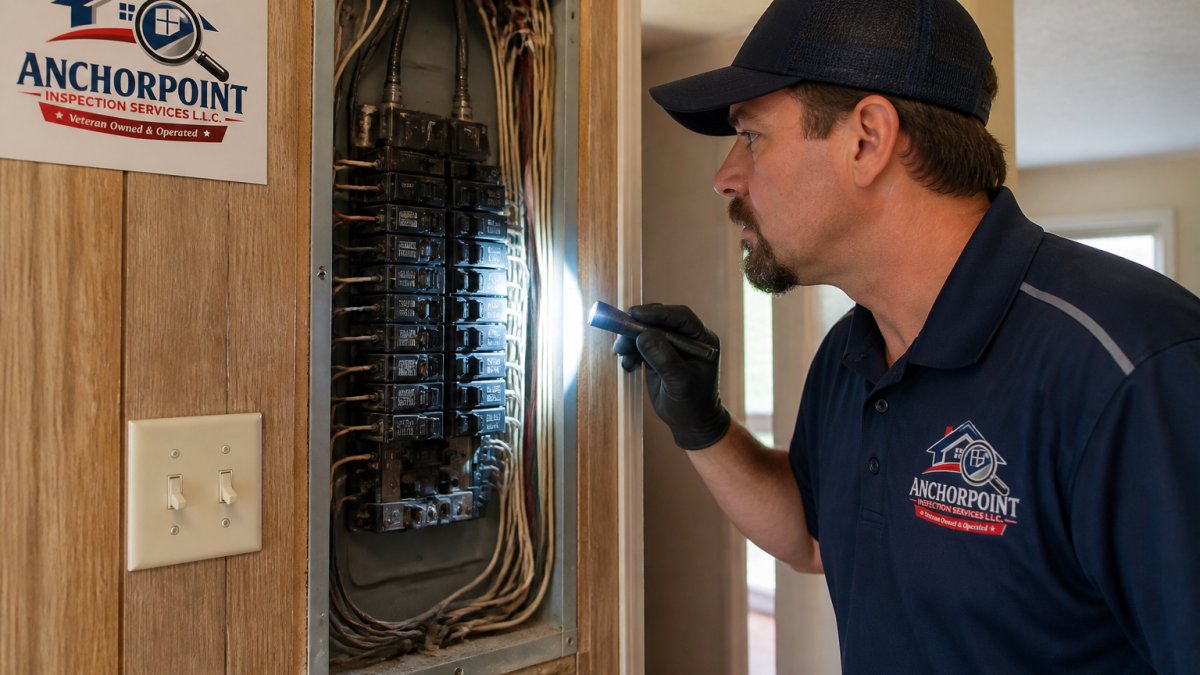
Service Panels and Safety Devices: Panel brands with known failure histories, functional AFCI and GFCI breakers, and solid grounding. Outdated branch wiring, such as cloth insulation or solid aluminum conductors, demands immediate attention due to fire and insurance risks.
Plumbing, Foundations, and Coastal Exterior Envelopes
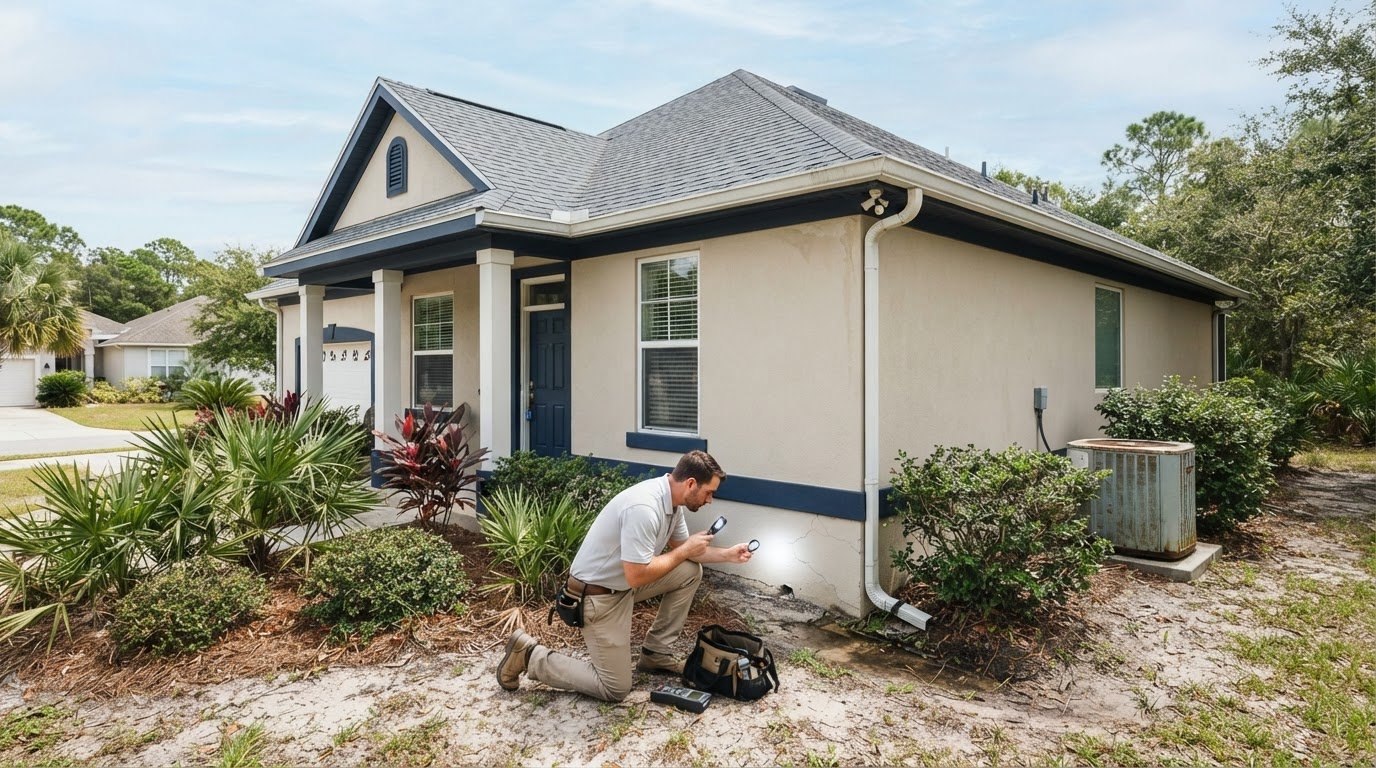
Plumbing reviews verify water supply materials, operational water heater shutoff valves, and signs of hidden slab leaks. Most regional homes sit on monolithic concrete slabs. Inspectors separate normal curing shrinkage cracks from structural displacement or foundation settlement. On the exterior, inspectors evaluate stucco clearance above grade, window perimeter sealant durability, and coastal siding corrosion. If you need local Panhandle insight on these exterior vulnerabilities, partnering with Anchorpoint Inspection Services ensures every component receives thorough, expert evaluation.
Understanding your Florida home inspection report at this mechanical level helps you judge which maintenance items can wait and which system repairs need immediate contractor estimates.
How Your Inspection Connects to Florida Home Insurance Requirements
Receiving your comprehensive inspection report is a major milestone, but Florida transactions come with an added hurdle: securing homeowner insurance. Private carriers scrutinize properties in coastal and hurricane-exposed areas with exceptional care. A standard evaluation protects you by uncovering defects, but underwriting teams require targeted documentation before issuing a binder. For carrier qualification requirements, review our 2026 guide to Florida home insurance inspections. A major part of understanding your Florida home inspection report involves recognizing how general findings cross over into insurance approval.
The 4-Point Inspection Cross-Reference
Insurers regularly mandate a standalone 4-point report for homes reaching thirty years of age, though many carriers now request them for properties that are twenty years old. This form isolates four core assemblies:
Roofing: Verifying system age, absence of active leaks, and general material integrity.
Electrical: Checking for obsolete branch wiring (such as cloth or aluminum) and outlawed panels.
Plumbing: Inspecting supply lines for failure-prone polybutylene, checking water heater condition, and evaluating visible shutoff valves.
HVAC: Confirming functional heating and cooling equipment with adequate remaining service life.
While an inspector notes small plumbing drips as routine home maintenance in a general file, active leaks on a 4-point form will halt an insurance application immediately.
Wind Mitigation Features and Premium Credits
Wind mitigation inspections assess construction features that resist tropical windstorms. While your standard report checks condition, the wind mitigation inspection documents structural connections using form OIR-B1-1802. Inspectors examine roof deck nail spacing, roof-to-wall connectors (such as clips, single wraps, or double wraps), roof geometry (hip vs. gable), and secondary water resistance barriers. Documenting these features can secure major discounts on the wind portion of your annual insurance premium, turning this short document into a valuable financial asset.
Roof Certification and Remaining Useful Life
Even if an architectural shingle roof has five years of practical life remaining, an underwriter might refuse coverage if the covering is over fifteen years old. In these scenarios, buyers frequently turn to a dedicated roof certification inspection Florida document. This assessment establishes that the roof covering remains watertight and meets the minimum remaining useful life required by insurance carriers. Understanding your Florida home inspection report alongside these specialized insurance forms ensures you don't face unexpected policy denials right before closing.
Prioritizing Repairs: Major Deficiencies vs. Routine Maintenance
Every property evaluation reveals defects, whether you are examining a thirty-year-old coastal cottage or new construction. Research shows that 50% of homebuyers use their inspection findings to negotiate purchase terms, but demanding repairs for every minor blemish quickly strains seller goodwill. True skill in understanding your Florida home inspection report involves separating genuine structural deal-breakers from everyday upkeep.
Material Defects That Demand Immediate Attention
Material defects are conditions that directly threaten structural integrity, personal safety, or habitability. Red-line discoveries include damaged roof framing, failed air conditioning compressors in mid-summer heat, or unpermitted additions with substandard electrical work. These issues require substantial capital to resolve and represent legitimate grounds for requesting licensed repairs, escrow holdbacks, or seller credits before closing.
Cosmetic Imperfections and Deferred Maintenance
Minor findings reflect ordinary wear and subtropical weather exposure rather than system failure. Worn caulk around window frames, loose towel bars, and shallow hairline cracks in exterior stucco belong on a personal post-closing checklist—you can learn more about bringing in reliable handyman support to handle these punch-list items after move-in. Handing a seller a forty-item repair list filled with five-dollar fixes creates unnecessary deal fatigue and distracts from vital safety corrections.
When understanding your Florida home inspection report, keeping your attention locked on primary mechanical and structural systems preserves your bargaining power. If you are preparing to purchase a home in Panama City or along the coastal Panhandle, schedule your comprehensive home inspection to secure the clear, objective data you need to negotiate effectively.
Next Steps: Turning Inspection Findings into Action
Once you finish reading your report, the clock starts ticking immediately. Standard Florida real estate contracts typically establish a strict inspection period of seven to fifteen days. During this window, you must complete all evaluations, gather specialist input, and submit formal repair requests to protect your earnest money deposit. If you're building fresh from the ground up, review our new construction inspection Florida guide to manage builder walk-through deadlines effectively. Truly understanding your Florida home inspection report means translating documented findings into a structured negotiation strategy before those contractual deadlines expire.
Consulting Licensed Trade Specialists
General home inspectors identify visible defects, but they don't produce engineering blueprints or itemized cost bids. When an assessment reveals red flags like compromised structural members, outdated electrical service, or aged air conditioning coils, you need licensed trade contractors immediately. Bringing in a licensed electrician, roofer, or HVAC specialist provides an actionable scope of work and a formal quote. These real-world numbers transform an inspector's general observation into verifiable leverage during contract negotiations.
Negotiating Repairs, Credits, or Escrow Holdbacks
Partnering with Anchorpoint for Clarity and Confidence
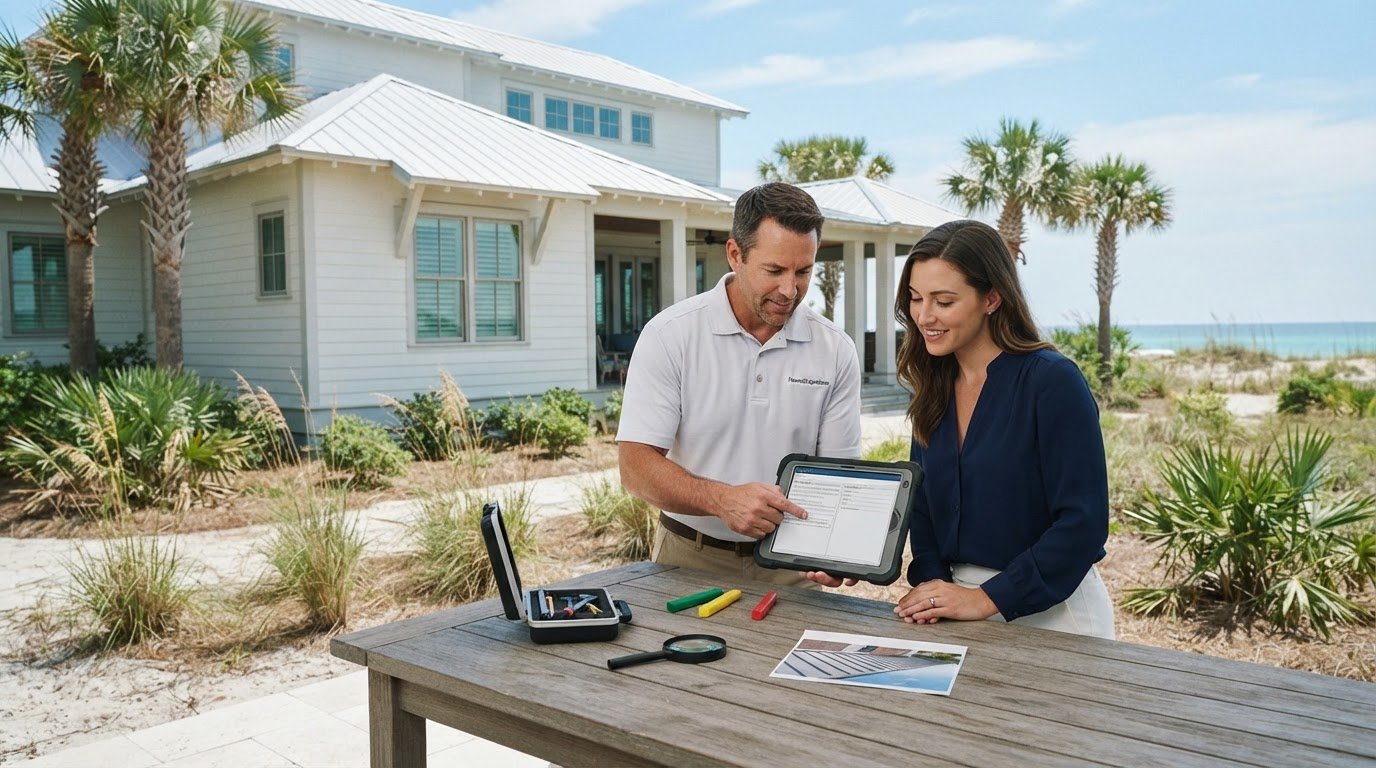
Technical reports can feel overwhelming, but you don't have to decipher them alone. Anchorpoint Inspection Services, led by Florida licensed inspector John R. Gramlick III, takes an educational, consultative approach to every assessment. We walk you through critical observations, explain Panhandle-specific building nuances, and answer your follow-up questions thoroughly. When you're ready to evaluate residential or commercial real estate across Lynn Haven, Panama City, or Panama City Beach, partner with a dedicated local inspector who prioritizes your long-term protection. Understanding your Florida home inspection report gives you complete control over your real estate investment.
Take Control of Your Florida Home Purchase
Navigating a real estate transaction doesn't have to feel like guesswork. Mastering the skill of understanding your Florida home inspection report allows you to separate urgent structural hazards from standard coastal upkeep, anticipate crucial insurance hurdles, and protect your contractual timelines. When you view the inspection document as an organized triage tool rather than a pass-fail report card, you transform raw technical data into decisive bargaining power.
At Anchorpoint Inspection Services, owned and operated by Florida licensed inspector John R. Gramlick III, we bring specialized coastal expertise to homebuyers across Lynn Haven, Panama City, and Bay County. We provide comprehensive, easy-to-read digital reports complete with high-resolution imagery and clear severity ratings, ensuring you have the exact facts needed to protect your investment. When you are ready to evaluate your next property with complete transparency, schedule your detailed property inspection with Anchorpoint and move toward closing day with steady peace of mind.
Frequently Asked Questions
Does a Florida home inspection report give a simple "pass" or "fail" grade?
No, a Florida home inspection report does not issue a pass or fail grade. Licensed inspectors provide an objective assessment of a property's condition at the time of inspection, noting functional deficiencies and safety hazards. Buyers use these factual observations to evaluate physical risks and negotiate repairs. Municipal code departments and insurance underwriters establish their own separate pass-fail criteria based on building codes or policy underwriting guidelines.
How long does it typically take to receive my completed inspection report in Florida?
Most professional home inspectors deliver the completed digital report within twenty-four hours of completing the physical walkthrough. Modern software allows inspectors to compile photos, thermal images, and narrative descriptions efficiently during on-site evaluations. Fast turnaround is essential in Florida real estate transactions, where contract inspection contingency periods often give buyers as few as seven to ten days to complete reviews and request repair concessions.
What is the difference between a comprehensive home inspection and a 4-point inspection?
A comprehensive home inspection is an exhaustive assessment of the entire property, performed for the buyer's peace of mind and purchase decisions. A 4-point inspection is a specialized, brief insurance form that evaluates only four major systems: roofing, electrical, plumbing, and HVAC. Insurance underwriters mandate 4-point reports on older Florida homes to assess basic policy risk, ignoring non-essential cosmetic features or detached structures.
Can an insurance company deny coverage based on findings in my inspection report?
Yes, insurance carriers routinely deny coverage or demand pre-closing repairs based on specific hazards. While buyers usually share specialized 4-point forms rather than full general reports, any documented issue involving active roof leaks, outdated cloth branch wiring, or polybutylene plumbing can prompt an immediate refusal. Understanding your Florida home inspection report enables you to identify these insurance red flags early and negotiate required fixes before coverage deadlines lapse.
Should I attend the home inspection in person, or just read the final report?
Attending at least the final thirty to forty-five minutes of your inspection is highly recommended. Joining the inspector on-site allows you to see flagged components firsthand, ask questions about mechanical shutoffs, and view minor cosmetic flaws in context. This direct walkthrough reduces anxiety, making the forty-page written document far easier to interpret once it arrives in your inbox.
What are the most common red-flag issues uncovered in Florida property reports?
The most frequent critical findings involve roofing decay, high moisture levels, and outdated electrical systems. Intense Gulf Coast heat and coastal storms accelerate roof wear and cause hidden water intrusion around window flashings. In older Panama City and Bay County homes, inspectors also frequently uncover obsolete electrical panels, damaged condensation lines, and compromised crawlspace framing that demand immediate structural or mechanical evaluation.
What should I do if my inspection report lists multiple defects on the roof?
If your report flags roof issues, hire a licensed roofing contractor immediately to assess the damage and provide an itemized repair estimate. A comprehensive assessment clarifies whether the roof requires minor flashing repairs or a complete replacement. In coastal Florida, understanding your Florida home inspection report helps determine if an older roof will pass carrier underwriting or if you must request a Roof Certification or seller closing credit.
Comments