

What a Comprehensive Florida Home Inspection Includes
A comprehensive Florida home inspection reviews a home’s visible, accessible condition, including its structure, roof, exterior, electrical and plumbing systems, and heating and cooling equipment. Knowing what is included in a comprehensive home inspection in Florida helps you understand what an inspector can observe and what may call for a separate evaluation. The inspection is a visual, noninvasive review, not an examination of concealed areas.
It’s reasonable to want a clear picture of a property before making a decision. Inspection findings can help you understand observed concerns, plan maintenance, and decide whether an issue needs further evaluation. This article explains which interior and exterior areas inspectors typically assess, how they look for moisture and drainage concerns, and what falls outside a standard inspection. It also explains how a comprehensive inspection differs from a four-point inspection, which focuses on four key systems for insurance purposes.
Table of Contents
What does a home inspector check?
A Florida home inspection reviews the visible condition of major systems and components. Inspectors focus on accessible areas, including the roof, structure, exterior, electrical and plumbing systems, and HVAC equipment.
Should Florida buyers order a 4-point inspection? Order one when an insurer requests it for issuing or renewing a policy. It covers four systems: roofing, electrical, plumbing, and HVAC, but it isn’t a full home inspection or a safety inspection.
How are roofs, HVAC systems, plumbing, and electrical systems inspected in Florida? Inspectors visually assess accessible components and operate systems when appropriate, such as testing faucets and outlets and checking heating and cooling equipment. They look for observable damage or concerns, not conditions hidden behind walls.
Roof and Exterior Checks
A roof and exterior review examines accessible roof coverings and exterior features for visible damage or deterioration. Inspectors may assess flashings, gutters, soffits, fascia, exterior walls, cladding, and trim. They can also observe driveways, walkways, grading, garages, and outbuildings. These checks help buyers understand whether visible roof or drainage conditions could contribute to water entry or pest access.
Structural and Foundation Checks
Structural checks assess visible foundation areas, walls, ceilings, and floors for signs of damage or movement. An inspector may note a foundation crack or uneven floor and describe its location and appearance. The inspection focuses on observable conditions, not concealed structural components. These findings help buyers distinguish routine upkeep from concerns that may need closer evaluation, such as a crack accompanied by signs of water intrusion.
Electrical, Plumbing, and HVAC Systems
Electrical checks can include the panel, visible wiring, outlets, switches, and light fixtures. Inspectors may test outlets and ground-fault circuit interrupters. Plumbing checks can include visible pipes, drains, water heaters, faucets, showerheads, and toilets, with attention to leaks or damaged exposed piping. HVAC checks cover accessible heating and cooling equipment, ductwork, and thermostats. Together, these observations show how key systems function during the inspection.
A thorough inspection can also identify visible safety concerns, such as outdated wiring, missing smoke detectors, or improper GFCI outlets. In plumbing, a leaking faucet or slow drain may point to a maintenance issue, while damaged exposed pipes may warrant further attention. For HVAC, the inspector may check whether the furnace or air conditioner operates when present and accessible.
The review is visual and noninvasive, so inspectors don’t open walls or test for asbestos, radon, or common sources of lead as part of a standard inspection. Those concerns require specific testing. The scope can vary with the property, inspection agreement, and applicable requirements, so a pool or another specialized system may need a separate assessment.
Findings are documented in a written report describing observed conditions and items that may need repair or further evaluation. Photos and clear descriptions can help buyers connect a report note to a specific area, such as roof flashing or an electrical panel, and plan their next steps.
Systems and components included in a Florida home inspection
The inspection covers visible, accessible components throughout the property, from the foundation to interior finishes. The exact scope can vary with the home and inspection agreement.
How much does a Florida home inspection cost, and what affects the price? The price depends on the property’s size, age, location, inspection scope, and additional services, and is provided after a quote request. A separate wind mitigation inspection is not part of a standard home inspection; it evaluates features related to wind resistance.
A Florida inspection generally takes about 2 to 4 hours, depending on property size. The inspector provides a written report describing findings, existing problems, and items that may need repair or further evaluation.
Structural Components and Foundation
Structural checks review visible foundation areas, walls, ceilings, and floors for observable damage or movement. These components form the home’s support system, so their condition helps buyers understand maintenance concerns or issues that may warrant further evaluation. A crack, uneven floor, or damaged wall is recorded as an observed condition, not a diagnosis of concealed structural components.
The inspection also considers how visible structural elements relate to the rest of the house. For example, a wall crack near a window may be documented alongside the condition of the window and surrounding surfaces. The report gives the seller and buyer a record of observed issues to discuss or investigate further.
Exterior Components and Drainage
Exterior checks cover visible walls, cladding, trim, gutters, soffits, fascia, driveways, walkways, grading, garages, and outbuildings. Inspectors look for conditions that could allow water entry or pest access, such as damaged exterior material or drainage directed toward the home. These observations help buyers understand how exterior components may affect upkeep and moisture management.
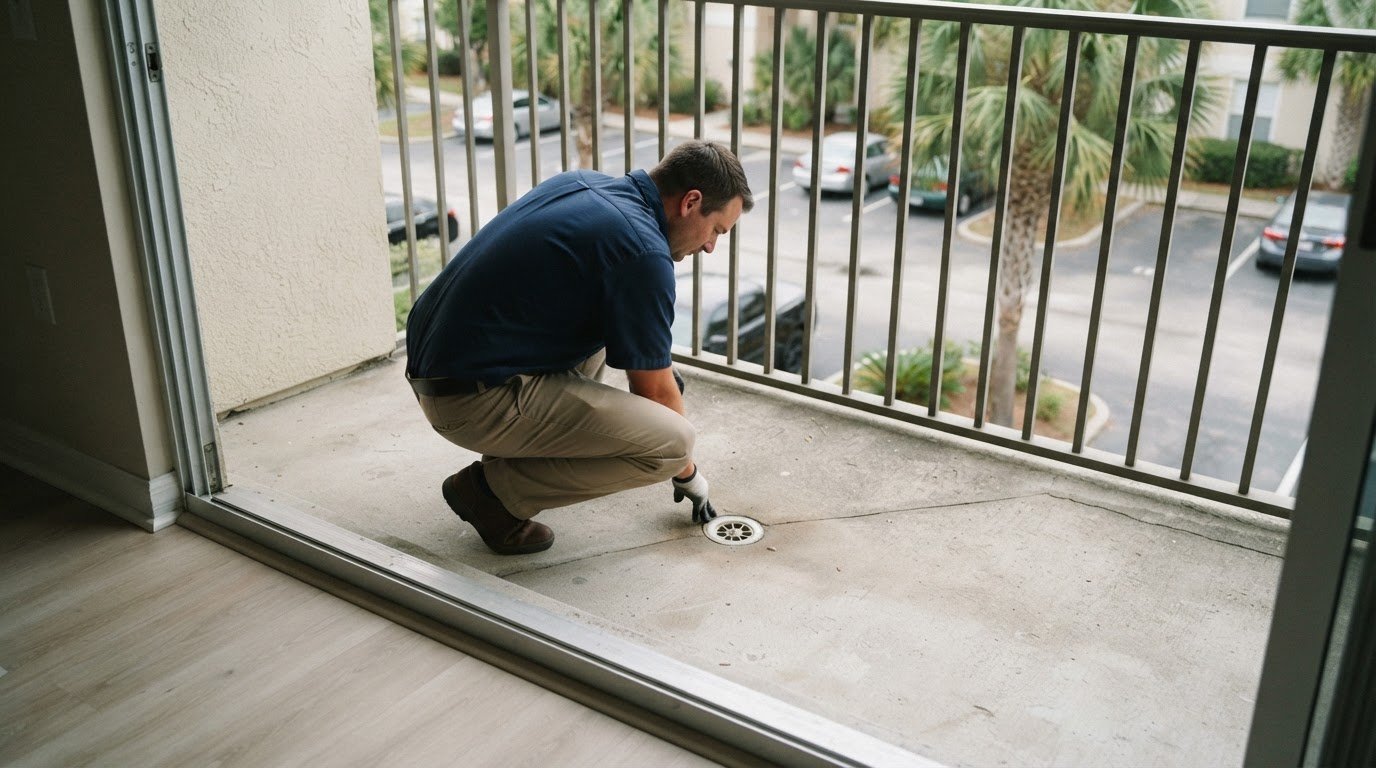
Drainage is assessed through visible grading and nearby surfaces, not by excavating the yard. A walkway sloping toward the house or a clogged gutter may be noted because each can affect where water collects. The report identifies the observed condition and its location, helping readers distinguish an exterior maintenance item from an area that needs closer evaluation.
Interior Components, Fireplaces, and Appliances
Inside, inspectors can assess visible walls, ceilings, floors, cabinets, and windows for damage. A stained ceiling, cracked window, or damaged cabinet is a concrete example of an observation that may appear in the report. Fireplace and appliance coverage depends on the inspection scope and accessibility, so the report describes what was observed rather than implying every component received specialized testing.
Buyers can use the written findings to understand which interior components showed visible concerns and which may need additional attention. A home inspection report records observed problems and recommendations for repair or further evaluation; it doesn’t provide a pass-or-fail grade. This distinction helps buyers and sellers discuss specific conditions rather than treating the entire property as approved or rejected.
Structure, foundation, roof, and exterior
A visual review connects the home’s structural condition with its roof and exterior features. For buyers, those observations can clarify maintenance needs and identify conditions to discuss before closing.
Structural and Foundation Condition
Inspectors assess visible foundation areas, walls, ceilings, and floors for cracks, displacement, or other signs of damage. A crack wider than ¼ inch is identified as a potential warning sign in the inspection information. The inspector records observable conditions, helping buyers consider whether further evaluation may be appropriate before negotiating repairs or other terms.
Context matters. A crack alongside a sloping floor, for example, tells buyers more than an isolated surface mark. The report describes what the inspector sees, not the hidden cause or a guarantee about future movement. This distinction is useful in an estate purchase, where the inspection can document visible conditions for the buyer’s decision.
Roofing and Exterior Features
Roof and exterior checks review visible roof coverings, flashings, gutters, soffits, fascia, exterior walls, cladding, and trim. Inspectors also observe features such as driveways, walkways, grading, garages, and outbuildings. A missing or damaged exterior feature can expose the home to water entry or pest access, so documenting its location helps buyers assess maintenance and possible next steps.
Florida’s tropical storms can contribute to roof wear, making visible shingle or flashing damage relevant to a property review. Gutters and grading also matter because they influence where rainwater flows around the home. The findings give buyers specific items to consider, rather than a broad impression that the roof or exterior is simply good or bad.
Interior condition adds another part of the picture. Inspectors can observe walls, cabinets, windows, ceilings, and floors for visible damage, such as a stained ceiling or cracked window. These details may help connect an interior symptom with an exterior area that also shows wear. The report records observed conditions and notes issues that may need repair or further evaluation.
Exterior drainage is assessed through visible grading, walkways, and nearby surfaces. For example, grading that directs water toward the house may be recorded as a concern because moisture can affect exterior materials. This is a visual assessment, not excavation or a review of concealed drainage systems. Buyers can use the location and description to decide what deserves attention before completing the real estate transaction.
A home inspection doesn’t assign a pass-or-fail grade. It documents visible conditions so buyers can weigh maintenance, request further evaluation, or negotiate based on the findings and their purchase agreement. Structural observations, roof wear, and exterior drainage each provide different information; together, they create a clearer record of the property’s condition.
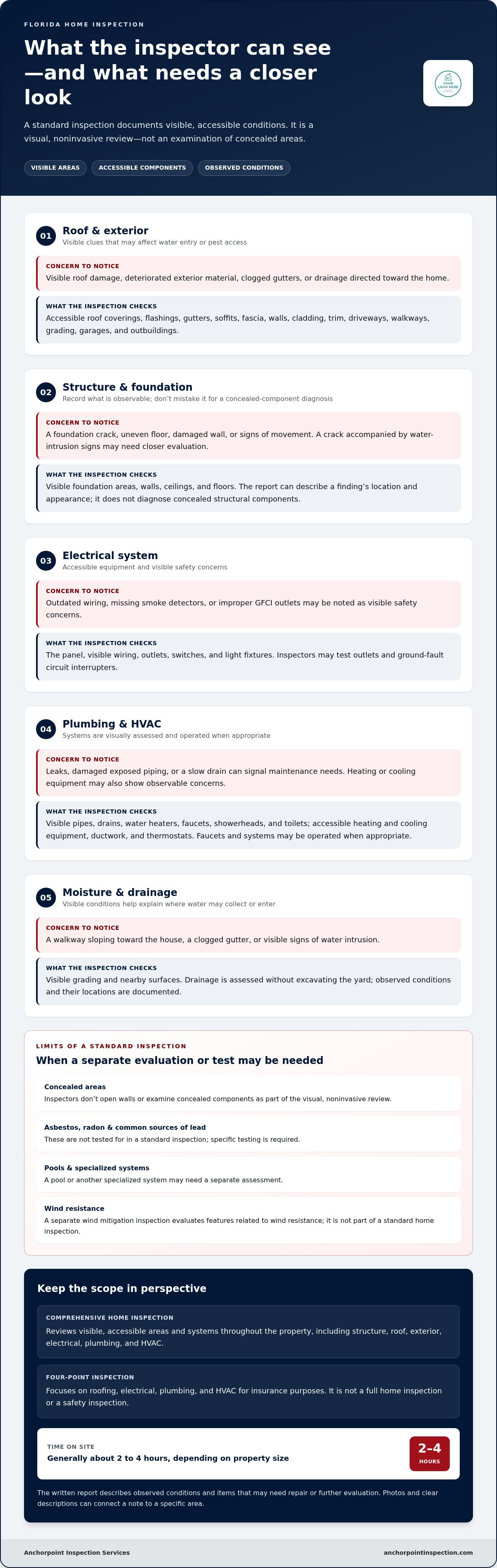
Visible and accessible areas and systems inspected
A Florida home inspection is a visual, noninvasive review of accessible systems and components. The inspection agreement and the property’s condition help define its scope.
What areas and systems are excluded from a standard Florida home inspection? Inspectors don’t assess concealed areas or test for asbestos, radon, or common sources of lead. Pools and septic systems also need dedicated inspections beyond a standard home inspection.
Visible and Accessible Areas
Inspectors assess areas they can see and reach without damaging the home, such as exposed piping, an accessible electrical panel, and visible interior surfaces. This boundary matters because a clear inspection report describes observed conditions, not the condition of materials hidden behind walls or beneath floors.
Access can affect what an inspector can observe. Stored items blocking a panel, for example, may prevent a clear view of its components. Florida home inspectors must meet state licensing requirements, and the inspection scope can vary with the property and agreement. Buyers can use the report to understand what was reviewed during the real estate purchase.
Heating and Cooling Systems
HVAC checks can include accessible heating and cooling equipment, ductwork, and thermostats. The inspector may operate the furnace or air conditioner, if present, and note visible concerns. These observations help buyers understand the system’s observed condition, rather than predict how long it will operate before needing replacement.
A blocked return vent or visibly damaged duct is an example of a condition that may be documented. The inspection doesn’t involve opening sealed equipment or dismantling ductwork. If a system is inaccessible, the report can distinguish that limitation from a defect actually observed during the inspection.
Appliances and Irrigation Systems
Appliances and irrigation systems should be considered in relation to the inspection agreement and what is accessible on site. An observable appliance condition or exposed irrigation component may be noted, but a standard inspection’s visual, noninvasive approach isn’t the same as specialized testing of every appliance or irrigation zone.
For example, stored belongings may block an appliance connection, while a buried irrigation line can’t be visually assessed. The report helps buyers see which conditions were observable and which areas were inaccessible. That distinction supports practical purchase planning without treating an unobserved component as either working or defective.
Visible conditions can also raise questions beyond the standard inspection. A suspected termite issue requires a separate inspection by a licensed pest professional, while a pool needs its own inspection. Keeping these scopes distinct helps buyers understand what the home inspection covers and what requires a dedicated assessment.
Flood, moisture, mold, and drainage concerns
Florida’s humidity, heavy rain, and storm exposure make moisture clues important during a home inspection. Inspectors can document visible conditions, while specialized concerns may need separate evaluation.
Are Florida home inspectors required to follow state standards of practice? Florida home inspectors must meet state licensing requirements. The inspection scope also reflects applicable requirements and the inspection agreement.
Look for visible signs such as water stains on ceilings, damp areas near windows, peeling paint, or musty odors. These observations can indicate moisture concerns, but a visual inspection doesn’t establish the presence or cause of mold. Drainage matters too: grading that directs water toward the house or gutters that discharge beside the foundation can contribute to water intrusion. The report can describe these conditions and identify areas needing further attention.
For mold concerns, consider a separate mold inspection before buying, particularly for an older home or after water damage. A roof leak, past plumbing leak, or flooding may leave moisture in places that aren’t visible during a standard inspection. Homeowners can use observed clues, such as recurring stains or warped trim, to understand where further evaluation may be useful. A real estate agent can help buyers coordinate inspection timing within the purchase process.
What additional inspections are recommended for Florida homes, such as termites, mold, or septic systems? A separate inspection by a licensed pest professional can assess termites and other wood-damaging pests; mold evaluation is worth considering for older homes or after water damage. Homes with septic tanks need a dedicated septic system inspection beyond the standard home inspection.
Inspectors can also note visible safety concerns, including missing smoke detectors, outdated wiring, or improper GFCI outlets. These findings describe observable conditions; they aren’t a comprehensive code-compliance review. A report may identify a concern at a specific location, such as an unprotected outlet near a sink, so buyers can understand what needs attention.
Flood exposure is another factor to consider. Florida buyers can review FEMA flood maps and consider whether flood insurance is needed for the property. A map provides context about flood risk, while the inspection documents visible conditions at the home. Neither replaces the other: one relates to mapped flood exposure, and the other records observed property conditions.
If moisture, drainage, or visible safety concerns are part of your purchase decision, schedule a comprehensive home inspection to receive a report of observed conditions and items that may need further evaluation.
Anchorpoint Inspection Services: Comprehensive Home Inspection
Anchorpoint Inspection Services provides a Comprehensive Home Inspection to help you understand a property’s visible condition before purchase or plan its maintenance. The findings can help you identify items for repair or further evaluation and make informed decisions about the home.
If an insurer needs focused information about key systems, a 4-Point Inspection covers the roof, electrical, plumbing, and HVAC systems. A Wind Mitigation Inspection documents features related to wind resistance. For homeowners approaching the end of a builder warranty, an 11 Month Warranty inspection can help identify defects before that coverage period ends.
Choose the inspection that matches your property and decision. Contact Anchorpoint Inspection Services to discuss your home inspection.
Make Your Next Property Decision With Clarity
Knowing what is included in a comprehensive home inspection in Florida gives you a practical starting point, but the next step is deciding how the findings fit your plans. Use the report to organize questions, identify priorities, and distinguish routine maintenance from items that may deserve further evaluation. This can help you move forward with a clearer understanding of the property, whether you’re preparing to buy or already own the home.
Anchorpoint Inspection Services offers a Comprehensive Home Inspection for a broader view of a property, along with a Wind Mitigation Inspection and a 4-Point Inspection for more focused needs. Choosing the right inspection depends on the decision you’re making and the information you need. A focused insurance inspection serves a different purpose from a comprehensive review, so matching the service to your goal matters.
Take the next step at your pace. Contact Anchorpoint Inspection Services to discuss an inspection that fits your property plans, and move forward with greater confidence.
Frequently Asked Questions
What Happens During the Inspection?
The inspector examines accessible parts of the property and records observed conditions. Buyers are encouraged to attend; the Consumer Financial Protection Bureau recommends attending when possible to help understand the report and ask questions. Follow the inspector’s route and note where a concern appears, such as a particular room or exterior wall. Those details can make it easier to connect report comments with the home afterward.
Post-Inspection: What Comes Next?
Use the report to organize follow-up, maintenance, and purchase decisions. Separate items that may need specialist evaluation from routine upkeep, then review them against your priorities and purchase agreement. For example, a concern noted in an accessible area may prompt a closer assessment before you decide how to proceed. Keeping related photos, questions, and follow-up notes together can make discussions with the seller more focused.
What does a comprehensive home inspection in Florida typically include?
A comprehensive inspection typically reviews the home’s accessible structure and major operating systems, along with visible interior and exterior components. Examples include the foundation, roof, walls, windows, electrical panel, plumbing fixtures, and heating or cooling equipment. The inspector documents visible conditions rather than dismantling systems or examining concealed spaces. For a home in Lynn Haven or Panama City, the report helps buyers understand the specific condition of the property they’re considering.
What hurricane, flood, drainage, and moisture risks should a Florida home inspection address?
Look for documented signs such as roof wear, water staining, damaged exterior materials, and grading that directs water toward the home. A Wind Mitigation Inspection is separate and focuses on features related to wind resistance. Flood-map information provides context about a property’s mapped exposure, while inspection findings describe the home’s observed condition. Together, these perspectives help buyers consider storm, drainage, and moisture concerns without confusing one assessment for another.
What should buyers do after receiving a Florida home inspection report?
Review each finding, clarify its location and significance, and identify which items may need further evaluation. Depending on the report and purchase agreement, buyers may discuss repairs with the seller, negotiate a credit or price reduction, accept the property as-is, or withdraw under an inspection contingency if a serious issue arises. Keep contract deadlines in view while weighing these options, since the agreement determines the available process and timing.
How long does a Florida home inspection take, and when is the report delivered?
A Florida home inspection generally takes about 2 to 4 hours, depending on the property’s size. The inspector provides a written report describing findings and items that may need repair or further evaluation.

Comments