

Avoiding a Money Pit: What a House Inspection Can Reveal Before You Buy
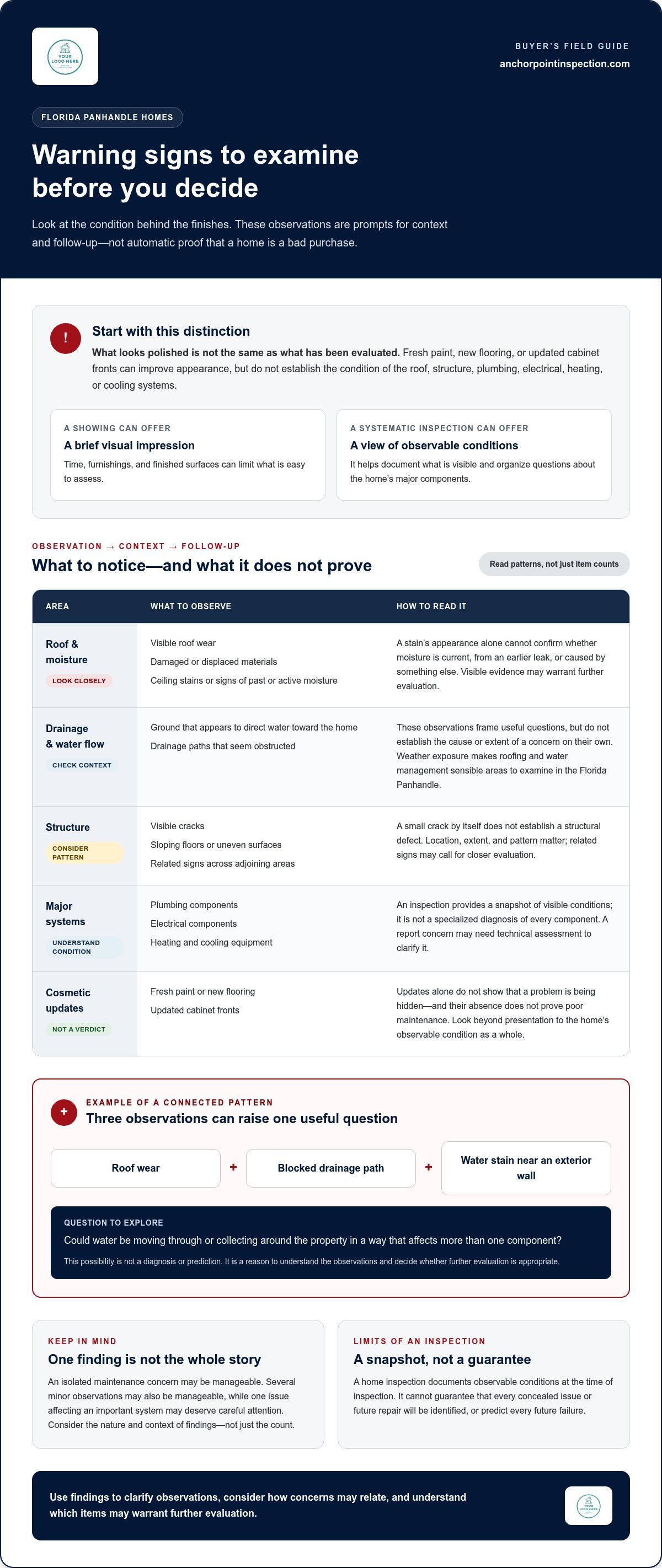
What if the fresh paint and renovated kitchen are the least important clues about a home’s condition? Cosmetic updates can make a property feel move-in ready while deferred maintenance remains out of sight. For buyers, avoiding a money pit house inspection means looking beyond appearances and understanding which findings need attention before they commit.
It’s reasonable to feel concerned when an inspection report notes roof wear, drainage issues, foundation cracks, or aging mechanical systems. But one finding alone doesn’t tell the whole story. A professional inspection is a decision-making tool, not a guarantee that every defect or future repair will be uncovered.
This guide explains which warning signs deserve follow-up, how to read inspection findings in practical context, and what an inspection can and cannot tell you before closing. You’ll also learn how to prioritize concerns and make a clearer decision about a home. In Lynn Haven, Panama City, and communities across the Florida Panhandle, a careful review of a home’s structure, roof, and mechanical components can help you set informed expectations.
Table of Contents
Why a House Can Become a Money Pit Even When It Looks Move-In Ready
A money-pit house isn’t simply an older property or one with a list of routine repairs. It’s a home where unresolved condition issues add up to a repair burden that becomes difficult to manage alongside the costs and responsibilities of ownership. The phrase brings to mind The Money Pit (film and concept), but a real home doesn’t need a dramatic collapse to create stress. Problems can build gradually when maintenance is postponed and related concerns go unaddressed.
A money pit is a property where deferred maintenance and unresolved defects allow ownership risks to accumulate faster than the buyer can reasonably manage them. That definition focuses on the pattern and significance of issues, not whether a house is new, old, attractive, or imperfect. A worn fixture may be a manageable maintenance item. Signs of active water intrusion or deteriorating components may call for closer, timely evaluation.
Why appearances alone cannot establish a home’s condition
Fresh paint, new flooring, and updated cabinet fronts can improve a home’s appearance, but they don’t establish the condition of the roof, structure, plumbing, electrical, heating, or cooling systems. Those updates may be part of ordinary renovation or upkeep. Their presence alone doesn’t show that a seller is hiding a problem, and their absence doesn’t prove a home is poorly maintained.
A showing offers a brief visual impression, not a systematic evaluation of the property. Buyers may have limited time to look around, and furnishings or finished surfaces can make some areas harder to assess. For anyone focused on avoiding a money pit house inspection, the practical step is to look beyond the room-by-room presentation and consider the home’s major components and observable condition as a whole.
How separate maintenance concerns can compound
One concern doesn’t automatically mean the house is a poor choice. Context matters: where an issue appears, whether related signs are present, and how components may interact. Those details can help distinguish an isolated maintenance need from a broader pattern worth investigating. Counting report items without considering their nature can be misleading. Several minor observations may be manageable, while one issue affecting an important system may deserve careful attention.
Consider a hypothetical home with roof wear, a blocked drainage path, and a water stain near an exterior wall. Each observation needs its own assessment. Together, they raise a useful question: could water be moving through or collecting around the property in a way that affects more than one component? That possibility isn’t a diagnosis or prediction. It’s a reason to understand the observations and decide whether further evaluation is appropriate.
Routine upkeep is part of owning any home. The challenge is recognizing when a concern goes beyond a cosmetic touch-up or ordinary maintenance task. A systematic inspection can help buyers understand visible conditions and organize questions, while keeping in mind that no inspection can guarantee every hidden issue or future repair will be identified.
Money-Pit Warning Signs to Examine in Florida Homes
Warning signs are prompts to understand a home’s condition, not automatic proof that it’s a bad purchase. A roof nearing the end of its service life, a crack in a wall, or an aging air-conditioning system may have different significance depending on its condition, location, and relationship to other observations. The goal is to identify what deserves attention and make decisions with the available evidence.
Related findings deserve context, not assumptions. Their location, pattern, and possible connection can matter more than the number of items on a list. In the Florida Panhandle, weather exposure makes it sensible to look closely at roofing, water management, and signs of moisture. Still, homes don’t all experience the same conditions.
Roofing, water intrusion, and drainage observations
Look for visible roof wear, damaged or displaced materials, ceiling stains, and signs of past or active moisture. Outside, note whether the ground appears to direct water toward the home or whether drainage paths seem obstructed. These observations help frame questions about condition, but they don’t establish the cause or extent of a concern on their own.
A ceiling stain, for example, could reflect an earlier leak, a current source of moisture, or another issue. Its appearance alone can’t confirm which explanation applies. An inspection can document visible evidence and recommend further evaluation when warranted. Rain and storms are part of the Florida Panhandle context, but they don’t prove that a particular roof or home has damage.
Structural, plumbing, electrical, and mechanical concerns
Visible cracks, sloping floors, or uneven surfaces are worth noting, but their meaning depends on factors such as location, extent, and pattern. A small crack in one area does not by itself establish a structural defect. A pattern of related signs may call for closer evaluation, especially if observations appear across adjoining areas.
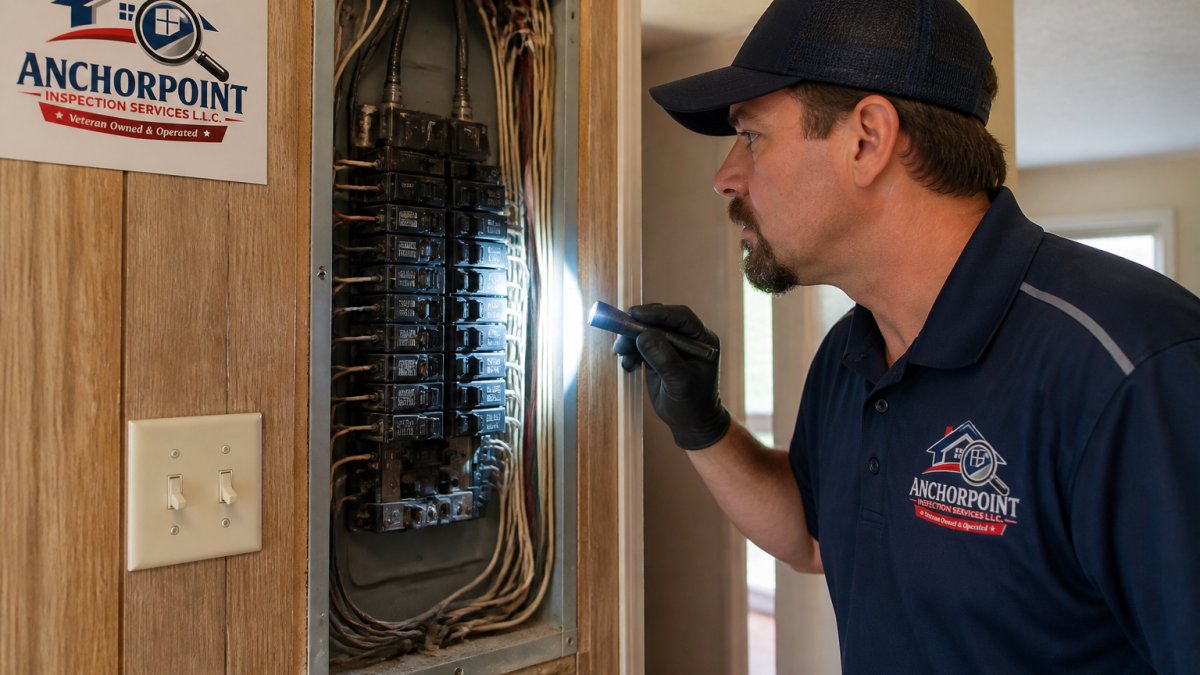
Buyers should also understand the observable condition of major systems, including plumbing, electrical components, and heating and cooling equipment. An inspection offers a snapshot of visible conditions. It isn’t the same as a specialized diagnosis of every component. If the report identifies a concern that needs technical assessment, further evaluation can help clarify its significance before you decide how to proceed.
Roof: Note visible wear and how the report describes the observed condition.
Moisture: Record stains or damp areas, then consider their location and whether other related signs appear.
Structure: Look at the pattern of cracks or unevenness rather than drawing conclusions from one mark.
Systems: Use reported observations to identify which components may need further evaluation.
For buyers focused on avoiding a money pit house inspection concerns are easier to assess when observations are organized by system and considered together. A comprehensive home inspection provides a structured view of a home’s observable condition and helps identify questions to address before closing.
What a Home Inspection Can Tell You, and What It Cannot
A home inspection provides a structured account of observable conditions on the day of the inspection. It can help buyers understand the visible state of key components, including structural elements, roofing, and mechanical systems, and identify areas that may need maintenance or further evaluation. The report is a snapshot, not a prediction of how every part of the home will perform over time.
That distinction matters. A condition that’s visible and accessible can be documented. A concealed issue behind a finished wall may not be apparent during a visual inspection. Some questions also require an evaluation focused on a particular system or concern. Understanding these limits helps buyers use the report as a practical decision-making tool rather than expecting it to answer questions it wasn’t designed to address.
How to interpret observations, concerns, and recommendations
Read each finding in context. Note the location, the component involved, what the inspector observed, and whether the report recommends maintenance, monitoring, or further evaluation. A routine maintenance note, such as a component needing ordinary upkeep, isn’t automatically equivalent to a condition that may require prompt attention. Let the report’s wording guide your interpretation rather than assigning a severity label it doesn’t use.
If a note feels unclear, connect it to the related section of the report and identify the question it raises. For example, a reported moisture mark is an observation. It doesn’t by itself confirm the source, whether moisture is active, or the full extent of any damage. The home inspection report guide offers additional context for reading findings and understanding how they can inform your next steps.
Why an inspection is not a guarantee or repair quotation
A visual inspection cannot reveal every concealed condition or predict all future failures. Components can change after the inspection, and hidden areas may not be accessible to view. A general condition report also isn’t a repair quotation. Determining the scope of work or its cost can require information that isn’t available from an inspection alone.
Those limits don’t make an inspection unhelpful. A systematic review can document what was observable, bring important concerns into focus, and help buyers decide what questions or evaluations may be appropriate before closing. For buyers focused on avoiding a money pit house inspection findings are most useful when treated as evidence to assess, not a guarantee or final diagnosis.
Use the report to build a clear picture of the home as it was observed. Some items may fit into routine maintenance; others may warrant timely follow-up. That distinction can help you weigh the property with more confidence while keeping uncertainty in perspective.
How Buyers Can Use Inspection Findings Before Making a Decision
An inspection report is most useful when you turn its observations into clear questions and next steps. Avoid reacting to the report’s length or letting one unfamiliar term make the decision for you. A practical approach to avoiding a money pit house inspection is to understand what the findings mean for this property, your plans, and the time available before closing.
Work through the report in sequence:
Read the full report. Review the overview, individual observations, and recommendations to understand the context before focusing on a single item.
Group the concerns. Sort findings into safety, active damage or moisture, major-system condition, and routine maintenance. This makes it easier to see what may need timely attention and what can be planned over time.
Clarify what’s uncertain. Note what the inspector observed, what the report says remains unclear, and whether further evaluation is recommended.
Decide on next steps. Consider the information alongside your budget, plans for the property, risk tolerance, and transaction timeline. Base your decision on the whole picture, not one line in the report.
Prioritizing findings without letting one item decide everything
Start with observations involving safety, signs of active moisture, or major systems that need clarification. Then consider whether findings appear connected or represent separate maintenance needs. For instance, roof wear and an interior stain may be related, but the report alone may not establish the stain’s source. Treat that relationship as a question to resolve, not a conclusion about cause, repair, or purchase.
A roof observation can also raise a separate question about certification. If that’s relevant to your decision, the Florida roof certification guide explains that distinct topic. Keep certification questions separate from the inspection’s observations about visible roof condition.
Questions to resolve before moving forward
For each priority item, write down three things: what the report observed, what remains uncertain, and what information would help you understand it. If further assessment is recommended, consider how that information could affect your decision. A report documents conditions observed during the inspection. It doesn’t set a repair scope, determine a negotiation outcome, or tell you whether to buy.
Timing matters. Review your transaction deadlines and applicable contract terms as you decide what to address and when. If information cannot be gathered within the available timeline, weigh that uncertainty against your comfort with the property and your plans for it. There isn’t one right response for every buyer.
For a documented view of a home’s observable condition, schedule a comprehensive home inspection with Anchorpoint Inspection Services. A detailed report can help you organize findings and make a more informed decision before closing.
Avoiding a Money Pit Starts With a Clear Local Inspection
Once you’ve considered what an inspection can and cannot establish, the next step is to get a clear view of the home in front of you. Anchorpoint Inspection Services evaluates residential properties in Lynn Haven, Panama City, and surrounding Bay County communities, focusing on structural components, roofing, and mechanical systems. A systematic review helps buyers understand observed conditions across these key parts of a property rather than relying on a quick showing alone.
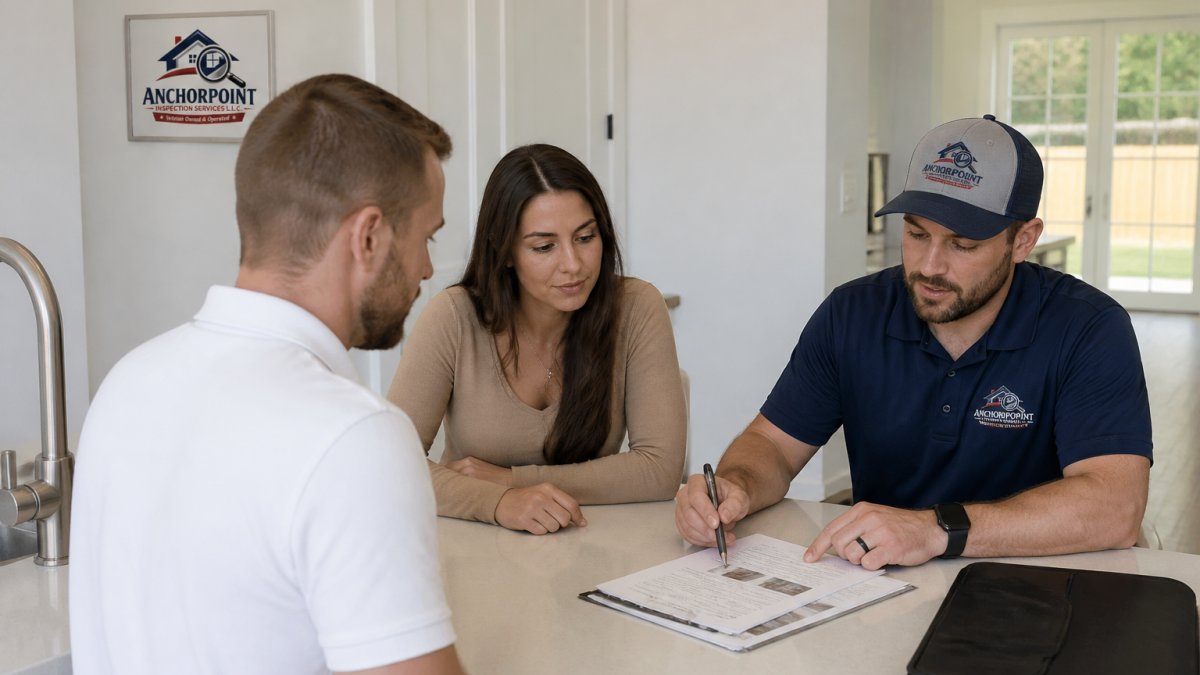
Anchorpoint is owned and operated by Florida-licensed home inspector John R. Gramlick III. The inspection results are presented in a detailed condition report, giving buyers a record of observations they can review, prioritize, and use to plan follow-up questions. The report does not promise that every defect or future repair will be identified. Its value is in helping you make sense of conditions observed at the time of the inspection and decide what information you need next.
What a local residential inspection adds to the decision
A report gives you an organized basis for assessing a property’s condition. For example, observations about a roof, a structural component, and a mechanical system can be considered in context rather than as unrelated notes. That clarity can help you distinguish routine upkeep from findings that may need further attention.
Local context can help frame what you observe without assuming every Bay County home faces the same conditions. The inspection focuses on the property itself: its visible components, their observed condition, and any recommendations recorded in the report. For buyers focused on avoiding a money pit house inspection findings can support a clearer decision, but they can’t guarantee a particular repair outcome or eliminate the possibility of future costs.
A straightforward next step for Bay County buyers
Arrange the inspection with your purchase timeline in mind so you have time to review the report and consider recommended follow-up within the deadlines and terms that apply to your transaction. Before the inspection, gather basic property details and note specific concerns you want to understand. If you’ve noticed a stain, unusual floor slope, or concern about a major system, identify its location so you can keep your questions focused.
A home inspection won’t make the decision for you. It can provide documented observations to weigh alongside your plans, comfort with uncertainty, and understanding of the property. That’s a practical starting point for avoiding a money pit house inspection without expecting a guarantee of a defect-free purchase.
For a clear, property-specific review, schedule a residential inspection with Anchorpoint Inspection Services. You’ll receive a detailed condition report to help you understand observed findings and plan your next steps in Lynn Haven, Panama City, Panama City Beach, Callaway, Southport, Mexico Beach, Port St. Joe, Santa Rosa, Fort Walton, Niceville, Destin, Pensacola, Gulf Shores, or San Destin.
Move Forward With a Clearer Plan
A home purchase always involves some uncertainty, but you don’t have to make the decision on appearance or instinct alone. The value of avoiding a money pit house inspection is the opportunity to pause, understand the available information, and decide what level of uncertainty feels manageable. A finding isn’t automatically a reason to walk away, just as a clean-looking room isn’t proof that every component is trouble-free.
Give yourself room to review the report, consider any follow-up that makes sense, and weigh the property against your needs and plans. That measured approach can turn an overwhelming list of observations into a clearer path forward. An inspection can’t promise a problem-free home, but it can help you make your next decision with better information.
If you’re preparing to buy in Bay County, schedule a residential inspection with Anchorpoint Inspection Services. Take the next step with a steady, informed perspective and move toward your home purchase with greater confidence.
Frequently Asked Questions
Is every older house a money pit?
No. A home’s age alone doesn’t determine whether it will create an unmanageable repair burden. Maintenance history, previous repairs, and present condition provide more useful context. An older property with well-documented upkeep may be easier to evaluate than a newer one with unresolved issues. When avoiding a money pit house inspection, consider how the findings fit together and review available maintenance records rather than treating the year built as a verdict.
Can a home inspection find every hidden problem?
No. An inspection can only report on conditions that are observable and accessible at the time. Issues behind walls, beneath flooring, or inside covered components may not be visible, and some concerns require specialized testing or assessment. If a report notes a limitation or recommends further evaluation, treat that as useful information about what remains unknown. An inspection reduces uncertainty, but it can’t remove it entirely.
What happens if a home inspection reveals a serious concern?
First, identify exactly what the report observed and whether it recommends further evaluation. Then consider what additional information could clarify the concern and how much time your transaction allows. A serious finding doesn’t automatically dictate whether you should proceed. Buyers in Lynn Haven, Panama City, Panama City Beach, Callaway, Southport, Mexico Beach, Port St. Joe, Santa Rosa, Fort Walton, Niceville, Destin, Pensacola, Gulf Shores, and San Destin can use the same measured approach: understand the finding before deciding.
Does a home inspection include a repair cost estimate?
Usually, an inspection report describes observed conditions rather than pricing repairs. A cost estimate depends on details such as the work required, materials, access, and the extent of the issue, which may not be established during a general inspection. If you need a budget figure, use the report to identify which concerns need a separate scope of work. Don’t treat an inspection observation as a repair quote.
Can fresh paint or new flooring hide a home problem?
Cosmetic updates can make some areas harder to assess, but fresh finishes don’t prove that a problem is present or that anyone intended to conceal one. Look for context: does the visible finish appear alongside stains, unusual odors, soft flooring, or other signs that merit attention? If you have questions about recent work, available invoices or maintenance records may help explain what was updated and when.
Should I be concerned about foundation cracks in a Florida home?
Take note of them, but don’t assume every crack signals a serious structural problem. Their location, direction, size, and relationship to other visible conditions help determine whether further attention may be appropriate. Across Lynn Haven, Panama City, Panama City Beach, Callaway, Southport, Mexico Beach, Port St. Joe, Santa Rosa, Fort Walton, Niceville, Destin, Pensacola, Gulf Shores, and San Destin, soil and property conditions vary, so assess a crack in the context of that home.
Can a home inspection predict how long a roof or HVAC system will last?
No. An inspection can describe visible condition and note concerns, but it can’t give a reliable expiration date for a roof or heating and cooling system. Age, maintenance, installation, use, and exposure can all affect how components perform. If you know the system’s age or have service records, consider those alongside the report. A condition assessment can inform planning, but it isn’t a guarantee of remaining service life.

Comments